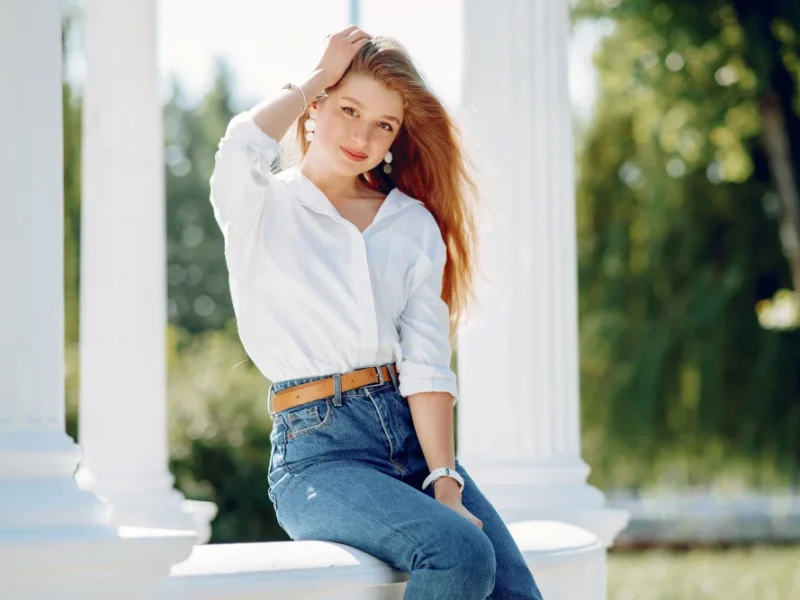


You catch your reflection in a shop window and barely recognize yourself. Your clothes fit fine. They’re fine. But fine isn’t the feeling you’re chasing. You want to feel more yourself—softer, more intentional, more feminine. The challenge? Femininity isn’t a size, a color, or a single silhouette. It’s a language your wardrobe has to learn.
Maybe you’ve tried before. You bought pink blouses and delicate ruffles, hoping femininity would click into place. Or you scrolled through Pinterest, got overwhelmed by conflicting aesthetics, and gave up. Or you’re simply asking: How do I dress more feminine in a way that actually feels like me?
This guide answers that question through the Softness Framework—a proven system that separates authentic feminine dressing from forced aesthetics.
How to dress more feminine in 30 seconds:
Dressing more feminine is about three core layers:
- Silhouette — Curved, flowing shapes (wrap dresses, A-line skirts, soft tailoring)
- Fabric — Responsive materials that move (silk, linen, cotton, wool crepe)
- Intention — Deliberate details (delicate jewelry, rounded bags, soft accessories)
The transformation isn’t about pink or ruffles. It’s about how fabric speaks against your skin and how intentionality reads in a room. Start with one wrap dress, add soft layers, and notice how your presence shifts.
WHY FEMININITY MATTERS: THE PSYCHOLOGY + WARDROBE CONNECTION
Most women know this feeling: you see someone walk past and feel instantly drawn to their presence. It’s not always about being “pretty” or “trendy.” It’s about how deliberately she exists in her clothes.
Femininity in dress is about softness and intention—not a rigid aesthetic box. A woman in a perfectly tailored charcoal wool blazer over a silk camisole reads differently than one in oversized menswear. Same polish level. Different presence.
Why This Matters to You
Your wardrobe shapes how you feel before you even leave the house. Research from the Journal of Experimental Social Psychology shows that what we wear influences not just how others perceive us, but how we perceive ourselves. When you dress with intentional femininity, you carry yourself differently.
The psychological mechanism: Femininity signals self-care to yourself. It says “I’m worth the thought.” That internal acknowledgment becomes visible—in your posture, your energy, how you move through a room. This is why women report feeling more confident after implementing feminine dressing practices.
The practical benefit: You’re not chasing someone else’s aesthetic. You’re activating the feminine softness that already exists within you.
THE SOFTNESS FRAMEWORK: HOW TO DRESS MORE FEMININE
The Blyssn approach to dressing more feminine isn’t about following trends or forcing an aesthetic that doesn’t suit you. It’s about understanding three core layers that create genuine softness. This framework works across body types, budgets, and lifestyle contexts.
Layer 1: Silhouette — The Visual Language of Softness
Femininity starts with how fabric moves around your body. Soft doesn’t mean tight; it means intentional.
Key feminine silhouettes:
A-line skirts — Creates movement and fluidity without clinging. Example: A-line midi skirt in neutral linen worn with a fitted sweater reads intentionally feminine because the silhouette echoes your natural curves without defining them harshly. The flow creates visual softness instantly.
Wrap dresses — The curve-defining power of wrapping fabric around your waist signals femininity immediately. Why? Because wrapping acknowledges your body without clinging to it. Bonus: they work on most body types. Try pairing a wrap dress with a leather belt to emphasize the intentional waist-definition.
Soft tailoring — A structured blazer with a fluid collar or soft shoulder seam. Think less power suit, more intentional structure. Pair soft tailoring with a slip dress underneath for layered intentionality that reads both professional and feminine.
Layering pieces — Silk slips, mesh tanks, and delicate cardigans worn over simple basics add dimension. A simple white tee becomes feminine when layered with a mesh top and fine jewelry.
Maxi dresses — The length and movement inherently read as feminine without requiring shape emphasis. Wear one over a turtleneck for transition seasons, or with strappy sandals in summer.
Rounded necklines — Most women skip rounded necklines and stick to crew necks. Insider truth: Rounded necklines—boat necks, sweetheart necklines, soft cowl necks—signal femininity immediately. The softness begins at the collarbone. Swap one crew neck for a boat neck top and notice the difference.
Visual comparison: A structured, straight-cut blazer reads powerful and masculine. A curved, nipped-waist blazer in the same color reads feminine and intentional. Same piece, different energy—determined by silhouette.
Layer 2: Fabric — What Touches Your Skin Matters
You can wear the most feminine silhouette, but if the fabric is stiff and unyielding, it reads as costume. Real femininity lives in the fabrics that respond to movement.
Soft, feminine, responsive fabrics:
Silk — Drapes beautifully, catches light, feels luxurious against skin. Use: Silk camis under blazers, silk scarves, silk blouses. Why it works: Silk moves with your body; it doesn’t fight against you.
Linen — Breathes, wrinkles intentionally (that’s the charm), moves like water. Use: Linen dresses, linen trousers, linen layering pieces. Why it works: The natural wrinkles and fluidity read as effortless, not careless.
Cotton voile and cotton lawn — Lighter than regular cotton, these fabrics float and move with you. Use: Summer dresses, lightweight shirts, layering pieces. Why it works: They drape without clinging, creating visual softness.
Wool crepe — Structured enough to hold shape, soft enough to flow. Perfect for tailored pieces that need to maintain form. Use: Crepe trousers, structured dresses, tailored blazers.
Cashmere blends — Even affordable cashmere blends signal softness and self-care. Why? Because cashmere is expensive and intentional. Your brain reads it as “she chose something luxurious.” That intention reads as feminine.
Fabrics to avoid: Stiff polyester blends, rigid denim (unless intentionally paired with soft pieces), and overly structured synthetic fabrics. These fight against feminine energy and make you feel less grounded.
The practical shortcut: If you’re shopping and unsure, touch the fabric. Does it respond to your hand? Does it move slightly? That’s your sign it communicates softness.
Real application: Compare two identical wrap dresses—one in stiff cotton-polyester blend, one in natural linen. The linen version reads softer, more intentional, and more feminine because the fabric responds to your body’s movement.
Layer 3: Intention — The Details That Make the Difference
Femininity lives in details. A woman can wear the same dress as another woman, and one reads as intentional while the other reads as default. The difference? Attention to how the whole picture comes together.
Intention details that signal femininity:
Jewelry that moves — Delicate chains, drop earrings, bangles that catch light. Why: Stillness reads as masculine; movement and light-catching reads as feminine. Swap static chunky jewelry for pieces with movement. A simple gold chain with a small pendant moves against your collarbone differently than a solid choker.
Rounded bag shapes — Structured top-handle bags feel formal and utilitarian; rounded hobo bags, mini crossbodies, and soft totes feel intentional and feminine. Why: Curved shapes echo feminine silhouettes. Angular, structured bags signal utility and power.
Shoes with presence — Pointed heels (elegant), rounded flats (approachable), strappy sandals (intentional). Avoid overly sporty silhouettes unless paired deliberately with feminine pieces. Pointed-toe shoes elongate the leg; they’re inherently more delicate-looking than chunky, rounded-toe alternatives.
Scarves and wraps — A silk scarf tied around your neck or wrist, a lightweight wrap over a dress, a headscarf. These add visible intention. They say “I thought about my look.”
Delicate belts — Thin leather belts defining your waist, chains worn loosely, or fabric sashes. These signal you’ve thought about your silhouette and chosen to emphasize it.
Fragrance — Scent is the invisible detail that makes you unforgettable. Light, floral, or warm scents read as intentionally feminine and linger in memory. A signature scent becomes part of your feminine identity.
Why this works: Each small detail says “I chose this.” Femininity is built on choice, not default. When someone observes your outfit, they subconsciously register: “She thought about how she looked today.” That awareness signals femininity.
Read Also: Can I Get a Body Glow Up Without Money?
BUILDING A FEMININE WARDROBE: CORE PIECES YOU ACTUALLY NEED
You don’t need to overhaul everything. You need foundational pieces that communicate softness and intention. Build these pieces in a neutral color palette (cream, black, navy, camel, olive) first. Then layer and repeat. You’re creating a system, not a costume collection.
Tops & Layers (Start Here)
- Silk camis and slips (invest here—these are your secret weapons for layering intentionality)
- Soft crew neck sweaters in 2–3 neutral colors
- Wrap blouses in natural fabrics (silk blends, cotton blends)
- Fitted cardigans in lightweight materials (pair with slip dresses for instant femininity)
- Mesh and sheer tops for layering over basics
- Soft turtlenecks in cream or black (pair with maxi dresses or slip skirts)
Bottoms (Essential Foundation)
- A-line midi skirts (at least 2—black and one neutral like cream or camel)
- Wrap or tie-waist trousers instead of straight-leg (these emphasize the waist intentionally)
- Slip skirts as both base layers and standalone pieces
- Tailored trousers in soft crepe with subtle tapering
Dresses (The Shortcuts to Feminine)
- Wrap dresses (the MVP of feminine dressing—one in solid color, one in neutral print)
- Maxi dresses in neutral colors (cream, black, navy)
- Fit-and-flare dresses for when you want defined waist emphasis
- Slip dresses to layer over long sleeves and turtlenecks
Outerwear (The Intention Layer)
- Soft blazer in neutral (structured but not oversized; think curved seams, not boxy shoulders)
- Lightweight trench coat or wrap coat in natural fabric
- Cashmere cardigan if budget allows (if not, quality wool blend works)
- Denim jacket styled intentionally with soft pieces underneath (never worn alone in a feminine wardrobe)
Accessories (Where Intention Lives)
- Delicate gold or silver chains (layered if possible; movement is key)
- Drop earrings in simple designs (a staple; they frame your face and create movement)
- Rounded bags in leather or natural materials (structured crossbodies, hobo bags, soft totes)
- Silk or cotton scarves for layering and wrapping
- Pointed-toe flats or heeled sandals (choose delicate versions, not chunky)
- Delicate belt in thin leather or chain material
The strategy: Start with 2–3 tops, 1 skirt, 1 dress, and basic accessories. Wear them together in different combinations. Once you feel this foundation, add one piece at a time. You’re building muscle memory for feminine dressing, not a massive wardrobe.
MISTAKES WOMEN MAKE WHEN TRYING TO DRESS MORE FEMININE
These are the most common pitfalls that kill the feminine energy you’re building. Avoid them.
Mistake 1: Overcomplicating With Pink and Ruffles
Why it happens: When women hear “feminine,” they picture hyper-girly aesthetics—hot pink, excessive ruffles, baby-doll silhouettes. They assume femininity requires a complete aesthetic overhaul into “cuteness.”
The real cost: You buy pieces that don’t align with your actual style. You feel like you’re wearing a costume. You abandon the effort because it doesn’t feel authentic.
The fix: Femininity lives in softness and intention, not color or trend. A woman in all black can read as far more feminine than a woman in head-to-toe pastels if her fabrics move, her silhouettes are curved, and her choices are intentional.
Skip the aesthetic pressure. Focus on the fundamentals: soft silhouette, responsive fabric, deliberate details. You’ll build something that feels like an upgraded version of yourself, not a completely different person.
Mistake 2: Choosing Trends Over Timelessness
Why it happens: You see a hyper-trendy feminine piece—exaggerated balloon sleeves, cutouts, trendy bows—and assume that’s what “feminine” means right now. You buy it. Six months later, you feel ridiculous wearing it.
The real cost: Your wardrobe feels dated quickly. You waste money on pieces you don’t actually wear. You lose confidence in your ability to dress feminine.
The fix: Feminine dressing is evergreen. Wrap dresses, A-line skirts, layered silhouettes, and soft fabrics will never go out of style. Choose classics that communicate softness over trend pieces that shout “fashion.”
When you’re drawn to a trendy piece, ask: “Will I wear this in two years?” If the answer is no, skip it. Your wardrobe will age better, and you’ll feel confident wearing it years later.
Mistake 3: Pairing Feminine Pieces With Harsh Accessories
Why it happens: You wear a beautiful wrap dress (feminine) with a chunky utilitarian backpack and white sneakers (utilitarian). The pieces fight. The overall effect feels confused.
The real cost: Your outfit sends mixed signals. People sense the contradiction, even subconsciously. You don’t feel cohesive.
The fix: If you’re wearing delicate, soft clothing, your accessories should echo that intention. Swap the backpack for a rounded leather bag. Choose delicate jewelry. Wear pointed-toe shoes or delicate sandals. Every accessory should feel like it’s in conversation with your outfit, not contradicting it.
Intention alignment across the entire look is what makes femininity readable.
Mistake 4: Ignoring Your Body’s Actual Shape
Why it happens: You treat femininity as a one-size-fits-all aesthetic. You buy pieces without considering whether they complement your specific silhouette. A wrap dress might be the most feminine silhouette ever invented, but if it bunches at your hips, it doesn’t serve you.
The real cost: You buy things that don’t fit well. You wear them anyway to prove you can dress feminine. You feel uncomfortable and self-conscious. You give up.
The fix: Test pieces before committing. How do they sit on your actual body? Do the silhouettes emphasize what you want emphasized? Do they hide what you want hidden?
The truth: The most feminine outfit is one that makes you feel confident and intentional. That requires knowing your shape and choosing pieces that respect it. A dress that doesn’t fit your body is never feminine—no matter how perfect the silhouette is on someone else.
Mistake 5: Treating Femininity as Performative
Why it happens: You’re dressing for others—to look a certain way, to perform an identity, to meet someone’s expectations. Femininity, approached this way, feels like costume. And it shows.
The real cost: You feel inauthentic wearing your own clothes. Other people sense the performance. You eventually abandon the effort because it doesn’t feel like you.
The fix: Dress feminine because it makes you feel grounded in yourself. The moment femininity becomes authentic choice rather than performed expectation, it stops feeling like costume and starts feeling like home.
Wear what makes you feel intentional, not what you think you “should” wear. If soft, delicate clothing makes you feel more yourself, that’s the compass. Follow it.
Read Also: How to Wear Kurtis with Confidence: The Complete Shoe Guide
PRO TIPS: INSIDER STRATEGIES FOR AUTHENTIC FEMININE DRESSING
These moves separate “trying to dress feminine” from “authentically dressing feminine.”
1. Layer deliberately, not by default.
Don’t layer just to fill space. Layer silk under blazers, mesh over simple tops, cardigans over slip dresses—each layer should add visual softness and intention. If the layer doesn’t serve the look, skip it.
Example: A white tee under a mesh top under a blazer reads intentionally layered. A white tee with a cardigan thrown on top because you’re cold reads practical, not intentional.
2. Invest in one luxury fabric and notice the difference.
Buy one piece in quality silk—a blouse, a slip dress, a scarf. Wear it for a week and observe how it changes your presence. Cheap fabrics make you feel cheap. Luxury fabrics make you feel intentional.
Why this works: This isn’t vanity. It’s a psychological shift. When your skin touches silk daily, you begin to embody the intention that fabric represents. Others notice it too.
3. Understand your color undertones—then dress for them.
Femininity isn’t about color—it’s about whether the color makes your face glow. Some women are autumn-toned (olive, warm undertones) and need warm neutrals. Others are cool-toned and need jewel tones and cool neutrals.
Dress in colors that make your face look alive, and the femininity will amplify automatically. Your face is the frame; your clothes are the gallery.
4. Choose shoes strategically—they set the tone.
Pointed-toe heels, delicate flats, and strappy sandals read feminine. Chunky sneakers and heavy utilitarian boots don’t. Your feet shouldn’t undermine your intention.
Choose shoes that feel intentional and delicate, even if they’re practical. A pointed-toe flat works for running errands while still communicating femininity.
5. Master styling over shopping.
You don’t need more clothes; you need to style what you have differently. Take that oversized blazer and wear it over a slip dress. Pair that simple white tee with a silk scarf and intentional jewelry. Master the art of layering and pairing before you buy anything new.
Most women have enough clothes in their closet already. They just haven’t learned to combine them intentionally.
6. The power of the wrap.
Wrap dresses, wrap blouses, wrap skirts—the wrapping silhouette is inherently feminine because it acknowledges and emphasizes your waist. If you buy nothing else, buy quality wrap pieces.
Why? Because wrapping is intentional. It’s not just wearing something; it’s choosing to emphasize a specific part of your body. That choice is what reads as feminine.
Read Also: Dressing Like a TradWife: A Timeless, Practical, and Authentic Style Guide
HOW TO DRESS MORE FEMININE: QUICK-REFERENCE CHECKLIST
Use this checklist when getting dressed to ensure your outfit reads as intentionally feminine. If you can check 7 out of 8 boxes, you’re ready.
- Silhouette Check: Does my top have a rounded neckline or is it fitted to show intention? Does my bottom have movement (A-line, wrap, flow) rather than stiffness?
- Fabric Feel: Will my fabrics move and respond to my body? Did I choose responsive natural fibers over stiff synthetics?
- Intention Details: Do my accessories add delicate details? Do they move? Do they signal choice?
- Jewelry Movement: Did I choose pieces that catch light and move (chains, dangles, bangles) over static pieces?
- Bag Alignment: Is my bag rounded and intentional, not structured and utilitarian?
- Shoe Presence: Are my shoes delicate and pointed, or strappy and intentional (not chunky or sporty)?
- Scarf or Wrap: Can I add a silk scarf, lightweight cardigan, or shawl to add intention layers?
- Overall Coherence: Do all the pieces feel like they’re in conversation with each other, or do they feel like they’re fighting?
Frequently Asked Questions
Q1: Can you dress feminine without wearing dresses?
Yes. Femininity lives in soft silhouettes, responsive fabrics, and intentional details—not garment type. You can dress feminine in tailored trousers paired with wrap blouses, layered silhouettes, and intentional jewelry. Try: wrap trousers with a soft cami and delicate jewelry. A-line skirts with fitted tops. Soft cardigans over slip skirts. All feminine without a single dress.
Q2: Does dressing more feminine mean wearing makeup and styling your hair?
No. Feminine dressing is about clothing and intention, not appearance. Some women pair it with makeup and styled hair; others pair it with a minimal face and natural hair. The outfit is the statement. Makeup and hair are entirely personal choices that don’t determine whether you’re dressing feminine.
Q3: How long does it take to build a feminine wardrobe?
Most women start noticing the shift within 2–3 weeks once they introduce key pieces like a wrap dress or soft cardigans. A full wardrobe shift takes 2–3 months if you’re shopping intentionally. But you don’t need to overhaul everything at once. Start with one wrap dress, add soft cardigans, and layer intentionally with pieces you already own. Small changes compound.
Q4: Can I dress feminine if I have an athletic or straight body type?
Absolutely. Femininity isn’t about curves; it’s about how fabric moves and how you carry intention. Athletic builds benefit from wrap silhouettes (they create visual curves), layering (which adds visual softness), and responsive fabrics. A-line skirts add instant femininity regardless of body type because the silhouette itself communicates softness.
Q5: Is dressing feminine the same as dressing formal?
No. Femininity is about intention and softness; formality is about occasion. You can dress feminine and casual (linen wrap dress, delicate jewelry, intentional bag). You can dress formal and masculine. They’re separate axes. Feminine-casual is one of the best combinations because it feels effortless and authentic.
Q6: What if my workplace is super casual or masculine-coded?
Femininity doesn’t require specific dress codes. You can introduce feminine elements into casual workplaces through soft layers, intentional jewelry, responsive fabrics, and subtle silhouette choices. A soft blazer over a slip dress reads professional and intentional in almost any workplace without being “too feminine.”
Q7: How do I know if I’m dressing feminine or just dressing like everyone else?
The difference is intention and visibility of choice. When other people notice your outfit, when you feel intentional putting it together, when each piece feels considered—that’s dressing feminine. When you grab default pieces without thought, that’s default dressing. Intention is the difference.
EXTERNAL AUTHORITATIVE SOURCES
This article is strengthened by research from:
- Journal of Experimental Social Psychology — Studies on enclothed cognition (how clothing influences self-perception and behavior)
- Fashion Institute of Technology — Silhouette design principles and how shapes communicate femininity visually
- Psychology of Dress research from universities including University of Hertfordshire and London College of Fashion — How femininity is perceived across cultures and body types
THE REAL TRANSFORMATION: DRESSING MORE FEMININE STARTS WITH INTENTION
Dressing more feminine isn’t about becoming someone else. It’s about becoming more intentional with the person you already are.
The women who seem to effortlessly dress feminine aren’t following rules. They’re making choices. They’re choosing soft fabrics because they feel better against their skin. They’re choosing curved silhouettes because they make them feel grounded. They’re choosing intentional details because those details say “I showed up for myself.”
That’s the actual work: showing up for yourself in your clothes. Not for Instagram, not for anyone else’s approval, but because intentionality feels like home.
Where to Start
Start small. Pick one piece—a wrap dress, a silk cami, soft trousers. Wear it. Notice how it makes you feel. That feeling is your compass. Follow it.
When you button that wrap dress and feel the fabric move against you, that’s femininity. When you layer a silk slip under a blazer and see how the light catches it differently, that’s femininity. When you catch your reflection and think “I chose this”—that’s femininity.
You don’t need permission to dress feminine. You don’t need to look a certain way. You don’t need to abandon yourself to access it.
Femininity is already in you. Your wardrobe is just learning to speak it.
What intention will you choose first?
FINAL NOTE: THE SOFTNESS FRAMEWORK AS YOUR SYSTEM
The Softness Framework—Silhouette + Fabric + Intention—is your touchstone. Come back to it whenever you feel lost in your wardrobe. Use it when shopping. Use it when getting dressed. Use it when mentoring someone else in feminine dressing.
This framework works because it’s not about aesthetics or trends. It’s about how clothes communicate, and that language is timeless.
You’re not just learning to dress more feminine. You’re learning to speak a language that says: “I’m intentional. I’m present. I’m here for myself.”
Femininity in fashion is that simple. And that powerful.
Want to take this further? Read our guide on: 7 Best Shoes Every Woman’s Wardrobe Actually Needs