

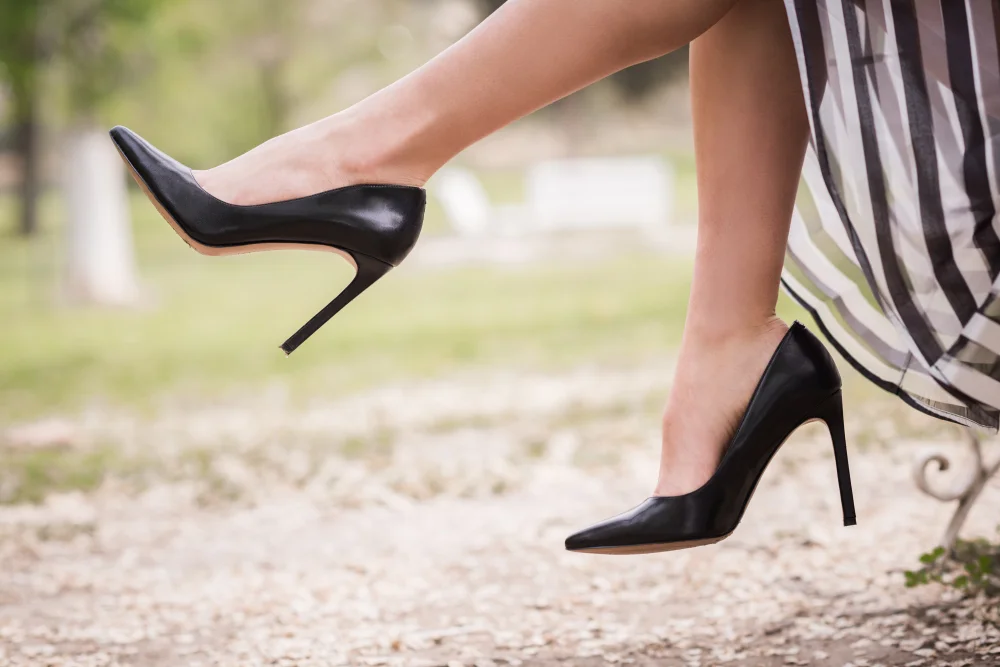
You open your wardrobe. Twenty outfits. Eight pairs of shoes. And somehow, nothing feels right.
This isn’t about having too few shoes. It’s about having the wrong ones — trendy pairs that only match one specific look, duplicates of things you already own, and gaps where the actually useful pairs should be.
The fix isn’t buying more. It’s knowing which seven shoes do the heavy lifting for everything else. Once you have these, getting dressed becomes fast, effortless, and intentional.
The short answer: The best shoes for any woman’s wardrobe are flat sandals, white sneakers, black pumps or block heels, nude/beige flats, ankle boots, embellished ethnic sandals, and loafers. These seven types cover casual, formal, traditional, and modern outfits — and they all work across a South Asian wardrobe (kurtis, shalwars, abayas) as much as Western clothing.
Why Most Women’s Shoe Collections Don’t Actually Work
You’d think more shoes = more options. In practice, the opposite is true.
Most women’s collections are full of shoes that each work with only one outfit. A pair of neon heels bought for a wedding. Chunky sandals that looked amazing in the shop but clash with everything at home. Trainers that only match activewear.
The result? You own a lot, but you use four pairs on repeat — and two of those are falling apart.
The problem isn’t your taste. It’s the strategy.
A strong shoe wardrobe isn’t built on trends. It’s built on versatility principles — shoes chosen because they solve multiple outfit problems at once.
The Versatility Test Every Shoe Must Pass
Before adding any shoe to your wardrobe (including the ones in this guide), ask three questions:
- Does this pair work with at least five different outfits I already own?
- Does it cover at least two different occasions (casual AND work, or casual AND formal)?
- Will I still reach for it in two years?
If a shoe fails two or more of these, it’s a specialty piece — not a wardrobe essential. Buy it only if you have a specific use case.
Why South Asian Women Have an Extra Challenge
Most “must-have shoe” guides are written for Western wardrobes: jeans, blazers, dresses.
If your wardrobe includes kurtis, shalwar kameez, abayas, or festive Pakistani wear — which most of ours does — those lists leave significant gaps. A loafer styled for trousers looks completely different under a long kurti. A block heel works for a Western dress but also for a formal lawn suit.
This guide is built for both realities. Every shoe on this list works across South Asian and Western outfits, so nothing in your existing wardrobe gets left behind.
The 7 Best Shoes Every Woman’s Wardrobe Needs
1. Flat Sandals — Your Most-Reached-For Pair
What they are: Simple, flat, open-toe sandals. Leather, faux leather, or quality synthetic straps. No embellishment, no hardware overload. Clean and minimal.
Why they earn the #1 spot:
Flat sandals are the most genuinely versatile shoe type that exists. They work under casual kurtis, with palazzo trousers, with jeans, with summer dresses, with linen co-ords. They work in 38°C heat and with light cardigans in winter.
No other shoe type covers that much ground.
What to look for:
- Neutral color: tan, camel, nude, or black (all four are useful, start with tan or black)
- Sole thickness: 1–1.5cm minimum — thinner soles make your feet ache on hard floors
- Strap width: medium — too thin breaks easily, too wide looks clunky
- Material: leather or high-quality faux leather (fabric sandals stretch and look worn fast)
The Blyssn rule: If you could only own one pair of shoes, it would be a tan flat sandal. Nothing pairs better with a white cotton kurti. Nothing works harder.
What they don’t work for: Very formal events, rainy days, long walking days on uneven ground.
2. White Sneakers — The Modern Wardrobe Anchor
What they are: Clean, low-profile white sneakers. Minimal logo, simple silhouette. Think clean canvas or leather trainers, not chunky athletic shoes.
Why they work:
White sneakers do something no other casual shoe does — they make an outfit look intentional without effort. A simple kurti and white sneakers looks styled. Jeans and a plain top with white sneakers looks put-together. They bring a freshness to outfits that black shoes often can’t.
They’ve been “in” for fifteen years and show no sign of stopping. This is about as close to a timeless casual shoe as exists.
What to look for:
- Keep the silhouette slim and low — chunky white sneakers work for specific looks, not everything
- All-white or white with minimal detailing — once logos dominate, pairing becomes harder
- Easy to clean — mesh stays dirty, canvas and leather wipe down properly
Pairing examples:
- White sneakers + straight-leg jeans + tucked-in shirt = effortless and polished
- White sneakers + casual kurti (cotton, solid color) = modern, relaxed, clean
- White sneakers + wide-leg trousers + tucked blouse = contemporary and comfortable
What they don’t work for: Traditional or formal Pakistani outfits, formal work settings, weddings or events with dressy dress codes.
3. Block Heels or Kitten Heels — Your Formal Workhorse
What they are: A low-to-mid heel (4–7cm) with a stable base. Block heels have a wide, square heel. Kitten heels have a slim, short heel (under 5cm). Both provide elevation without the instability of stilettos.
Why they matter:
Every wardrobe has formal moments — weddings, office presentations, family events, dinners. Flat shoes often underpower these occasions. Stilettos are uncomfortable and hard to walk in on most surfaces in Pakistan (uneven pavements, grass lawns, marble floors).
Block or kitten heels solve both problems. They elevate an outfit visually, signal formality, and remain walkable for 4–6 hours.
What to look for:
- Neutral color first: black, nude, or metallic (gold/silver covers ethnic events)
- Closed toe for formal settings, open toe for semi-formal
- Heel height: 4–6cm is the sweet spot — elevated enough to be formal, low enough to last
When each works:
- Black block heel: Office, semi-formal dinners, modern Pakistani formal outfits
- Nude kitten heel: Formal events, weddings, formal lawn suits — disappears visually and elongates the leg
- Gold or silver block heel: Ethnic formal wear, Eid outfits, weddings — works where embellished shoes are too heavy
The insider rule: If you’re choosing between one neutral and one metallic, get the metallic first if you attend desi events regularly. Gold heels work at weddings, Eid, formal dinners, and even semi-formal occasions. A nude heel, while versatile, won’t survive a wedding floor as well visually.
4. Nude or Beige Flats — The Underrated Powerhouse
What they are: Closed-toe flat shoes (ballet flat or pointed flat style) in nude, beige, or skin-tone shades. No hardware, no embellishment. Simple and clean.
Why they belong in your wardrobe:
Most people overlook nude flats because they don’t look exciting. That’s exactly what makes them valuable.
Nude flats disappear against the leg, creating an unbroken line from ankle to floor. This makes you look taller and your outfits look more cohesive. They work with formal trousers, abayas, long kurtis, midi skirts, and dress pants without competing with any other element.
Where they outperform every other shoe:
- Under a long formal kurti or shalwar kameez: nude flats keep the attention on the outfit, not the shoes
- With an abaya or long dress: the continuous leg-to-shoe color line creates an elegant silhouette
- At the office: polished and professional without the commitment of heels
What to look for:
- Color match: find a shade close to your own skin tone — this is where the “disappearing” effect works
- Pointed toe elongates the look further; rounded toe is more casual
- Avoid thin, flimsy ballet flats — they wear out in weeks. Look for structured soles with some cushioning.
What they don’t work for: Casual everyday wear (they look too “officey”), heavy embroidered formal outfits (they visually underpower the look), any setting with significant walking on rough ground.
5. Embellished Ethnic Sandals (Khussa or Embellished Heels) — The Desi Essential
What they are: Either traditional khussas/mojris (flat, hand-crafted ethnic shoes with embroidery or embellishment) or embellished heeled sandals with mirror-work, stone-setting, or metallic detail.
Why a South Asian wardrobe needs this:
This is the one shoe category that Western “wardrobe essentials” guides completely miss — and it’s the one most Pakistani women’s wardrobes already overindex on.
Embellished ethnic shoes are not optional if your wardrobe includes formal Pakistani wear. A formal embroidered kurti, a gharara, a bridal lehenga, or heavy festive wear needs a shoe that matches its visual weight. Plain nude flats or basic heels will look underwhelming. Over-the-top Western stilettos often clash with the aesthetic.
Khussas and embellished sandals bridge this gap perfectly.
What to own:
- One pair of embellished flat sandals or khussas: Covers casual and semi-formal ethnic wear. Worked embroidery, mirror-work, or metallic thread. Perfect under printed lawn suits and casual festive outfits.
- One pair of embellished heeled sandals (optional but recommended): For weddings, formal events, and heavy festive wear. Gold or silver base, 5–8cm heel.
Pairing guide:
- Heavy embroidered kurti → embellished heeled sandal
- Printed lawn casual → flat khussa or embellished flat sandal
- Festive short kurti with palazzo → embellished sandal (flat or low heel)
- Bridal or formal event wear → embellished heeled sandal in gold or silver
The Blyssn rule for embellished shoes: Match the level of embellishment to the outfit’s heaviness. Light embroidery → light embellishment on the shoe. Heavy formal wear → statement shoe. When the shoe competes with the outfit, the whole look loses.
Read Also: How to Wear Kurtis with Confidence: The Complete Shoe Guide
6. Ankle Boots — The Transition Season Game-Changer
What they are: Short boots that end at or just above the ankle. Chelsea boot style (no laces, elastic side panels) or heeled ankle boot. Leather or faux leather.
Why they earn a place:
Ankle boots solve the October-to-February wardrobe problem that flat sandals and sneakers can’t. When it’s too cold for sandals but too warm for full boots, ankle boots fill the gap perfectly.
They also add structure and edge to outfits that otherwise read as “safe.” A simple midi dress with ankle boots looks more put-together than the same dress with flats. A straight-leg trouser with ankle boots looks sharper than the same trouser with sneakers.
What to look for:
- Chelsea boot style (no laces): Most versatile — works with dresses, trousers, and even midi kurtis
- Color: Black first (works everywhere), tan or cognac second (warmer outfits, more casual)
- Heel: Flat or block heel. Pointed-toe ankle boots with a small block heel are the most versatile shape.
- Avoid: Overly chunky platform ankle boots or highly embellished styles — they narrow pairing options significantly
Pairing examples:
- Black ankle boots + straight-leg jeans + oversized blazer = effortlessly put-together
- Black ankle boots + midi skirt = elevated and feminine
- Tan ankle boots + casual shalwar with a modern cut = fusion look that works for outings
- Chelsea boots + flared trousers = clean, polished silhouette
What they don’t work for: Very traditional ethnic outfits (embroidered formal wear, wedding looks), hot summer weather, heavily casual settings where they feel overdressed.
Read Also: Different Ways to Style Cowboy Boots for Women
7. Loafers — The Office-to-Outing Shoe That Does It All
What they are: Slip-on shoes with a flat or very low heel, typically with a moccasin-style toe box. Classic loafers, penny loafers, or horsebit loafers. Leather, suede, or quality faux leather.
Why they round out the list:
Loafers are the one shoe that genuinely bridges smart-casual and formal. They’re more polished than sneakers but less “event-ready” than heels. This is a gap that most wardrobe collections leave unaddressed — and it’s one of the most-needed categories for working women.
They work for office settings, university, casual outings, and most situations where sneakers are too casual but heels are too much.
What to look for:
- Black loafers are the most versatile starting point
- Brown or tan for a more relaxed, warm-toned wardrobe
- Look for a slightly structured toe box — overly soft loafers look sloppy
- Avoid novelty hardware or loud logos if you want maximum versatility
Pairing examples:
- Black loafers + tailored trousers + button-down shirt = sharp and professional
- Brown loafers + straight jeans + cardigan = smart casual
- Loafers + wide-leg trousers + tucked blouse = contemporary office look
- Black loafers + A-line midi skirt = feminine and polished
The Blyssn insight: Loafers are one of the few shoes that look better with wide-leg trousers — a silhouette many Pakistani women love but struggle to finish properly. The structured toe of a loafer anchors the wide hem and creates visual balance.
Shoe Mistakes That Are Quietly Ruining Your Outfits
You can own every shoe on this list and still get it wrong. These are the mistakes that undo everything.
Mistake 1: Buying Colors That Only Match One Outfit
You find stunning shoes in a very specific shade — say, dusty mauve or cobalt blue. You buy them because they’re beautiful. They match exactly one outfit, and you wear them twice a year.
The fix: For your core seven pairs, stay in the neutral family: tan, black, nude, white, cognac, and metallic. These don’t need to “match” anything — they harmonize with everything. Save specific colors for shoes you already have strong pairings for.
Mistake 2: Ignoring the Occasion-to-Shoe Energy Balance
Wearing heavy formal heels to a casual lunch makes you look overdressed and uncomfortable. Wearing flat sandals to a formal event makes the most stunning outfit look unfinished.
Every shoe has an “occasion weight.” Flat, minimal shoes = casual. Heels, structure, embellishment = formal. Your shoe should match the occasion’s energy, not just your outfit’s color.
The fix: Ask “what is the energy of this occasion?” before choosing shoes, not “what matches this color?”
Mistake 3: Letting Comfort Stop You Before You Start
Many women dismiss heels entirely because “they hurt.” Many avoid loafers because “they look too stiff.” The problem is usually not the shoe type — it’s the wrong fit, wrong height, or wrong quality.
The fix: Try the shoe type in the right specifications first. A 4cm block heel that fits your foot is a completely different experience from a 9cm stiletto that doesn’t. Don’t rule out entire categories based on bad experiences with the wrong version.
Mistake 4: Keeping Worn-Out Shoes Out of Loyalty
That pair of sandals that served you well for three years — if the sole is peeling, the strap is cracked, or the color is gone, they are making your outfits look worse. You don’t have to bin them immediately, but they shouldn’t be your first reach.
The fix: Audit your wardrobe every six months. Anything visibly worn beyond repair goes to the front door (donate or discard), not the back of the shelf.
Pro Tips That Will Change How You Shop for Shoes
1. Buy the neutral version of a shoe before the trendy one.
Every time you see a shoe you love in a statement color, imagine it in black, tan, or nude. If you’d wear the neutral version five times a week, buy the neutral first. The statement version is a bonus, not a starting point.
2. A shoe’s first outing should not be a high-stakes event.
New heels at a wedding is a recipe for blisters and regret. Wear new shoes at home for an hour. Walk on hard floors. Break the sole in. Then take them to the event.
3. Spend more on the four you wear daily, less on specialty pieces.
Your flat sandals, white sneakers, loafers, and one versatile heel will be worn fifty to a hundred times per year. These are worth investing in. Your embellished wedding sandal gets worn five to ten times. Basic quality is fine for that.
4. The “cost per wear” calculation changes everything.
A Rs. 8,000 pair of quality flat sandals worn 80 times costs Rs. 100 per wear.
A Rs. 2,500 trendy pair worn 4 times costs Rs. 625 per wear.
Which is actually expensive?
5. For South Asian wardrobes, two shoe categories are non-negotiable.
Every guide will tell you to get flat sandals, sneakers, and heels. Almost none will tell you to get embellished ethnic footwear. If your wardrobe includes Pakistani formal wear — and most of ours does — that category is as essential as white sneakers are to a Western capsule wardrobe.
Your Shoe Wardrobe At a Glance
| Shoe Type | Best For | Occasions | Priority |
|---|---|---|---|
| Flat sandals (tan/black) | Everything casual | Daily, errands, casual outings | Start here |
| White sneakers | Modern casual, kurtis, jeans | Daily, casual outings | Start here |
| Block/kitten heel | Formal, office, events | Office, dinners, formal events | Essential |
| Nude/beige flats | Formal without heels | Office, formal outings, under abayas | Essential |
| Embellished ethnic sandals | Pakistani formal & festive wear | Weddings, Eid, formal events | Essential (South Asian wardrobe) |
| Ankle boots | Smart casual, autumn/winter | Outings, casual office, colder months | Add when ready |
| Loafers | Office, smart casual | Work, university, outings | Add when ready |
The build order: Start with flat sandals + white sneakers + one block heel. Add nude flats + embellished sandals next. Finish with ankle boots and loafers as the wardrobe grows.
Read Also: Dressing Like a TradWife: A Timeless, Practical, and Authentic Style Guide
Frequently Asked Questions
What shoes should every woman own?
Every woman’s wardrobe needs at minimum: a pair of flat sandals in a neutral color, white sneakers, and one pair of formal heels (block or kitten). For South Asian wardrobes, embellished ethnic sandals or khussas are equally essential. These four types cover the majority of daily occasions without requiring dozens of pairs.
What is the most versatile shoe a woman can own?
Tan or black flat sandals are the single most versatile shoe in any wardrobe. They work with casual kurtis, jeans, palazzo trousers, summer dresses, and everyday outfits regardless of the season. No other shoe type covers the same range of outfit types and occasions at the same comfort level.
How many pairs of shoes does a woman actually need?
Seven to ten well-chosen pairs is enough for most women’s full wardrobe. The key is that each pair serves a distinct purpose — casual, formal, ethnic, athletic, transitional. More than ten pairs usually means duplicates or pairs that only match one outfit. Quality and versatility over quantity.
What shoes never go out of style?
Classic flat sandals, white sneakers, nude flats, block heels, loafers, and black ankle boots have remained wardrobe staples for over two decades and show no sign of changing. These are grounded in function and proportion, not trend cycles, which is why they endure. Embellished ethnic sandals and khussas are similarly timeless within South Asian fashion.
What shoes go with everything?
Tan flat sandals and white sneakers come closest to “goes with everything” in a casual context. For formal settings, nude or metallic heels are the most universally compatible choices. The reason these work is that they don’t compete with the outfit — they complement it without adding visual noise.
Can the same shoes work for both Pakistani and Western outfits?
Yes — and this is the key to building a truly efficient wardrobe. Tan flat sandals, nude flats, and gold block heels all work across both wardrobes. The only category that stays strictly ethnic is embellished khussas and heavy traditional sandals. Everything else, if chosen in neutral tones, crosses between Pakistani and Western outfits easily.
The Real Reason Shoes Matter (And It’s Not What You Think)
A well-chosen shoe doesn’t just complete an outfit. It tells you something about how much thought you gave to getting dressed — and that communicates directly to how you carry yourself.
When your shoes fit the occasion, match the outfit’s energy, and actually work with what you’re wearing, you walk differently. You’re not distracted by whether your look “works.” You just know it does.
That confidence is invisible but unmistakable.
You don’t need twenty pairs to get there. You need seven good ones, chosen intentionally.
Start with flat sandals, white sneakers, and one heel. Build from there. Every pair you add from this point is a deliberate upgrade — not a gap-filler.
And the next time you open that wardrobe, everything will have a match.
Want to take this further? Read our guide on: How to Dress More Feminine? A Practical, Expert-Backed Guide Rooted in Real Experience , it pairs everything you just learned with the clothing side of the equation.