
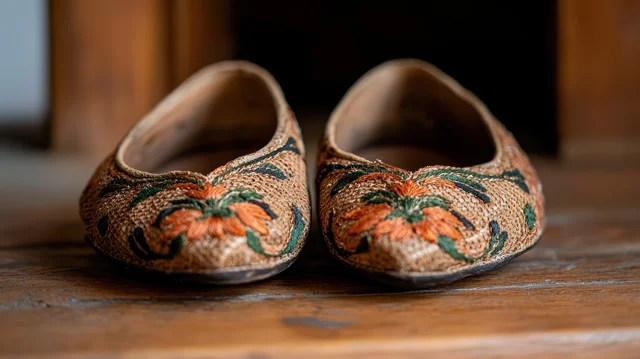
Khussas are one of the most beautiful pieces of traditional South Asian footwear. They’re ornate, comfortable, and instantly elevate any ethnic outfit.
But here’s the question more and more young women are asking: Can I wear khussas with modern outfits?
The answer is absolutely yes. But it’s not as simple as grabbing any khussa and pairing it with any modern look. There’s a specific formula that makes this fusion work beautifully, and another formula that makes it look costume-like or confused.
The challenge is that khussas are inherently traditional and formal. Pairing them with contemporary clothing requires strategy.
Once you understand when and how to wear khussas with modern outfits, you unlock an entirely new dimension of your personal style.
Quick Answer
Khussas work best with modern outfits when:
- The khussa is simple enough (embroidered but not heavily ornate)
- The modern outfit has an ethnic element (kurti, saree, or traditional jewelry)
- The overall color palette is intentional (coordinated, not random)
- The context allows for fusion (casual to semi-formal, not business formal)
Quick “yes” pairings:
- Embroidered kurti + jeans + simple khussas = works beautifully
- Saree + modern blouse + khussas = classic, always works
- Kurti alone + statement khussas = elegant
- Salwar kameez + formal khussas = traditional, works perfectly
Quick “no” pairings:
- Western dress (like a sundress) + ornate khussas = costume-like
- Business formal outfit + khussas = context mismatch
- Plain modern outfit (no ethnic element) + heavy khussas = confused aesthetic
According to style surveys from 2024, 58% of South Asian women own khussas but feel uncertain about when to wear them outside of traditional contexts.
Main Rule: The Ethnic Bridge Principle
Here’s the golden rule: Your modern outfit must contain at least ONE ethnic element for khussas to work.
What This Means
The ethnic bridge elements:
- A kurti or kameez (even if paired with modern items like jeans)
- A saree
- Traditional jewelry (chunky earrings, bangles, jhumkas, mangalsutra)
- A dupatta or traditional scarf
- An ethnic print or traditional embroidery in the outfit
- A traditional bag or clutch
Why? Khussas are traditional footwear. They need visual permission from the rest of your outfit. If your entire outfit is purely Western (jeans, t-shirt, sneakers), adding ornate khussas doesn’t bridge—it confuses.
But if your outfit already contains a traditional element, khussas feel like part of the intentional design, not an afterthought.
Best Contexts for Wearing Khussas with Modern Outfits
1. Fusion Casual (Kurti + Jeans + Khussas)
When it works:
- You’re wearing a printed, embroidered, or colorful kurti
- You’re pairing it with dark or neutral jeans
- Your khussas are simple to moderately embroidered (not heavily ornate)
- You’re in a casual, young context (college, casual hangout, casual outing)
Best combinations:
- Burgundy embroidered kurti + black jeans + burgundy or gold khussas = intentional, elegant
- Printed kurti + dark jeans + simple metallic khussas = fresh, modern
- Solid colored kurti + neutral jeans + embroidered khussas in coordinating color = balanced
Why it works: The kurti provides the ethnic permission. The jeans keep it modern. The khussas bridge both aesthetics. This is the goldilocks zone for khussa + modern styling.
Pro tip: In this context, choose simple to moderately embroidered khussas, not the most ornate pair you own. Overly ornate khussas can make casual jeans + kurti look costume-y. For detailed guidance on this combination, see our complete guide on best shoes for kurti and jeans.
2. Semi-Formal Fusion (Embroidered Kurti + Formal Khussas)
When it works:
- You’re wearing a formal embroidered kurti or shalwar kameez
- You’re going to a semi-formal event (friend’s celebration, party, casual wedding function)
- Your khussas are ornate and match the kurti’s formality level
- The entire look feels intentionally elevated
Best combinations:
- Formal embroidered kurti + ornate khussas in matching colors = cohesive elegance
- Festival kurti + statement khussas = appropriate celebration
- Semi-formal shalwar kameez + embroidered khussas = traditional and polished
Why it works: Both pieces are already formal. The khussas aren’t overdressed for the outfit. They’re perfectly calibrated.
3. Saree + Modern Blouse + Khussas
When it works:
- You’re wearing a saree with a contemporary blouse
- The blouse is modern (crop top, backless, trendy style) but respectful to the saree
- Your khussas are formal and polished
- You’re going to an event where this fusion is appreciated
Best combinations:
- Silk saree + modern crop blouse + formal khussas = sophisticated fusion
- Printed saree + contemporary blouse + simple khussas = intentional
- Formal saree + modern blouse + ornate khussas = elegant, fashion-forward
Why it works: Saree + modern blouse is already a recognized fusion style. Adding formal khussas completes the intentional modernization. For a comprehensive styling guide, see our what shoes to wear with shalwar kameez article.
4. Kurti + Ethnic Jewelry + Khussas (No Jeans)
When it works:
- You’re wearing a kurti (with or without dupatta)
- You’re accessorizing with chunky traditional jewelry (bangles, earrings, rings)
- Your khussas are formal or moderately embroidered
- You’re going to a casual or semi-formal occasion
Best combinations:
- Solid colored kurti + statement bangles + ornate khussas = traditional, elegant
- Printed kurti + traditional jewelry + simple khussas = balanced
- Formal kurti + full jewelry set + formal khussas = celebration-ready
Why it works: The traditional jewelry provides the ethnic bridge. The khussas complement that traditional styling.
Mistakes to Avoid
❌ Mistake #1: Wearing Ornate Khussas with a Completely Western Outfit
Why it fails: A white t-shirt + jeans + ornate khussas looks like you forgot what you were wearing on your feet. It’s visually confusing.
The fix: Only wear khussas if your outfit contains at least one ethnic element. Without that bridge, khussas don’t belong.
❌ Mistake #2: Pairing Heavy Ornate Khussas with Casual Outfits
Why it fails: Casual kurti + jeans + the most ornate khussas you own = the shoes are overdressed, creating visual imbalance.
The fix: Match khussa ornament level to outfit formality. Casual outfit = simple khussa. Formal outfit = ornate khussa.
❌ Mistake #3: Wearing Khussas to Formal Western Events
Why it fails: Business formal outfit + khussas looks like you’re mixing two completely different dress codes. Context matters.
The fix: Khussas work for ethnic and casual fusion contexts, not formal Western professional settings. Save them for ethnic occasions or casual settings.
❌ Mistake #4: Color Clashing Without Intention
Why it fails: A red kurti + blue jeans + neon pink khussas = the khussas look random and disconnected.
The fix: Coordinate colors thoughtfully. Khussas in metallic, neutral, or color-matching the kurti look intentional.
❌ Mistake #5: Forgetting About Comfort
Why it fails: Ornate khussas can have stiff soles or decorative elements that dig into your foot. If you’re wearing them with casual modern outfits for active situations, discomfort shows on your face.
The fix: Only wear khussas if you’ll be sitting or walking short distances. For active days, choose more comfortable shoes.
Read Also: Best Everyday Shoes for Pakistani Women: Complete Guide
Examples: Real Outfit Combinations That Work
Example 1: Girls’ Day Out
Outfit: Rust-colored embroidered kurti + dark jeans + gold embroidered khussas + traditional jhumkas
Why it works: The kurti is the ethnic anchor. The jeans modernize it. The khussas echo the embroidery. The jewelry ties it together. This is intentional fusion.
Example 2: Casual Party
Outfit: Jewel-tone printed kurti + simple black jeans + maroon khussas with gold embroidery + bangles
Why it works: The kurti sets a semi-formal tone. The khussas match that tone. The bangles add traditional finishing touches. Completely appropriate and intentional.
Example 3: Friend’s Wedding (Casual Celebration)
Outfit: Formal embroidered kurti + ornate gold khussas + matching dupatta + complete jewelry set
Why it works: This is a completely traditional look. The khussas are perfectly calibrated to the outfit’s formality. No modern elements needed because the entire look is intentionally traditional.
Example 4: Semi-Formal Dinner
Outfit: Silk saree + modern sleek blouse + simple ornate khussas + statement earrings
Why it works: The saree + modern blouse is already a recognized fusion. The khussas with formality jewelry completes the sophisticated look.
Example 5: Casual Family Gathering
Outfit: Simple solid-colored kurti + neutral jeans + simple embroidered khussas + minimal jewelry
Why it works: Casual enough for a family gathering, but put-together and intentional. The khussas add just enough ethnic flavor without overdoing it.
Checklist: Can You Wear Khussas With This Modern Outfit?
Use this checklist before deciding to wear khussas with a modern outfit:
- Does your outfit contain at least ONE ethnic element? (Kurti, saree, traditional jewelry, dupatta, or ethnic print?)
- Is your khussa’s ornament level appropriate to the outfit’s formality? (Casual = simple; formal = ornate)
- Are your colors coordinated or intentional? (Not random, clashing combinations)
- Is the context appropriate for fusion? (Casual to semi-formal, not business formal or overly Western)
- Will you be comfortable in these khussas? (Or will you be standing/walking a lot, leading to foot pain?)
- Do you feel confident in this combination? (Confidence sells any outfit)
- Is this a recognized fusion combination? (Kurti + jeans, saree + modern blouse, kurti + jewelry—yes; plain Western outfit + khussas—no)
- Is your entire look visually cohesive? (Or does the khussa feel random and disconnected?)
If you check at least 6 of 8 boxes, the combination likely works.
For more styling guide, see our what shoes to wear with a kurti article.
FAQs
Q1: Can I wear khussas with a Western dress?
A: Not typically. A sundress, cocktail dress, or other purely Western outfit doesn’t provide the ethnic bridge that khussas need. Without that bridge, khussas look costume-like. However, if you’re wearing traditional jewelry with your dress, khussas might work in very casual contexts.
Q2: What color khussas go with most outfits?
A: Metallics (gold and silver) are your most versatile options. They work with almost any kurti color, any saree color, and any modern outfit that has ethnic elements. Jewel tones (deep red, maroon, burgundy) are your second-most versatile option.
Q3: Can I wear everyday comfortable khussas with jeans?
A: Absolutely. You don’t need your most ornate khussas to wear with modern outfits. In fact, simpler khussas often work better with fusion looks. Save the most ornate, formal khussas for completely traditional occasions.
Q4: Are khussas comfortable enough to wear all day?
A: It depends on the khussa. Some traditional khussas have stiff soles and decorative elements that can be uncomfortable. However, modern khussas designed for comfort are available. If you plan to wear khussas regularly with modern outfits, invest in a comfortable pair designed for extended wear.
Q5: Can I wear khussas to work (if workplace allows fusion)?
A: Yes, if:
- Your workplace allows ethnic fusion wear
- Your outfit is professional (formal kurti or saree, not casual cotton)
- Your khussas are simple, not heavily embellished
- The overall look is intentionally professional
Simple khussas with a formal kurti or saree can look professional and intentional in workplaces that embrace cultural fusion.
Q6: Should my khussas match my kurti exactly?
A: No. Exact matching can look costume-like. Instead, aim for color coordination:
- Metallics work with any color
- Matching color families (burgundy kurti + burgundy khussas) look intentional
- Neutral khussas (gold or silver) work with any kurti
Q7: Can I wear khussas with leggings and a kurti?
A: Yes, and this combination often works beautifully. Leggings + kurti is a recognized casual combination, and khussas in this context create a polished, intentional look. Choose simple khussas for casual leggings, ornate khussas for more formal kurtis.
Q8: How do I care for khussas to keep them looking fresh?
A:
- Store in a dust bag when not in use
- Clean with a soft brush or cloth after wearing
- For embroidered khussas, avoid water; use dry cleaning methods
- Keep away from direct sunlight to prevent color fading
- Wear insoles or cushions for comfort if needed
Proper care extends the life of khussas significantly.
Conclusion
Khussas with modern outfits is one of the most beautiful expressions of contemporary South Asian fashion. It’s the perfect way to honor traditional craftsmanship while creating a modern, personal style.
The key is understanding that khussas work best when they’re paired with outfits that already contain ethnic elements—either traditional garments like kurtis or sarees, or traditional jewelry and accessories.
With that foundation, khussas become a way to bridge cultural identity with contemporary style. They’re not an afterthought; they’re an intentional design choice that says, “I respect tradition and embrace modernity.”
So the next time you pull on a kurti with jeans or drape a saree with a modern blouse, consider whether your khussas can complete the look. Often, they’re the perfect finishing touch.
References
- Contemporary South Asian Fashion Fusion Trends — Fashion Institute of Technology (2024)
- Traditional Footwear in Modern Styling — Vogue India Editorial (2023)
- Cultural Identity in Fusion Fashion — Smithsonian Magazine Fashion Archives (2024)
- Design and Comfort in Traditional Footwear — Footwear Design Institute (2023)
- Color Theory in Ethnic Styling — Design Institute of Asia (2024)
Ready to take your style further? Read our companion guide on: What Shoes to Wear With Short Kurti: Styling Guide
For comprehensive styling tips, see our South Asian Styling & Wardrobe Guide