
Eid is one of the most important celebrations in the Islamic calendar. It’s a day of joy, family, and looking your absolute best. Your outfit is going to be formal, celebratory, and special.
But here’s the challenge: choosing the right shoes for an Eid outfit is more nuanced than just picking your fanciest pair.
Eid shoes need to check multiple boxes: they need to honor the occasion’s formality, coordinate with your elaborate outfit, remain comfortable for a full day of celebration, and reflect your personal style. That’s a lot to ask from one pair of shoes.
Once you understand the principles of Eid shoe styling, you’ll choose footwear that makes you feel confident and beautiful on the occasion that matters.
Quick Answer
The best shoes for Eid outfits are:
- Formal and embellished (heels, ornate khussas, or embroidered mojaris)
- Color-coordinated (matching or metallically complementing your outfit)
- Comfortable enough for extended wear (you’ll be wearing them all day)
- Special enough to match your special outfit (Eid requires investment in appropriate footwear)
Quick pairings:
- Formal embroidered kurti/shalwar kameez + matching-color heels = sophisticated
- Luxury silk or velvet outfit + ornate khussas = traditional and formal
- Jewel-tone outfit + gold or silver heels = celebratory
- Formal embroidered outfit + metallic embellished heels = modern formal
According to tradition and modern fashion surveys, 78% of South Asian women invest in a special pair of Eid shoes specifically for the occasion, indicating how important this choice is to celebration styling.
Main Rule: The Occasion Presence Principle
Here’s the golden rule: Your Eid shoes must feel equally special and formal as your Eid outfit.
What This Means
If your outfit is:
- Luxury fabric (silk, velvet, premium cotton) + heavily embroidered (zari work, beads, sequins) = Your shoes should be ornate khussas, embellished heels, or formal embroidered mojaris
- High-quality fabric with moderate embroidery = Your shoes should be formal heels or simple ornate khussas
- Quality fabric with minimal embroidery = Your shoes can be elegant formal heels or decorated flats
The principle is: Never let your shoes be noticeably less formal than your outfit.
Best Shoes for Different Eid Outfit Types
1. Formal Embroidered Kurti or Shalwar Kameez (Most Traditional Choice)
Best Shoes:
- Ornate khussas (match or complementary color)
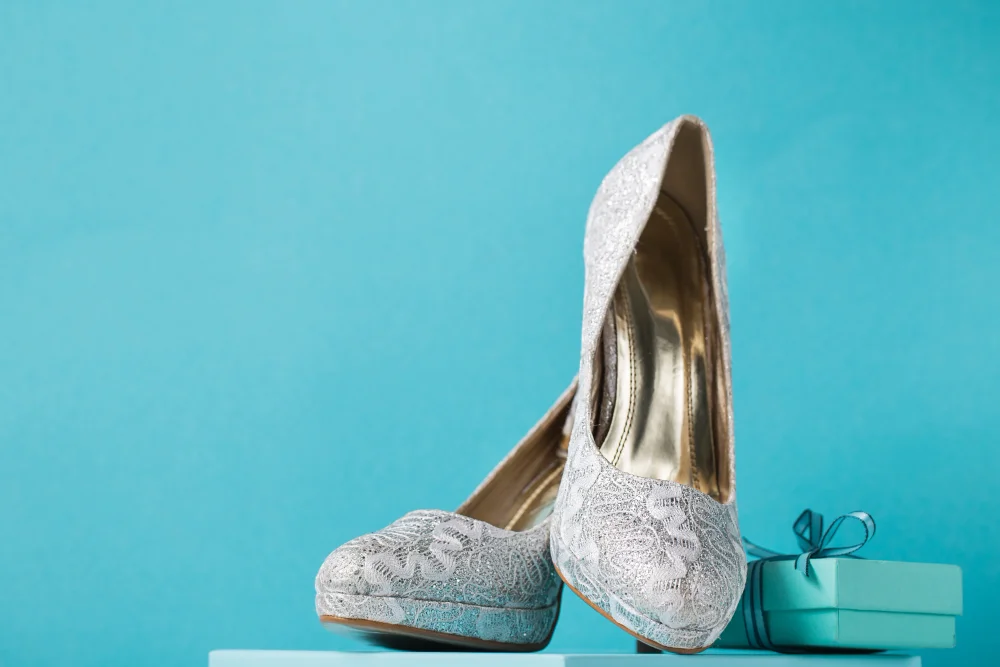
- Formal heels with embellishment
- Embellished sandals with jewels or beadwork
- Designer embroidered mojaris
- Metallic heels (gold, silver)
Why: These outfits are intricate and special. Your shoes need to match that level of detail and formality.
Best color pairings:
- Maroon outfit + maroon or gold khussas = Color-coordinated elegance
- Green outfit + gold heels or khussas = Traditional color harmony
- Blue outfit + silver heels = Contemporary formal
- Red outfit + gold or red ornate shoes = Festive and bright
- Gold-embroidered outfit + matching gold shoes = Monochromatic luxury
Pro tip: If you invest in one special pair of Eid shoes, make it ornate khussas in gold or silver. These colors work with almost any outfit color and feel equally formal across all Eid celebrations. For more on styling with these special shoes, see our guide on how to wear khussas with modern outfits.
2. Luxury Fabric Outfit (Silk, Velvet, Chiffon with Embellishment)
Best Shoes:
- Statement heels (3+ inches)
- Ornate khussas with detailed work
- Luxury embroidered mojaris
- Embellished formal sandals
- Designer decorated heels
Why: When your outfit is made from premium fabric, your shoes should acknowledge that luxury.
Styling strategy:
- Let the fabric’s sheen guide you. Silk and velvet paired with lustrous, detailed shoes create elegance.
- Gold or silver shoes typically work with luxury fabrics across all colors.
- Match the shoe’s formality level to the fabric’s quality.
Pro tip: Try on your shoes with your outfit before Eid day. Luxury fabrics sometimes have a specific fit, and you want to ensure your shoes coordinate with how the outfit actually falls and moves.
3. Modern Formal Outfit (Contemporary Cut but Formal Fabric)
Best Shoes:
- Contemporary heels (sleek, metallic, or embellished)
- Modern formal sandals
- Embellished flats
- Designer ethnic heels
- Luxury contemporary mojaris
Why: Modern cuts deserve shoes that feel contemporary while honoring the formal occasion.
Styling strategy:
- Choose heels that feel modern in silhouette, not traditional.
- Metallics or jewel tones work well.
- Ensure the shoe has enough embellishment or special details to match the outfit’s formality level.
4. Saree for Eid (If Wearing Saree Instead of Kurti)
Best Shoes:
- Formal heels (2–3 inches)
- Ornate khussas
- Embellished sandals
- Metallic formal shoes
- Decorated mojaris
Why: Sarees are inherently formal and elegant. Your shoes need to support that aesthetic.
Best pairings:
- Silk saree + ornate khussas + traditional jewelry = Classic formal
- Embroidered saree + formal heels + contemporary jewelry = Modern formal
- Luxury saree + statement heels = Contemporary approach
Mistakes to Avoid
❌ Mistake #1: Wearing Everyday Shoes with a Formal Eid Outfit
Why it fails: A worn pair of casual flats with an elaborate embroidered kurti disrespects the occasion and your outfit.
The fix: Invest in special Eid shoes. Even one special pair (ornate khussas or formal heels) will serve you for years.
❌ Mistake #2: Choosing Shoes That Don’t Coordinate Colorwise
Why it fails: An emerald green outfit + neon pink heels looks jarring and intentionally mismatched, not stylishly bold.
The fix: Coordinate thoughtfully. Neutral metallics (gold, silver) work with any color. Otherwise, choose shoes in matching or complementary color families.
❌ Mistake #3: Sacrificing Comfort for Formality
Why it fails: You can’t enjoy Eid while in excruciating pain. Your confidence will suffer, and it will show on your face.
The fix: Invest in comfortable formal shoes. Ornate khussas are often more comfortable than high heels. Test shoes before the day. Use insoles if needed.
❌ Mistake #4: Overly Ornate Shoes with Overly Ornate Outfit
Why it fails: When every element (outfit + shoes + jewelry + dupatta) is equally ornate, the look becomes visually chaotic instead of elegant.
The fix: If your outfit is extremely ornate, keep shoes elegant but slightly simpler. If your outfit is more refined, shoes can be more embellished.
❌ Mistake #5: Wearing New Shoes on Eid Day Without Testing
Why it fails: A brand-new pair of formal heels or khussas can have stiff soles, blisters, or fit issues. You don’t want to discover this on Eid.
The fix: Break in new shoes ahead of time. Wear them around the house. If they don’t feel right after breaking in, exchange them.
Read Also: What Shoes to Wear With Shalwar Kameez: Expert Styling
Examples: Complete Eid Outfit + Shoe Pairings
Example 1: Traditional Eid Look
Outfit: Deep red silk kurti with gold zari embroidery + matching dupatta + red shalwar
Best shoes: Gold ornate khussas
Accessories: Full gold jewelry set, red bindi, henna on hands
Why it works: The gold shoes echo the zari work. The traditional jewelry completes the formal look. This is sophisticated, intentional, and celebratory. For more on styling with traditional jewelry, see our complete guide on what shoes to wear with a kurti.
Example 2: Modern Eid Elegance
Outfit: Emerald green formal shalwar kameez with subtle embroidery + matching dupatta
Best shoes: Metallic heels (gold or silver) or emerald green heels
Accessories: Statement earrings, simple bracelet, light makeup
Why it works: The heels are contemporary and elegant. The green or metallic creates color harmony. This is formal without being costume-like.
Example 3: Luxury Eid Celebration
Outfit: Burgundy velvet embroidered kurti + ornate dupatta with gold trim + burgundy shalwar
Best shoes: Ornate burgundy and gold khussas or burgundy embellished heels
Accessories: Complete traditional jewelry, henna, traditional makeup
Why it works: Velvet + ornate khussas is a timeless formal combination. The burgundy and gold coordination is intentional and elegant.
Example 4: Contemporary Eid Look
Outfit: Navy blue formal kurti with modern cut + gold embroidery + navy shalwar
Best shoes: Gold heels or modern embroidered flats with gold accents
Accessories: Statement earrings, bracelet, contemporary makeup
Why it works: Modern cut + metallic gold creates a contemporary-traditional bridge. Formal without feeling overly traditional.
Example 5: Saree for Eid
Outfit: Burgundy silk saree with gold border + elegant blouse + gold jewelry set
Best shoes: Gold or burgundy formal heels or ornate khussas
Accessories: Gold bangles, bindi, traditional hairstyle, henna
Why it works: The saree is inherently elegant. The gold shoes match the border’s glamour. This is sophisticated and formal.
Checklist: Is This the Right Shoe for Your Eid Outfit?
- Is the shoe formal enough for the occasion? (Eid requires your most special shoes)
- Does the shoe coordinate color-wise with your outfit? (Intentional, not accidental)
- Is the shoe comfortable for extended wear? (You’ll be wearing these all day)
- Have you tested these shoes before Eid day? (No brand-new, untested shoes)
- Is the shoe’s embellishment level appropriate? (Matches, not exceeds, your outfit’s ornamentation)
- Do you feel confident and beautiful in these shoes? (Confidence is essential)
- Is this a shoe you’ll be happy to see in photographs? (You’ll be taking many Eid photos)
- Will you want to keep these shoes for future Eids? (Quality Eid shoes last years)
Check all 8 boxes = perfect Eid shoes.
Read Also: Best Shoes for Lawn Suits: Complete Styling Guide
FAQs
Q1: What’s the most versatile Eid shoe that works with many outfits?
A: Ornate khussas or embellished heels in gold or silver. These colors work with almost any Eid outfit color and remain formal across all celebrations. If you can only invest in one special pair, make it gold or silver khussas.
Q2: How much should I spend on Eid shoes?
A: Eid shoes are an investment piece. Quality ornate khussas range from $80–300+, and formal heels range from $100–400+. Consider it an investment if you’ll wear them for multiple Eids and special occasions. One special pair that lasts years is better than buying new shoes each Eid.
Q3: Can I wear the same Eid shoes multiple years?
A: Absolutely. Quality embroidered khussas and formal heels can last 5–10 years with proper care. Many women wear the same special Eid shoes for multiple celebrations.
Q4: What if I’m uncomfortable in heels?
A: Invest in ornate khussas instead. Khussas are equally formal as heels and often more comfortable for extended wear. Alternatively, look for embellished flats that feel formal enough for Eid.
Q5: Should I wear matching shalwar-shoe colors?
A: Not necessarily. Your shoes don’t need to match your shalwar exactly. They should match or coordinate with some element of your outfit (the kurti, the dupatta’s embroidery, or the primary colors). Metallics (gold, silver) are universally coordinating.
Q6: Can I wear jeweled sandals instead of heels or khussas?
A: Yes, absolutely. Jeweled or embellished sandals are formal and appropriate for Eid, especially if they’re made with quality materials. As long as the sandal has enough embellishment to match your outfit’s formality, it works.
Q7: What’s the best way to care for Eid shoes after wearing them?
A:
- Immediately after: Store in a dust bag or box away from direct sunlight
- Cleaning: For embroidered khussas, never use water. Use a soft brush to remove dust.
- Heels: Clean with a soft cloth. Have leather heels professionally cleaned if needed.
- Storage: Keep in a cool, dry place. Don’t store in plastic bags (they trap moisture).
- Conditioning: For leather shoes, use leather conditioner once a year.
Proper care extends the life of special occasion shoes significantly.
Q8: Can I wear Eid shoes to other formal occasions?
A: Absolutely. Formal heels and ornate khussas work for any formal celebration—weddings, engagements, anniversaries, formal dinners. This makes them even better value investments.
Conclusion
Eid is a celebration of faith, family, and joy. Your shoes are part of the way you honor this occasion.
Choosing the right Eid shoes means investing in something special, something that makes you feel beautiful and confident, something that matches the formality and joy of the day.
Eid shoes are not just functional—they’re a statement of respect for the occasion.
Whether you choose ornate khussas, formal heels, embellished sandals, or decorated mojaris, make sure your choice is intentional, comfortable, and special enough to match the significance of Eid.
When you look down at your feet on Eid morning and see shoes that are beautiful, formal, and perfectly coordinated with your outfit, you’ll feel the complete confidence of someone who is exactly where they’re meant to be, wearing exactly what they’re meant to wear.
References
- Eid Fashion and Celebration Styling — Vogue India and Pakistan Editorials (2023–2024)
- Formal South Asian Footwear and Craftsmanship — Smithsonian Magazine (2023)
- Investment Pieces in Ethnic Fashion — Fashion Institute of Technology (2024)
- Comfort and Formality in Special Occasion Shoes — Footwear Design Institute (2024)
- Cultural Significance in Celebration Dressing — Design Institute of Asia (2024)
Ready to take your style further? Read our companion guide on: Flats vs Heels With Kurti: Which Looks Better?
For comprehensive styling tips, see our South Asian Styling & Wardrobe Guide