

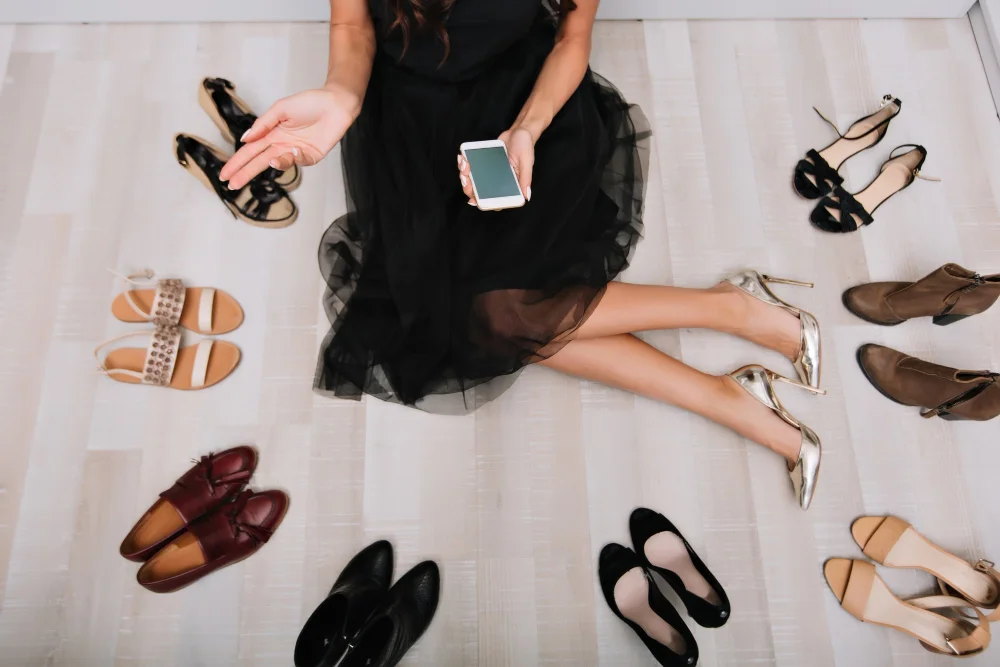
Pakistani women navigate a unique footwear challenge: we need shoes that work with traditional garments (kurtis, shalwar kameez, saris), modern clothing (jeans, dresses), work environments, casual outings, and family gatherings.
We need shoes that are versatile enough to work across our entire life, not just one occasion.
This means building a core wardrobe of everyday shoes that are:
- Comfortable for extended wear
- Versatile across traditional and modern outfits
- Appropriate for multiple climates and seasons
- Durable enough to handle daily wear
- Affordable enough to own multiple pairs
The challenge is knowing which shoes to invest in and which to skip.
Once you understand which shoes form the core of a Pakistani woman’s everyday wardrobe, building the perfect collection becomes straightforward.
Quick Answer
Every Pakistani woman needs these 5 everyday shoe categories:
- Comfortable leather flats or juttis (for traditional wear)
- White sneakers (for everything casual)
- Neutral heels (for semi-formal and work)
- Ethnic sandals or mojaris (for casual traditional wear)
- Formal embroidered shoes or khussas (for celebrations and formal occasions)
These 5 categories will cover 95% of your everyday footwear needs.
Main Rule: The Everyday Shoe Hierarchy
Here’s the principle: Invest in versatile workhorse shoes over specialized single-occasion shoes.
What This Means
Instead of buying a dozen pairs of shoes that each work for one specific outfit, buy fewer shoes that work across multiple outfits, multiple occasions, and multiple seasons.
A truly versatile everyday shoe:
- Works with traditional garments AND modern clothing
- Works across seasons (breathable for summer, pairs well with winter clothing)
- Works from casual to semi-formal contexts
- Remains comfortable after 8+ hours of wear
- Lasts 2+ years with proper care
- Costs under $150 (ideally under $100)
The 5 Core Everyday Shoes Every Pakistani Woman Should Own
1. Leather Juttis or Simple Embroidered Flats
Why everyone needs this:
- Works with casual to semi-formal kurtis
- Comfortable for all-day wear
- Appropriate across age groups
- Bridges traditional and casual contexts
- Affordable and durable
Best materials: Quality leather or fabric Ideal colors: Black, tan, brown, cream, gold Investment level: $30–80
How to wear it:
- Casual kurti + leather juttis = effortless
- Casual shalwar kameez + juttis = comfortable
- Cotton kurtis with jeans + juttis = modern casual
- Works across seasons
Pro tip: Invest in at least 2 pairs in different colors (black and tan are your foundation). Quality leather juttis last 3–5 years, making them excellent value.
2. White or Metallic Sneakers
Why everyone needs this:
- Works with casual kurtis, casual shalwar kameez, AND modern clothing
- Appropriate for college, casual outings, running errands
- Comfortable for active days
- Feels modern and intentional
- Affordable and replaceable
Best materials: Canvas, leather, or mesh Ideal styles: Simple white, metallic silver, or white with subtle accent Investment level: $40–100
How to wear it:
- Printed casual kurti + jeans + white sneakers = iconic casual look
- Solid kurti + white sneakers + crossbody bag = effortless
- Modern outfits + white sneakers = always works
- Summer casual wear + white sneakers = age-appropriate
Pro tip: White sneakers are the MVP of Pakistani women’s everyday shoes. Buy the best quality you can afford. A quality pair will last 2–3 years of regular wear.
3. Neutral Heels (Black or Tan, 2–3 Inches)
Why everyone needs this:
- Works with formal kurtis for work or celebrations
- Appropriate for office environments (if dress code allows)
- Elevates casual outfits for semi-formal occasions
- Appropriate across age groups
- One pair can work with dozens of outfit combinations
Best materials: Leather or quality synthetic Ideal colors: Black (most versatile) or tan/nude Investment level: $50–150
How to wear it:
- Formal kurti + neutral heels + work blazer = professional
- Semi-formal kurti + neutral heels + dupatta = celebratory
- Embroidered shalwar kameez + neutral heels = formal
- Solid colored kurti + neutral heels = instantly elevated
Pro tip: One pair of black heels is one of the best investments a Pakistani woman can make. It works with more outfits than any other shoe in your wardrobe.
Read Also: Flats vs Heels With Kurti: Which Looks Better?
4. Ethnic Sandals or Comfortable Mojaris
Why everyone needs this:
- Works with casual to semi-formal traditional wear
- Comfortable for warm weather
- Appropriate for family gatherings, casual occasions
- Bridges casual and ethnic aesthetics
- Affordable
Best materials: Quality leather, fabric, or embroidered Ideal colors: Neutral leather tones, gold, metallic, or kurti-coordinating colors Investment level: $25–80
How to wear it:
- Casual kurti + ethnic sandals = summery and comfortable
- Casual shalwar kameez + mojaris = traditional and relaxed
- Lawn suits + ethnic sandals = season-appropriate
- Casual family gatherings + ethnic sandals = appropriate
Pro tip: Have 2-3 pairs in neutral colors (tan, brown, metallic). These are your warm-weather workhorse shoes.
5. Formal Embroidered Shoes or Khussas
Why everyone needs this:
- Works with formal embroidered kurtis, shalwar kameez
- Appropriate for celebrations, weddings, formal occasions
- Makes formal outfits feel intentional and special
- Can be worn across multiple formal occasions
- Durable if cared for properly
Best materials: Embroidered leather, velvet, or quality fabric Ideal colors: Gold, silver, jewel tones, or neutral Investment level: $80–250
How to wear it:
- Formal embroidered kurti + khussas = intentional elegance
- Shalwar kameez for celebrations + khussas = appropriate formality
- Eid outfits + khussas = celebratory
- Engagement or wedding celebrations + khussas = formal
Pro tip: Invest in one pair of high-quality khussas in gold or silver. These colors work with almost any formal outfit. Quality khussas can last 5+ years if cared for properly. For detailed guidance on when to wear khussas, see our complete guide on how to wear khussas with modern outfits.
Building Your Everyday Shoe Wardrobe: A Purchasing Strategy
Phase 1: Foundation (Budget Priority)
Start here if you’re building from scratch:
- Quality leather juttis (black or tan) — $30-50
- White or metallic sneakers — $50-80
- Simple neutral heels (black) — $60-100
Total investment: $140-230
These 3 shoes will cover your everyday needs across seasons and occasions.
Phase 2: Expansion (Add Seasonality and Versatility)
Once you have the foundation, add:
- Ethnic sandals or mojaris (tan or gold) — $30-60
- Second pair of juttis (different color) — $30-50
Additional investment: $60-110
Now you have seasonal options and color variety.
Phase 3: Elevation (Formal and Special Occasions)
Once you have everyday covered, invest in:
- Formal khussas or embroidered shoes (gold or silver) — $100-200
Additional investment: $100-200
Now you’re ready for celebrations and formal occasions.
Phase 4: Refinement (Personal Preference and Lifestyle)
Based on your specific lifestyle and preferences, add:
- Colored or patterned flats if you wear formal kurtis regularly
- Additional heels if your workplace prefers them
- Statement shoes if you have specific style preferences
Mistakes to Avoid
❌ Mistake #1: Buying Shoes Based on Appearance Alone
Why it fails: That gorgeous embroidered khussa might kill your feet after 2 hours. Beauty doesn’t matter if you’re in pain.
The fix: Always test shoes for comfort before committing. Wear them around the house. Walk around the store. Comfort is non-negotiable.
❌ Mistake #2: Buying Too Many Single-Occasion Shoes
Why it fails: A shoe you wear once a year takes up space and doesn’t add value to your wardrobe.
The fix: Focus on versatile shoes that work across multiple outfits and occasions. Quality over quantity.
❌ Mistake #3: Neglecting Shoe Maintenance
Why it fails: Even quality shoes deteriorate quickly if not cared for. Worn-out shoes make entire outfits look sloppy.
The fix: Clean shoes after each wear, store properly, and condition/repair as needed.
❌ Mistake #4: Buying Uncomfortable Shoes “to Break In”
Why it fails: Shoes shouldn’t require breaking in if they fit properly. Pain during break-in usually means they’ll never be comfortable.
The fix: If shoes hurt in the store, they likely won’t improve significantly at home. Return them.
❌ Mistake #5: Ignoring Season and Climate
Why it fails: Heavy formal shoes in a Karachi summer are unwearable. Thin flip-flops in a Lahore winter are inappropriate.
The fix: Consider your climate and adjust your shoe wardrobe seasonally. Inventory your shoes by season.
For more on building confidence through style, see our complete guide on: best shoes for lawn suits
Real Everyday Wardrobe Examples
Example 1: Student/College Girl
Shoes to own:
- White sneakers (for college and casual hangouts)
- Leather juttis (for casual kurtis)
- Ethnic sandals (for summery casual occasions)
Optional: Neutral heels (if attending events)
Budget: $100-150
Example 2: Working Professional
Shoes to own:
- Neutral black heels (for work)
- White sneakers (for casual Fridays)
- Leather juttis (for casual kurtis outside work)
- Ethnic sandals (for warm weather)
- Formal khussas (for office celebrations)
Budget: $200-350
Example 3: Stay-at-Home or Part-Time Work
Shoes to own:
- Comfortable leather juttis (for daily wear with casual kurtis)
- Ethnic sandals (for warm weather)
- White or metallic sneakers (for casual modern looks)
- Formal khussas (for family celebrations)
Budget: $150-250
Example 4: Mixed Modern and Traditional Lifestyle
Shoes to own:
- White sneakers (for modern casual)
- Leather juttis (for casual traditional)
- Neutral heels (for work and semi-formal)
- Ethnic sandals (for warm weather traditional)
- Formal khussas (for celebrations)
Budget: $200-400
Shoe Care Tips for Extended Durability
For Leather Shoes (Juttis, Heels, Sandals):
- After each wear: Wipe with soft cloth to remove dust
- Weekly: Brush gently with soft brush; remove any embedded dirt
- Monthly: Condition leather with leather conditioner
- Storage: Keep in dust bag, away from direct sunlight
- Repairs: Have heels repaired at a cobbler when worn down; have leather conditioned professionally once a year
Expected lifespan with proper care: 2-5 years
For Embroidered Shoes (Khussas, Mojaris):
- After each wear: Wipe with soft cloth; never use water on embroidery
- Weekly: Use soft brush to remove dust from embroidered areas
- Storage: Keep in dust bag; use silica packets if storing long-term to prevent moisture
- Avoid: Water, direct sunlight, pressing against other objects
- Cleaning: Professional dry cleaning only if needed
Expected lifespan with proper care: 5-10 years
For Sneakers:
- After each wear: Wipe exterior; shake out loose dirt
- Weekly: Use damp cloth on exterior; let dry naturally
- Monthly: Wash insoles separately
- Storage: Keep in cool, dry place; allow to air dry if wet
- Repairs: Replace insoles as needed; have soles repaired professionally if worn down significantly
Expected lifespan with proper care: 2-3 years
For detailed guidance on combinations, see our complete guide on best shoes for kurti and jeans.
FAQs
Q1: How many pairs of shoes should a Pakistani woman realistically own?
A: Realistically, 6-8 pairs covers most needs:
- 2 pairs of juttis (different colors)
- 1-2 pairs of heels (neutral colors)
- 1 pair of sneakers
- 1-2 pairs of ethnic sandals
- 1 pair of formal khussas
Quality over quantity is the key. 6 pairs you wear and love is better than 20 pairs you don’t.
Q2: What’s the most versatile everyday shoe?
A: Black leather juttis or black neutral heels. Both work across traditional and casual contexts, multiple seasons, and countless outfit combinations. If you can own only one pair of shoes, choose one of these.
Q3: Should I invest in expensive shoes?
A: Not necessarily. Mid-range quality shoes ($60-120) last just as long as expensive designer shoes if cared for properly. Focus on quality materials and comfort, not brand names.
Q4: How do I choose shoes that work across seasons?
A:
Summer: Open-toe sandals, light-colored shoes, breathable materials Winter: Closed-toe shoes, darker colors, heavier materials
Neutral colors (black, tan, cream, gold, silver) work year-round. Invest in a few neutral basics that transition across seasons, then add season-specific shoes as needed.
Q5: Are expensive designer khussas worth the investment?
A: If you wear them regularly for formal occasions, yes. Quality khussas last 5-10 years and work across many formal occasions. One good pair is better than multiple cheap pairs. However, mid-range quality khussas ($80-150) are also excellent and often as durable as expensive versions.
Q6: What’s the best shoe for Pakistani weather?
A: In hot climates (Karachi, Lahore summers), breathable open-toe shoes like ethnic sandals and mojaris are ideal. In cooler climates (Islamabad, Peshawar, winter), closed-toe shoes like juttis and heels are more appropriate.
Q7: Should I own different shoes for different cities (Karachi vs Lahore vs Islamabad)?
A: Not necessarily. A versatile core wardrobe works across cities. However, if you live in different cities seasonally, adjust for climate differences (lighter shoes for hot cities, warmer shoes for cooler cities).
Q8: How do I know if an everyday shoe is worth the investment?
A: Ask yourself:
- Will I wear this at least 20-30 times a year?
- Does it work with multiple outfits?
- Is it comfortable for 6+ hours of wear?
- Will it last 2+ years with proper care?
- Does it make me feel confident?
If you answer yes to most of these, it’s worth the investment. For more on styling with these versatile pieces, explore our complete collection starting with what shoes to wear with a kurti.
Conclusion
Building a practical everyday shoe wardrobe for a Pakistani woman isn’t about having dozens of pairs—it’s about having the right versatile shoes that work across your real life.
You need shoes that work with your traditional cultural identity, your modern lifestyle, your climate, your career, and your budget. You need shoes that are comfortable enough for daily wear, durable enough to last years, and versatile enough to work with countless outfit combinations.
The truth is simple: a few quality, versatile shoes beat many specialized, single-occasion shoes every single time.
Invest in your foundation shoes (juttis, sneakers, neutral heels). Add seasonal and occasion-specific shoes as your lifestyle requires. Care for your shoes properly. And you’ll have a wardrobe that serves you beautifully across every context, season, and occasion.
This is wardrobe efficiency. This is smart shopping. More than anything, this is what real, wearable fashion looks like.
References
- Sustainable Fashion and Wardrobe Building — Fashion Institute of Technology (2024)
- Everyday Footwear and Durability Standards — Footwear Design Institute (2024)
- Pakistani Women’s Fashion and Lifestyle — Smithsonian Magazine (2023)
- Climate-Appropriate Dressing for South Asia — Design Institute of Asia (2024)
- Value and Investment in Quality Clothing — Fashion Psychology Institute (2024)
Ready to take your style further? Read our companion guide on: Best Shoes for Eid Outfits: Complete Celebration Guide
For comprehensive styling tips, see our South Asian Styling & Wardrobe Guide