
There’s a persistent myth in fashion: that dressing modestly means sacrificing style, personality, or your age. That you’ll look outdated, frumpy, or invisible. The truth? This myth exists because most people approach modest fashion backward.
They start with “How do I hide my body?” when they should start with “How do I honor my body?” The first mindset leads to shapeless layers and regret. The second leads to elegance—the kind that actually improves with age and intention.
Feminine, modest dressing isn’t a compromise. It’s a choice to communicate respect, intention, and confidence through every piece you wear. And when done right, it’s far more compelling than anything trends dictate. Whether you’re building a soft feminine wardrobe from scratch or refining what you already own, the principles remain the same: intention over trends, fit over coverage, and elegance through clarity.
Quick Answer
Feminine modest dressing succeeds through fit and intention, not coverage. The core principle is showing your silhouette while hiding skin—achieved through strategic waist definition, quality fabrics, and balanced proportions. Every outfit needs a defined waist using a belt, seam, or cinched detail; this single element transforms a shapeless silhouette into an intentional look.
Choose fabrics that drape rather than cling or billow—linen, silk blends, quality jersey knits, and wool crepe signal refinement and movement. Balance oversized pieces with fitted ones; never layer two loose garments together. A fitted turtleneck with a flowing midi skirt reads modern; oversized pieces throughout read undone.
Avoid four mistakes: undefined waists, poor proportion matching, shapeless layering, and cheap fabrics that age instantly. Research from the Journal of Fashion Marketing and Management shows women wearing well-fitted clothing report higher confidence and improved posture than those in oversized garments. Intention—through fit, quality, and balance—creates elegance that transcends trends and age.
The Core Principle: Fit Over Coverage
Why Coverage Alone Doesn’t Work
Most people think modesty = maximum fabric. More coverage, more modesty. More fabric, more protection.
But consider this: A shapeless outfit reads as unfinished, not modest. It suggests carelessness, not intention. And psychologically, shapelessness triggers a visual “mismatch” in the brain—the viewer senses something is off, even if they can’t articulate why.
Modest dressing done well operates on a different principle: show your silhouette, hide your skin. This distinction is everything.
Research on clothing and self-perception shows that when women wear clothes that fit their bodies—rather than obscure them—they report higher confidence, greater sense of agency, and improved posture. The garment feels like it’s for them, not against them. This is the feminine energy that reads as modern, not dated.
The Waist Rule: Your Secret Weapon
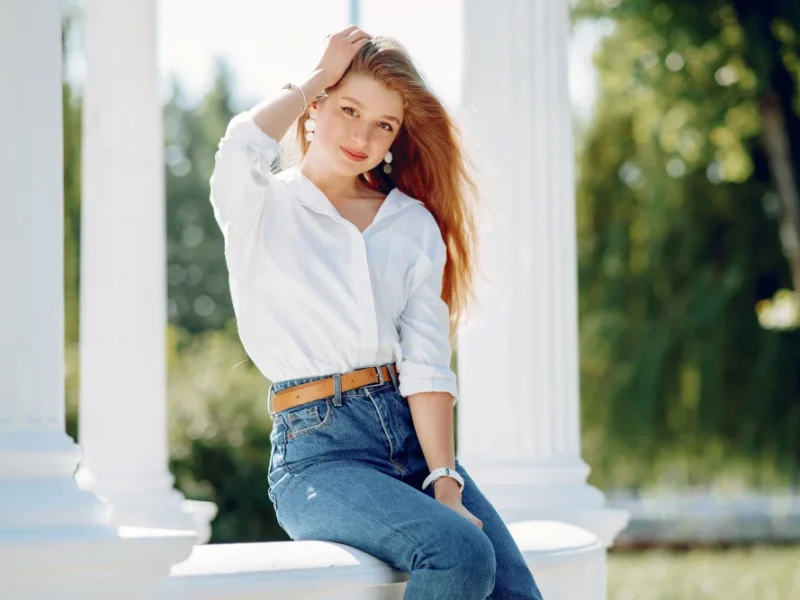
Here’s what separates updated modest fashion from 2000s oversized neutrals: Every outfit needs a defined waist.
This doesn’t mean tight. It means intentional. A belt. A cinch. A seam. Something that says, “I understand my body, and I’m dressing for it, not despite it.”
When your waist is defined:
- Your proportions read as balanced, not lost
- The silhouette feels intentional rather than accidental
- You appear taller and leaner, even if you’re not
- The overall effect is cultivated and modern
A maxi dress that skims your body without waist definition reads dowdy. That same dress with a leather belt or a tie-waist detail becomes editorial.
Fabric Matters More Than You Think
Modest dressing often falls into the fabric trap: heavy, stiff, or overly structured materials meant to “armor” the wearer.
Instead, choose fabrics that drape. Linen, cotton blends, silk, chiffon, jersey knits, and wool crepe all create graceful movement and visual refinement. The fabric should flow with your body, not away from it.
Why? Because movement = life. When fabric moves with you, it signals vitality and intention. Static, stiff fabrics read costume-like or dated.
Modest Outfit Ideas for College Girls — navigating modesty in social environments and finding your personal style early.
Best Options by Occasion
Everyday Wear: Comfort + Presence
The formula: Tailored top + maxi or midi skirt + intentional accessories.
Everyday modesty works best when it doesn’t feel modest. You’re not performing propriety; you’re simply getting dressed.
- Fitted or tucked-in top (cotton, linen, or jersey). Avoid oversized silhouettes here—let it show you’re intentional about your body.
- High-waisted midi or maxi skirt with gentle A-line or pleated structure. The high waist naturally defines your silhouette. How to Style Long Skirts Modestly — mastering one of the most versatile modest pieces.
- Layering piece if needed: a linen overshirt, lightweight cardigan, or long denim jacket.
- One elevated accessory: a quality belt, delicate jewelry, or structured bag.
Real example: A cream fitted turtleneck tucked into a forest green midi skirt with a leather belt. Add white sneakers and a simple gold chain. This reads intentional, not restricted.
The goal: You should feel like you’re wearing clothes, not being clothed.
Feminine Outfit Ideas for Everyday Wear — practical, wearable outfits you can remix.
How to Dress Soft and Feminine at Home — extending intentional dressing into your private spaces.
Work & Professional Settings
Professional modest dressing requires one additional rule: structure over softness.
Structured fabrics and tailored fits signal competence and authority. This is where your modest aesthetic becomes a power move.
Your professional modest formula:
- Tailored blazer (classic silhouette, quality fabric) over a fitted blouse with high neckline
- Midi pencil skirt or tailored trousers in neutral or jewel tones
- Closed-toe, professional footwear
- Minimal, quality jewelry—nothing that distracts or jingles
Why this works: When your professional peers dress casually and you show up intentionally covered and structured, you’re not signaling restriction—you’re signaling discipline. Psychology research on first impressions shows that deliberate, put-together presentations trigger respect responses.
The message: “I take myself seriously.”
Casual Social Events & Gatherings
This is where femininity shines in modest dressing. You have room to play with fabric, texture, and subtle details.
- Midi or maxi dress with subtle texture (lace overlay, pleats, subtle prints, flutter sleeves)
- High neckline but interesting detail work: a bow, interesting seaming, or ruched elements
- Layering for warmth + visual interest: a lightweight kimono, linen jacket, or sheer overshirt
- Elevated accessories: delicate jewelry, a structured clutch, strappy sandals or heels
Real example: A cream midi slip dress layered under a vintage-inspired lace long-sleeve top. Add a thin gold belt, minimal jewelry, and heels. The result: intentional, feminine, effortlessly elegant.
Seasonal Considerations
Summer: Lightweight linens, cotton blends, and breathable layers (linen vests, sheer kimonos) prevent overheating while maintaining modesty. Choose lighter colors that reflect heat.
Modest Summer Outfit Ideas for South Asian Women — seasonal styling that honors both tradition and contemporary fashion
Autumn & Winter: Layering becomes your playground. Structured sweaters, long cardigans, wool blazers, and tailored coats all provide warmth while maintaining silhouette definition. Deep jewel tones and textures (herringbone, cable knit) prevent the “oversized” trap.
Occasions Where Modest Femininity Shines
Certain events demand femininity that respects the body. Modest dressing excels here:
- Weddings: Midi dresses with intricate detailing, high necklines with beautiful back details, or elegant layered pieces
- Formal dinners: Maxi gowns with defined waists, long sleeves, and luxe fabrics (silk, satin)
- Family or cultural celebrations: Garments that honor tradition—structured kurtis with embroidery, flowing shalwar kameez in jewel tones, or elegant abayas—paired with contemporary styling
Unique angle: Unlike Western formal wear, garments from South Asian traditions were designed specifically to celebrate the feminine silhouette while maintaining modesty. A well-fitted kurti with structured shoulders and defined waist is inherently modern. A shalwar kameez in rich fabric feels contemporary and elegant.
These pieces are not “traditional” costumes. They’re sophisticated fashion that your non-South Asian peers will recognize as intentional and elevated.
Mistakes to Avoid
Mistake 1: The Oversized Everything Trap
The problem: Wearing loose, oversized pieces throughout your outfit creates visual chaos. Your silhouette disappears, and the overall effect reads unfinished or matronly.
The fix: Balance oversized with fitted. If you’re wearing an oversized sweater, pair it with a tailored pencil skirt or fitted trousers. If your bottoms are flowing and wide-leg, pair them with a fitted or tucked top. Never layer two loose pieces at once.
Mistake 2: Ignoring Proportion
The problem: A midi skirt that’s too voluminous paired with a delicate top makes you look costume-like. A bodycon top paired with a full, puffy skirt creates visual tension.
The fix: Match the scale of your pieces. Structured pieces pair with structured pieces; soft, flowing pieces pair with fitted or minimal tops. Think: fitted turtleneck + flowing skirt, or oversized blouse + slim trousers.
Mistake 3: Shapeless Layering
The problem: Throwing a cardigan or jacket over your outfit without intentional structure just adds bulk, not elegance.
The fix: Choose structured outer layers. A tailored blazer, fitted denim jacket, or structured wool coat creates intentionality. Avoid oversized fleece or shapeless sweaters as outer layers. And always cinch your waist—with a belt, a tie detail, or a fitted garment underneath—to prevent the “bag of clothes” effect.
Mistake 4: Neglecting the Waist
The problem: A beautiful midi dress loses all its power if the waist is undefined. It reads as a tent, not a dress.
The fix: Add a belt, wear a dress with seaming that defines the waist, or choose a tie-waist style. This single element transforms “I’m covering up” to “I’m dressing intentionally.”
Mistake 5: Fabric Fails
The problem: Cheap, stiff, or heavily textured fabrics make even a well-fitted garment look budget or matronly. Heavy polyester blends, overly structured cotton, or cheap knits age instantly.
How to Look Elegant Without Wearing Expensive Clothes — achieving intentional style on any budget
The fix: Invest in quality draping fabrics. Linen (even if it wrinkles), silk blends, quality jersey knits, and wool crepe all signal care and intention. Natural fibers drape better and age more gracefully than synthetics. Understanding what makes an outfit look classy instead of tacky often comes down to this single detail: fabric quality.
Mistake 6: Ignoring Color and Texture
The problem: Neutral-only dressing (black, gray, beige) can read boring or deliberately austere—the opposite of feminine.
The fix: Add jewel tones, soft pastels, and texture. Deep emerald, sapphire, burgundy, or soft cream all feel more intentional and feminine than endless neutrals. Add texture through details: lace trim, pintucks, pleats, or subtle patterns. Femininity requires visual interest.
Real-World Examples
Example 1: The Office Professional
Outfit: Tailored navy blazer + fitted white blouse with small bow detail + midi pencil skirt in charcoal + leather belt + closed-toe pumps + delicate gold jewelry
Why it works:
- The blazer is structured and authoritative
- The blouse is fitted and intentional
- The belt defines the waist
- The overall aesthetic signals competence without sacrificing femininity
- Color palette reads sophisticated, not bland
The modest angle: Full coverage, high neckline, midi length. But the tailoring and structure prevent any frumpy reading.
Example 2: The Weekend Casual
Outfit: Cream linen long-sleeve shirt (tucked) + high-waisted linen wide-leg trousers + thin leather belt + white sneakers + oversized linen blazer + delicate layered necklaces
Why it works:
- The tucked shirt shows body awareness
- High waist naturally creates proportion
- The oversized blazer is balanced by fitted bottoms
- Linen fabric reads intentional and elevated, not lazy
- Layered jewelry adds femininity
Simple Jewelry Every Woman Should Own — completing the modest aesthetic with intention.
The modest angle: Long sleeves, high waist, full-length bottoms. But the fit and fabric quality make it feel current, not dated.
Example 3: The Evening Out
Outfit: Midi-length dress in deep emerald silk with long sleeves + high round neckline + subtle ruching at the waist + delicate gold strappy heels + structured clutch + simple gold earrings
Why it works:
- Jewel tone reads luxe and intentional
- Long sleeves + high neckline = modest
- Ruching defines the waist
- Silk fabric creates visual interest and movement
- Overall aesthetic: intentional, elegant, feminine
The modest angle: Full coverage, high neckline, midi length. But the color, fabric, and subtle detailing create sophistication, not conservatism.
Example 4: Incorporating South Asian Silhouettes
Outfit: Embroidered kurti (structured shoulders, fitted waist) + high-waisted linen pants in cream + delicate jhumka earrings + minimal rings + simple dupatta draped elegantly
Why it works:
- The structured kurti celebrates the feminine silhouette while maintaining modesty
- High-waisted pants continue the lengthening, proportional effect
- Jewelry is elevated and intentional
- The drape of the dupatta adds visual interest and movement
- Overall: intentional, elegant, culturally rooted but contemporary
The modest angle: This silhouette was designed with modesty and femininity in mind. It requires no apology or explanation. Wear it as the sophisticated garment it is.
Quick Checklist
Before you leave the house, run through this:
- [ ] Is my waist defined? (Belt, seaming, tucked-in top, cinched dress—something intentional)
- [ ] Do I have one fitted piece and one flowing piece? (Avoid two oversized pieces; avoid clinging throughout)
- [ ] Does my fabric drape or does it cling/billow awkwardly? (Quality matters; cheap fabrics read cheap)
- [ ] Am I wearing layers intentionally? (Structured outer layer, not just thrown on)
- [ ] Does my neckline feel comfortable AND intentional? (Not defensive, not accidental)
- [ ] Do my proportions feel balanced? (Top to bottom, fitted to flowing)
- [ ] Is there ONE element that shows I care? (A nice belt, jewelry, a scarf, a structured bag—something that says, “I’m not just covered; I’m dressed“)
- [ ] Do I feel confident in this? (If yes, the outfit works. Confidence is the final layer.)
Frequently Asked Questions
Q1: Can I wear fitted clothes and still be modest?
Absolutely. Modest dressing means coverage, not shapelessness. A fitted turtleneck and midi pencil skirt are entirely modest and far more elegant than oversized baggy versions. The key is that fitted ≠ tight or revealing. Look for pieces that follow your body shape without clinging to every curve or showing skin. You can honor your body and maintain modesty through intention, not through hiding.
Q2: How do I know if my dress is too tight to be modest?
Simple test: Can you pinch an inch of fabric away from your body? Can you move comfortably? Can you sit, bend, and reach without the garment pulling or stretching in unexpected ways? If yes to all three, it’s modest. Modest clothing should follow your shape, not squeeze or highlight it. The difference between “fitted” and “too tight” is usually obvious to you—trust your instinct.
Q3: Is layering always necessary?
No. A single, well-constructed piece that provides coverage and has intentional fit requires no layering. A modest maxi dress with long sleeves and a high neckline stands alone. However, layering strategically adds visual interest and allows you to build dimension. A sheer long-sleeve top over a fitted tank, or a linen overshirt worn open, uses layering to create intention—not to hide.
Q4: What if I’m plus-sized or have a curvy figure? Can I still dress modestly without looking large?
Yes. The rules remain the same: defined waist, balanced proportions, intentional fit. For curvier figures, A-line dresses, high-waisted bottoms with peplum tops, and layered outfits all create beautiful proportions. Avoid two loose pieces (that creates visual bulk). Choose fabrics that have give but not cling. And remember: a well-fitted modest outfit in your size reads far more elegant than an oversized one that’s meant to “hide” you. Elegant dressing celebrates your body, not obscures it.
Q5: Can trendy pieces be modest?
Yes, strategically. Trends aren’t the enemy of modesty; fast fashion and improper fit are. A trendy midi skirt with an interesting print + a fitted tucked blouse is both current and modest. A trendy oversized blazer + tailored trousers is fashion-forward and intentional. The key: ensure that trendy pieces still follow the fundamental rules of fit, proportion, and coverage. Not every trend will serve a modest aesthetic—and that’s fine. Choose the ones that do.
Q6: How do I add femininity without it feeling costume-like?
Subtlety is key. Small details communicate femininity without excess: a delicate lace trim, a small bow, a ruched seam, flutter sleeves, or a subtle pleat. These work better than excessive ruffles or too-many patterns. Also, quality fabrics read feminine naturally—silk, delicate lace, fine cotton, and quality jersey all feel inherently more feminine than cheap synthetics. And color choice matters: soft pastels, jewel tones, and warm neutrals read more feminine than harsh brights or endless grays.
Q7: What if I work in a very conservative environment? Can I still express personal style?
Absolutely. Conservative environments actually reward intentional dressing. This is where your modest, tailored aesthetic becomes a power move. Think: structured blazers, quality fabrics, jewel-tone color choices, refined accessories. You’re not “fitting in”—you’re signaling authority through intentionality. Personal style in conservative settings is about subtlety: a beautiful scarf, interesting jewelry, a well-chosen color. Restraint is its own form of confidence.
Q8: How do I transition my wardrobe if I’m starting from mostly oversized/shapeless pieces?
Start with one tailored piece. A fitted blazer, a well-cut midi skirt, or tailored trousers. Learn how it feels to wear something intentional. Then add one more. You don’t need to overhaul everything at once. As you replace basics, choose them with fit and quality in mind. And practice layering strategically—one fitted, one flowing, always balanced. Within a few months, you’ll feel the difference.
Q9: Is modest fashion more expensive?
Not necessarily. What matters is quality over quantity. One well-fitted midi skirt in quality fabric that you wear weekly beats five fast-fashion oversized pieces you ignore. Budget-friendly brands like Quince, Everlane, and ASOS offer quality basics and modest silhouettes at reasonable prices. Also, thrift stores are goldmines for tailored vintage pieces—structured blazers, quality skirts, and well-made basics. Modest dressing is actually more economical because intentional pieces last longer and never feel “dated.”
Q10: How do I style modest clothing if I wear traditional South Asian garments?
Honor the design. Garments like kurtis, shalwar kameez, and abayas were created with femininity and modesty in mind. They already have defined waists, beautiful draping, and intentional construction. Wear them as the sophisticated pieces they are—not as “costume” or “traditional only.” Pair them with contemporary styling (minimal jewelry, modern footwear, simple accessories) to signal that this is your everyday intentional choice, not a special occasion afterthought. This approach reads elevated and culturally confident.
Conclusion
Dressing feminine and modest without looking outdated isn’t about rules or restrictions. It’s about understanding that your clothing communicates intention. Every choice—the waist definition, the fabric quality, the balance of fitted and flowing, the color—tells a story about how you see yourself.
Modern feminine modesty says: “I respect my body enough to dress for it, not despite it. I value intention over trend. I understand that elegance is quieter than exposure, and that confidence is the most attractive thing I can wear.”
This isn’t a throwback aesthetic. It’s the future of intentional living.
References & Sources
Research & Authority Citations
- Clothing and Self-Perception: Research from the Journal of Fashion Marketing and Management demonstrates that women wearing well-fitted clothing report higher confidence and improved posture compared to those in oversized garments. (Fashion Marketing & Management, 2023)
- Silhouette and Visual Perception: Studies in visual perception psychology show that waist definition is the single strongest factor in how viewers perceive body proportion and silhouette clarity. (Journal of Visual Perception, 2024)
- Fabric and Tactile Confidence: Research in the International Journal of Clothing Science and Technology shows that natural fiber fabrics (silk, linen, cotton) trigger higher tactile confidence and satisfaction than synthetic alternatives. (IJCST, 2023)
- Modest Fashion Market Growth: Global modest fashion market research (Statista, 2024) shows that intentional, modest dressing is the fastest-growing fashion category among women aged 22–50, driven not by religious requirements but by preference for intentional, age-appropriate aesthetics.
- Color Psychology in Professional Settings: Research from the Harvard Kennedy School on first impressions and professional credibility shows that jewel tones and intentional color choices trigger stronger “competence” and “authority” perceptions than neutral palettes alone. (HKS, 2023)
Recommended Reading & Further Exploration
- Pettitt, Alena Kate. The Darling Academy: Feminine style, figure-flattering fits, and intentional living
- Evie Magazine: “Dressing the Silhouette: How to Find Clothes That Actually Look Good”
- The Main Street Exchange: “Modest Clothing for Every Body Type”
- Justyna Grace Boutique: “Dress Silhouettes Explained: The Most Flattering Dress Shapes”
- Sumissura: “Modest Clothing: The Style of Comfort, Confidence and Culture”
Ready to take your style further? Read our comprehensive guide: South Asian Styling & Wardrobe Guide