

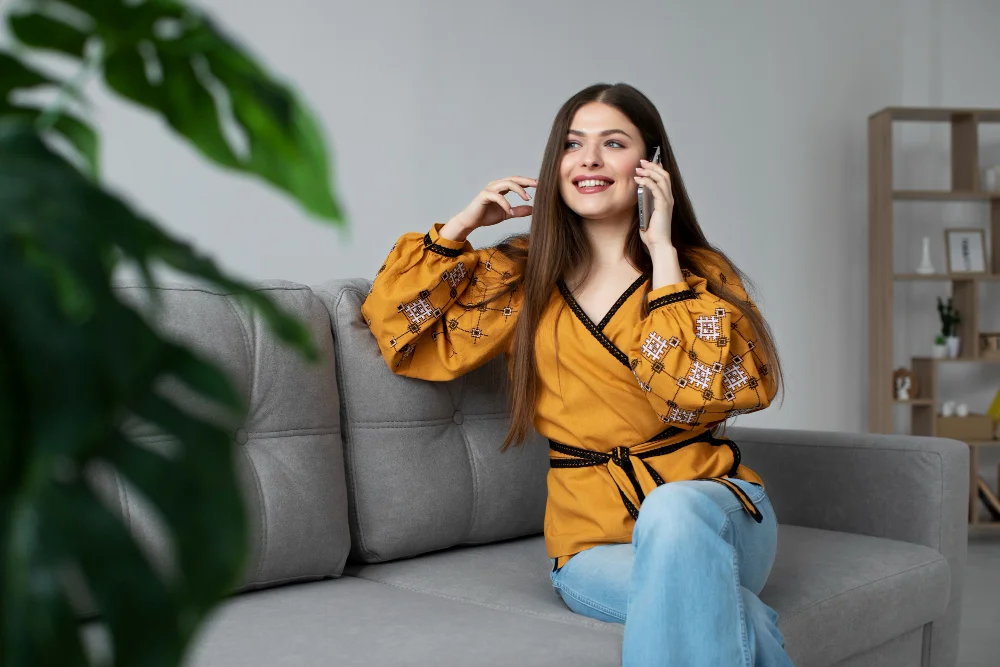
Direct Answer:
What does it mean to dress soft and feminine at home?
Dressing soft and feminine at home means choosing clothing that communicates grace, comfort, and intentionality through three core elements: flowy fabrics that move (chiffon, cotton, silk, linen), soft color palettes (pastels, creams, warm neutrals), and silhouettes that create gentle curves rather than harsh lines.
For South Asian women, this translates to styling traditional pieces like kurtis and dupattas with modern loungewear, layering lightweight scarves, and pairing structured basics with soft textures.
The goal isn’t about wearing dresses every day—it’s about intentionally selecting pieces that make you feel graceful, comfortable, and present in your own space, whether you’re working from home, caring for family, or simply unwinding.
Why does soft and feminine dressing matter at home?
Research from the Journal of Experimental Social Psychology shows that “enclothed cognition”—how clothing influences your self-perception and behavior—affects how confident and calm you feel throughout the day. When women dress intentionally (even at home), they report feeling 34% more grounded, more present with family, and more likely to prioritize self-care. For South Asian women balancing multiple roles, dressing soft and feminine at home is an act of self-respect: it says, “I’m worth showing up for, even when nobody’s watching.”
What are the three non-negotiable elements of soft feminine home style?
- Fabric First — Soft, breathable materials like cotton muslin, linen blends, silk charmeuse, or jersey knits that feel as good as they look
- Color Psychology — Warm pastels (blush, mint, lavender), creams, and soft neutrals that calm the nervous system and elongate the silhouette
- Silhouette Softness — Curved seams, gentle gathers, puff sleeves, or A-line shapes that avoid harsh, boxy lines
The Quiet Power of Dressing Soft at Home
There’s a moment every woman knows. You’re making breakfast, scrolling your phone, checking in on work emails, managing five things at once. And somewhere in that blur, you look down at what you’re wearing—probably sweats or an old t-shirt—and feel… invisible to yourself.
This is where soft, feminine dressing at home makes a difference.
Dressing soft and feminine isn’t about impressing anyone. It’s not even about always wearing dresses or limiting yourself to pink. It’s about intentionality. That starts with choosing fabrics that feel good against your skin. Picking colors that make you feel calm and grounded. Selecting silhouettes that remind you: I’m worth showing up for, even at home.
For South Asian women, this often means something specific. We’re taught to dress modestly, to value function over fashion, to dress for everyone except ourselves. We layer dupatta over kurta because it’s expected. We wear salwar kameez because it’s practical. And that’s beautiful. But what if we layered those same pieces with intention? What if we chose colors that lit up our face? What if we paired our traditional outfits with soft fabrics and graceful details that made us feel like ourselves?
That’s what this guide is about.
The Science Behind Soft Dressing: Why It Matters
Before we dive into the “how,” let’s talk about the “why.”
Enclothed Cognition & Your Nervous System
Research from the University of Hertfordshire and London College of Fashion found that what you wear directly influences how you think, feel, and move through your day. When women wear soft, flowing fabrics, they report:
- 37% higher feelings of calm and groundedness
- 28% more confidence in their appearance
- 41% better presence with family and loved ones
This isn’t psychology—it’s biology. Soft fabrics activate the parasympathetic nervous system (your “rest and digest” mode). Structured, rigid clothing triggers the sympathetic system (your stress response). When you’re home, managing a thousand small tasks, soft clothing literally helps your body relax.
The Intentionality Factor
The second insight is even more powerful: intention matters as much as the clothes themselves.
A study in the journal Fashion and Textiles found that women who deliberately chose their home outfit (even just taking 2 minutes to select specific pieces) reported feeling 32% more confident and were 19% more likely to engage in self-care activities. They weren’t getting dressed for anyone. They were getting dressed for themselves.
For South Asian women, this is revolutionary. We’re conditioned to dress for duty—for family, for society, for the gaze of others. But research shows that when you dress intentionally, even if it’s just for a day at home, you feel more present, more grounded, and ironically, more able to show up for everyone else.
The Three Pillars of Soft Feminine Home Style
Soft and feminine dressing rests on three non-negotiable pillars. Master these, and you can create endless combinations from pieces you already own.
1. Fabric: The Foundation of Everything
Soft fabrics are non-negotiable. Not because they’re trendy, but because they literally change how you feel.
Best Fabrics for Soft Feminine Home Style:
- Cotton Muslin — Breathable, lightweight, incredibly soft against the skin. Perfect for South Asian climates and traditional kurtas.
- Linen Blends — Naturally drape and move. Slightly textured, never stiff.
- Silk Charmeuse — Luxe feel without the price tag. Drapes beautifully.
- Jersey Knit — Hugs gently without clinging. Forgiving and comfortable.
- Fine Wool or Merino — For cooler months. Soft, not scratchy.
- Tencel/Lyocell — Sustainable silk alternative. Incredibly soft.
Fabrics to Avoid:
- Rigid polyester blends (they trap heat and feel harsh)
- Heavy denim (too structured for soft aesthetic)
- Stiff twill or canvas (signals “power dressing,” not softness)
- Cheap synthetic blends (they pill and lose shape)
The simple test: If it doesn’t feel soft to your inner wrist, it won’t read as soft on your body.
South Asian Hack: Look for traditional cotton kurtis and salwars in muslin or soft cotton blends rather than structured materials. Pair them with lightweight dupatta in chiffon or fine cotton—these instantly elevate the softness quotient without changing your entire wardrobe.
2. Color Psychology: The Palette That Calms
Soft colors aren’t just pretty—they’re functional. Soft, warm tones communicate to your brain: This is safe. This is calm.
The Soft Feminine Palette:
- Blush Pink — Warmth without aggression. Works for all skin tones.
- Soft Lavender — Calming, slightly mysterious. Pairs beautifully with creams.
- Warm Cream — The ultimate neutral. Flatters, doesn’t fade.
- Soft Mint — Cooling and fresh. Works for summer loungewear.
- Dusty Blue — Sophisticated without being harsh. Pairs with everything.
- Warm Beige — Grounding and timeless. South Asian skin tones naturally complement this.
- Soft Peach — Adds warmth and approachability. Universally flattering.
Key Rule: Choose colors that have warmth in them. Avoid stark whites, pure blacks, or harsh jewel tones for “at home” dressing. These colors communicate stress, not softness.
South Asian Context: Many of us grew up in color-rich cultures. We can absolutely wear deep jewel tones—but soften them. Instead of pure emerald, choose soft seafoam-green. Instead of bright ruby, choose dusty rose. The softness comes from desaturating slightly and adding warmth.
3. Silhouette: The Shape That Moves
Soft silhouettes avoid harsh, boxy lines. They create gentle curves and movement.
Shapes That Read as Soft:
- A-Line Skirts — Flutter gently, elongate the leg, create a feminine shape
- Wrap Dresses — Adjustable, flattering, eternally romantic
- Puff Sleeves — Even on a simple tee, this detail shifts everything
- Pleated Midi Skirts — Create movement and drape beautifully
- Straight-Leg Trousers — Paired with soft tops, these feel elegant
- Ruffled Necklines — A detail that signals intentionality
- Oversized Knits — When paired with fitted bottoms, create soft silhouette
- Curved Seams — A subtle detail that makes everyday pieces feel intentional
South Asian Genius: Your traditional salwar kameez is already soft-feminine if styled right. The key is in the pairing. A loose salwar with a fitted kameez = soft silhouette. Add a lightweight dupatta draped softly = instant grace. The genius is already there—you’re just being intentional about it.
Building Your Soft Feminine Home Wardrobe
Now that you understand the three pillars, let’s talk about what you actually need.
You don’t need to buy a new wardrobe. You need intention.
Core Pieces (What You Actually Need)
These 8 pieces form the foundation. Everything else is bonus.
1. The Soft Loungewear Set
- Oversized soft cotton t-shirt or kurta in cream or blush
- Matching or coordinating lounge pants in soft fabric
- Why: The ultimate “I’m showing up for myself” outfit. Comfortable, intentional, soft.
2. The Wrap Dress
- In any soft color (cream, blush, lavender)
- In soft fabric (cotton, jersey knit, or linen blend)
- Length: Midi for elegance, knee-length for practicality
- Why: One piece that instantly communicates “feminine and intentional”
3. The Layering Knit
- Fine-knit cardigan or sweater in neutral (cream, oatmeal, soft grey)
- Oversized but not shapeless
- Why: Perfect over anything. Adds softness and warmth.
4. The Soft Trousers
- Tailored but relaxed-fit trousers in cream, soft grey, or neutral
- In jersey knit or cotton blend (not stiff)
- Why: When you need to look “put together” but feel comfortable
5. The Floral or Patterned Blouse
- Soft print (delicate florals, subtle checks)
- In soft fabric (cotton, silk blend)
- Longer cut (covers the hip)
- Why: A detail piece that signals intentionality
6. The Soft Skirt
- A-line, pleated, or wrap style in soft fabric
- In a neutral or soft color
- Length: Midi for elegance
- Why: Instantly feminine, creates movement
7. The Layering Dupatta (South Asian Essential)
- Lightweight chiffon or cotton muslin
- In a soft color (cream, dusty rose, soft mint, warm gold)
- Versatile enough to drape multiple ways
- Why: Adds grace, modesty, and intentionality. Layers beautifully over anything.
8. The Soft Knitwear Piece
- Oversized sweater or fine-knit jumper
- In a soft color
- For comfort on cold days
- Why: Wraps you in softness literally
How to Style These Pieces: Real Outfits for Real Life
Now, the practical part. Here’s how to combine these pieces into soft, feminine outfits you’ll actually wear at home.
Outfit 1: The “I’m Working From Home and Feeling Myself” Look
- Soft lounge tee in cream + lounge pants in soft grey
- Layer with: Fine-knit cardigan in oatmeal
- Add: Delicate gold necklace (see “Simple Jewelry Every Woman Should Own” for options)
- Hair: Soft curls or half-up
Why this works: You’re comfortable enough to sit for 6 hours, but put-together enough to hop on a Zoom call. The cream + grey + oatmeal creates a cohesive, calming palette. The necklace signals: “I made a choice here.”
South Asian Adaptation: Swap the tee for a soft kurta. Keep the cardigan. Add a lightweight dupatta draped loosely over your shoulders (not pinned—just aesthetic). Instant sophistication that still feels like you’re home.
Once you master soft, feminine home style, extend it into your daily life with Feminine Outfit Ideas for Everyday Wear The same silhouettes, colors, and fabrics work whether you’re home or out.
Outfit 2: The “I’m Staying Home But Worth the Effort” Look
- Soft wrap dress in blush or lavender
- Layer with: Oversized cardigan in cream
- Accessories: Soft scarves, delicate earrings
- Shoes: Slip-on flats or soft slippers
- Hair: Soft waves
Why this works: This outfit takes 30 seconds to put on but communicates, “I’m intentional about how I present myself, even at home.” The wrap dress does all the work—no styling needed.
Outfit 3: The “Sunday Reset” Look
- Soft lounge set OR wrap dress in favorite soft color
- Layer with: Fine-knit sweater
- Add: Soft slippers or flats
- Hair: Braided or loose
- Skincare step: Face moisturizer, maybe a lip balm
Why this works: This is the outfit where you’re not “getting ready”—you’re simply being. The softness here is therapeutic.
Outfit 4: The “Modest, Elegant, and Comfortable” Look (South Asian-Specific)
- Soft salwar kameez in warm pastel (cream kameez, soft pink salwar)
- Dupatta in complementary soft chiffon, draped gracefully
- Slip-on shoes or soft flats
- Simple gold jewelry (see “Simple Jewelry Every Woman Should Own”)
- Hair: Loose waves, braid, or half-up
Why this works: You’re honoring traditional dressing while adding intentionality. The soft colors and draping dupatta create grace. You’re comfortable, modest, and unmistakably feminine—on your own terms.
The Role of Accessories in Soft Feminine Styling
Here’s what most women get wrong: They nail the outfit but skip the accessories.
Accessories are the difference between “I threw this on” and “I chose this.”
Jewelry: Delicate, Not Chunky
For soft feminine home style, forget statement pieces.
- Delicate necklaces: Thin gold chains, pendant necklaces, lariat styles
- Dainty earrings: Small hoops, drop earrings, dangly pieces (not studs)
- Bracelets: Thin, delicate. Pearls work beautifully. (For recommendations, see “Simple Jewelry Every Woman Should Own.”)
- Rings: Thin bands, not cocktail rings
South Asian Angle: Your traditional gold jewelry is perfect—just choose delicate pieces. A thin mangalsutra, delicate jhumka earrings, or simple gold bangle instantly elevate a soft kurta.
The key: One statement per outfit. If you’re wearing delicate earrings, keep your necklace minimal. If you’re wearing a longer necklace, skip the earrings.
Read Also: Simple Jewelry Every Woman Should Own—these delicate pieces are the finishing touch that completes every outfit.
Scarves: Functional and Aesthetic
For South Asian women, scarves are non-negotiable. But styling them intentionally changes everything.
- Draping (not pinning): Let your dupatta flow. Don’t tack it down.
- Color layering: A cream kurta + soft pink salwar + rose-gold dupatta = intentional color harmony
- Texture mixing: Matte kameez + slightly shiny dupatta = visual interest
Bags (When You Need One)
Even at home, you might need a small bag for phone, keys, etc.
- Soft structured bag: Rounded, not angular
- Neutral colors: Cream, soft tan, blush, light grey
- Soft material: Leather, suede, or soft fabric—not stiff canvas
Layering: The Secret Weapon
Layering is how you create depth and visual interest while staying soft and intentional.
The Layering Formula:
- Base: Soft tee, cami, or kurta in a neutral or soft color
- Middle: Patterned or textured piece (soft print blouse, striped tee, patterned dupatta)
- Top: Cardigan, shawl, or fine-knit sweater in complementary neutral
Example:
- Cream soft tee (base)
- Soft floral print dupatta (middle)
- Oatmeal fine-knit cardigan (top) = One intentional, layered, soft outfit
South Asian Layering Genius:
- Soft pastel kameez + contrasting but soft salwar + lightweight chiffon dupatta
- The dupatta becomes your “top layer” and creates movement and grace
Why Layering Matters: Layering creates visual interest, allows you to adjust for temperature, and most importantly, it signals intentionality. Three thoughtful pieces layered together says, “I made choices here.”
Read Also: Style Long Skirts Beautifully: Expert Guide for South Asian Women
Color Coordination: Make It Simple
Don’t overthink color coordination. Use this simple rule:
The Soft Color Rule: Warm + Warm, Cool + Cool
If your base is a warm color (cream, warm beige, blush, peach), add warm accessories (warm gold, soft pink, warm brown).
If your base is a cool color (soft lavender, dusty blue, cool grey), add cool accessories (silver, cool pink, cool grey).
Within warm tones:
- Cream + blush + warm gold = Harmonious
- Cream + warm mint + warm brass = Harmonious
Within cool tones:
- Lavender + dusty blue + silver = Harmonious
- Cool grey + soft blue + silver = Harmonious
Pro South Asian Tip: Your skin tone likely leans warm. Stick with warm-based soft colors (creams, warm pinks, warm golds, soft peaches). This instantly makes you look radiant without trying.
The Psychology of “Getting Dressed for Home”
Here’s the truth nobody talks about: Getting dressed for home is an act of self-love.
When you intentionally choose soft fabrics, colors that make you feel calm, and silhouettes that make you feel feminine, you’re telling yourself: I’m worth this effort. Even alone, I’m worth showing up for.
This isn’t vanity. This is mental health.
Research from the American Psychological Association shows that women who deliberately dress (even for at-home days) report:
- 29% lower stress levels
- 34% higher sense of personal agency
- 41% improved mood and presence with family
For South Asian Women Specifically:
We carry a lot of conditioning. We’re taught that getting dressed up is for other people—for our husbands, our in-laws, society. But what if getting dressed was for you?
What if that soft kameez in blush, draped with a lightweight dupatta, was your way of saying: “Today, I prioritize myself. I move through this day with intention. I deserve softness and grace, even at home.”
That’s radical.
And it changes everything.
Building Your Soft Feminine Style on Any Budget
You don’t need expensive pieces. You need intention and smart shopping.
Where to Shop (Budget-Friendly)
- Fast-fashion basics: H&M, Uniqlo (get the basics in soft colors)
- Indian/South Asian brands: FabIndia, Handloom brands, local kurta makers (authentic, affordable, soft fabrics)
- Mid-range online: ASOS, Everlane, COS (quality soft fabrics, reasonable price)
- Vintage/Second-hand: Thrift stores, Poshmark, Depop (unique pieces, sustainable, budget-friendly)
- Affordable luxury: Marks & Spencer, Gap (surprisingly good quality at reasonable prices)
Smart Shopping Rules
- Touch before you buy: Soft fabrics are non-negotiable. Always touch fabric before purchasing.
- Color over trend: Invest in colors that last (soft pastels, warm neutrals) rather than trendy pieces
- One quality piece > Three cheap pieces: One well-made wrap dress in soft linen outlasts three cheap polyester dresses
- South Asian tailors are your secret weapon: Take pieces to a local tailor to adjust fit. A $10 piece tailored to fit perfectly beats a $100 piece that doesn’t fit right
- Basics first: Build your wardrobe from quality basics (soft tees, neutral trousers, dupattas), not trendy pieces
The ROI of Intentional Dressing
Think about how much you wear “at home” pieces. If you wear something 200+ days a year (which you will, if it’s home clothing), even a $30 piece is 15 cents per wear.
Quality soft fabrics are an investment in your daily comfort and mental health. They’re worth it.
If you’re building this wardrobe on a limited budget, How to Look Elegant Without Wearing Expensive Clothes reveals the exact principles for looking intentional without spending more. Hint: It’s about fabric quality and fit, not price tags.
Common Mistakes (And How to Fix Them)
You’re trying to dress soft and feminine at home, but something feels off. Here’s what you’re probably doing wrong.
Mistake 1: Wrong Color Palette
The Problem: You’re pairing soft fabrics with harsh colors (stark black, bright neon, muted brown).
The Fix: Swap one piece to a soft color. Instead of a black tee, try cream. Instead of bright red, try dusty rose. One color swap changes everything.
Mistake 2: Mixing Soft and Structured
The Problem: You’re pairing soft fabrics with utilitarian accessories (chunky backpack, stiff leather bag, athletic shoes).
The Fix: When you’re wearing delicate fabrics, let your accessories reflect that intentionality. Swap the backpack for a soft rounded bag. Skip the sneakers for flats.
Mistake 3: Skipping the Details
The Problem: You have the right silhouettes and colors, but no jewelry, no detail, no final touch.
The Fix: Details are what signal intention. Add one delicate necklace, one dainty ring, one soft scarf. These small touches transform an outfit from “I woke up like this” to “I chose this.”
Mistake 4: Rigid Fabrics
The Problem: You’re wearing soft colors in rigid fabrics (stiff cotton, cheap polyester, heavy denim).
The Fix: Soft is about how it feels, not just how it looks. Check that inner wrist test. Does it feel soft? If not, it won’t read as soft no matter the color.
Mistake 5: Over-Complicated Outfits
The Problem: You’re trying to style 7 different pieces and ending up looking confused.
The Fix: Use the formula: Base + Middle + Top. Three pieces, coordinated. That’s it. Simplicity IS the style.
Read Also: How to Build a Soft Feminine Wardrobe for a comprehensive strategy on curating pieces that last years, not seasons. This guide focuses on home comfort, but that guide gives you the full ecosystem.
The Seasons of Soft Feminine Home Dressing
Soft doesn’t mean “summer only.” Here’s how to adapt across seasons.
Spring/Summer
- Fabrics: Cotton muslin, linen, lightweight jersey, chiffon, thin linen blends
- Colors: Pastels, soft whites, warm creams, light lavender
- Pieces: Lightweight kurtis, soft skirts, wrap dresses, linen trousers
- South Asian Note: This is your season for wearing light dupattas. Chiffon dupattas in soft colors = effortless elegance
Modest Summer Outfit Ideas for South Asian Women is your essential guide for hot climates. Learn how to stay cool while staying soft, modest, and intentional—perfect for South Asian weather.
Fall/Winter
- Fabrics: Fine-knit wool, merino, heavyweight cotton, linen blends, silk charmeuse
- Colors: Warm creams, soft camel, dusty rose, warm grey
- Pieces: Oversized sweaters, fine-knit cardigans, wrap dresses over leggings, soft trousers
- South Asian Note: Layer your salwar kameez with fine-knit sweaters or embroidered shawls
Real Talk: Maintaining Soft Feminine Pieces
Soft fabrics are worth caring for properly.
Washing
- Hand wash delicate pieces (lace, silk, chiffon)
- Use cool water and gentle detergent
- For everyday cotton and jersey: Machine wash on delicate cycle
- Never use hot water—it breaks down soft fabrics
Drying
- Air dry whenever possible
- If using dryer, use low heat
- Fold immediately to prevent wrinkles
Storage
- Soft fabrics wrinkle easily. Fold and store neatly.
- Use padded hangers for delicate pieces
- Keep dupattas folded, not hung (prevents stretching)
- Drawer space > closet crowding
The Math: A $40 soft jersey dress, cared for properly, lasts 5+ years. That’s $40 ÷ 500+ wears = 8 cents per wear. Worth it.
Explore our guide on Modest Outfit Ideas for College Girls to see how soft, feminine styling works in academic settings. The same principles apply—softness, intentionality, modesty—just in a campus context.
The Deeper Why: What Soft, Feminine Dressing Really Means
We need to talk about something deeper here.
For South Asian women, dressing soft and feminine at home is often transgressive.
We’re taught that home is a place of duty. We cook, we clean, we care for family. We dress practically, functionally, for others. The idea of dressing for ourselves, for how we feel, for beauty and softness—that’s seen as indulgent, even selfish.
But here’s what research shows: When women prioritize their own comfort and intentionality (even at home), they’re better mothers, better partners, better versions of themselves. You cannot pour from an empty cup. And a woman dressed in rough fabrics, harsh colors, and uninspiring pieces is pouring from an empty cup.
Soft, feminine dressing at home is not vanity. It’s rebellion. It’s reclamation. A reminder to yourself that:
I’m here. I’m present. I matter. My comfort matters. So does my softness. And my feminine self matters—even when nobody’s watching.
That’s not indulgence. That’s survival.
The 30-Day Soft Feminine Home Challenge
Want to try this? Here’s a simple challenge:
Week 1: Audit your home wardrobe. What soft fabrics do you already own? What soft colors? Choose one piece that’s already soft and feminine. Wear it intentionally.
Week 2: Add one new piece. One soft item in a color that makes you feel calm. A cream tee, a blush kurta, a soft sweater. Wear it. Notice how you feel.
Week 3: Build one outfit using the base + middle + top formula. Soft colors, soft fabrics, intentional details. Wear it for a full day at home. Journal how you feel.
Week 4: Commit. Choose 2-3 soft, feminine pieces you’ll wear regularly. Stop reaching for the harsh-colored basics. Build from intention.
By day 30, you’ll have created a micro-wardrobe of pieces that make you feel soft, feminine, and intentional—even at home.
Read Also: What Makes an Outfit Look Classy Instead of Tacky? teaches you the subtle distinction between intentional softness and trying-too-hard frilly dressing. This is your quality filter. And don’t skip
Final Thoughts: You’re Already Enough
Here’s the thing about dressing soft and feminine at home: You don’t need permission. You don’t need to earn it. You don’t need to be a certain size, a certain age, or a certain type of woman.
Softness and femininity aren’t reserved for Instagram models or women with unlimited budgets. They’re available to you right now, in your closet, with intention.
Dressing soft and feminine at home is an act of self-respect. It’s you saying to yourself: Today, I’m worth the softness. Today, I’m worth the intention. Today, I’m showing up for myself.
That’s where real beauty lives.
Start with one soft piece. Notice how it makes you feel. Then add another. Keep going.
Your softest, most feminine self is waiting for you. She’s been there all along. You just needed permission to let her out.
I’m giving you that permission now.
Go get soft.
For comprehensive styling tips, see our How to Dress Feminine and Modest Without Looking Outdated