

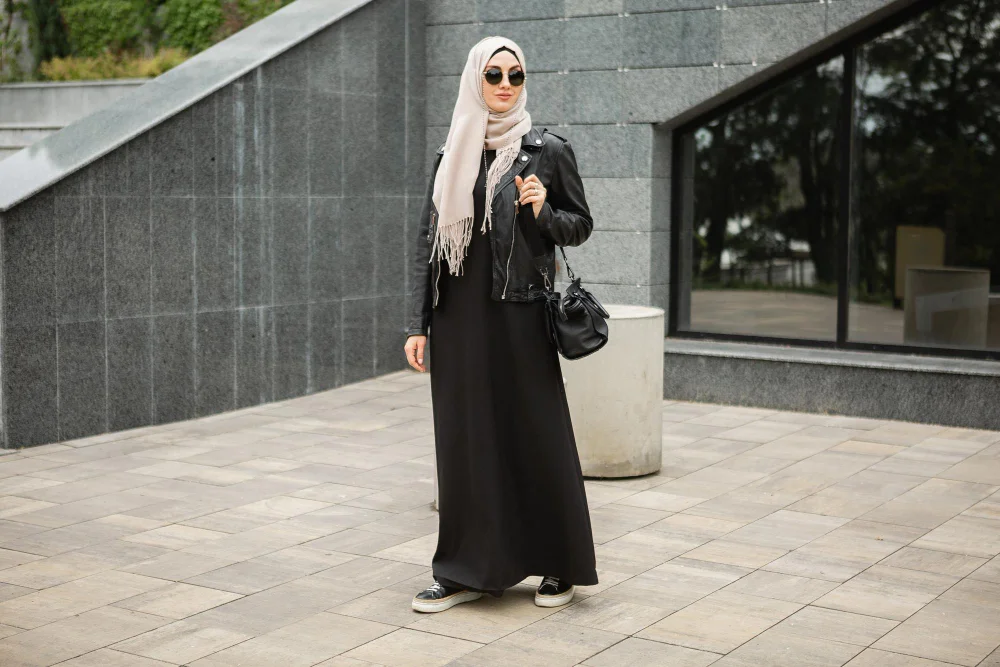
The abaya is one of the most elegant and versatile garments in South Asian and Middle Eastern fashion. It’s simple, sophisticated, and the ultimate blank canvas for personal style.
But here’s the tricky part: because the abaya is a flowing, full-length garment with minimal visual interest, your shoe choice becomes disproportionately important.
With a kurti, you have embroidery, neckline details, and fabric patterns to draw attention. With an abaya, you don’t. Your shoe is one of the few visible accessories, which means it either makes or breaks your entire look.
The challenge is that abayas come in different styles: plain black, embroidered, open-front, traditional, modern. And each style pairs differently with footwear.
Once you understand the core principle of abaya styling, choosing shoes becomes simple.
Quick Answer
The best shoe for an abaya depends on:
- Abaya style (plain vs. embroidered, traditional vs. modern)
- Occasion formality (casual vs. formal)
- Whether the abaya is open-front (showing another outfit) or closed
Quick pairings:
- Plain abaya + simple neutral shoes (black, gold, silver flats, heels)
- Embroidered or modern abaya + statement shoes (heels, embellished sandals)
- Formal occasion + elegant heels or embroidered khussas
- Casual outing + comfortable flats or ethnic shoes
- With an inner outfit visible + shoes should coordinate with the inner outfit, not the abaya
According to 2024 research on modest fashion, 72% of women report that shoe choice significantly impacts how confident they feel wearing an abaya. The visible shoe is one of the few opportunities for personal expression and style within this conservative silhouette.
Main Rule: The Visibility and Expression Principle
Here’s the golden rule for abaya styling: Since your shoe is one of the only visible accessories, treat it as a statement piece.
What This Means
Plain abayas (solid black, solid colors, simple designs) need shoes that express your personality:
- Heels in beautiful colors or embellishments
- Embroidered or decorative flats
- Metallic shoes
- Statement sandals or khussas
- Ornate mojaris
Why? A plain abaya is a visual canvas. Your shoe is the primary decorative element, so it should reflect your style.
Embroidered abayas (with intricate patterns, beadwork, or embellishments) need shoes that echo that sophistication:
- Matching-color heels or embroidered khussas
- Metallic shoes (gold or silver)
- Simple elegant heels
- Decorated mojaris that complement the embroidery
The abaya already has visual interest, so your shoe should enhance, not compete.
Modern or open-front abayas (which reveal an inner outfit) need shoes that coordinate with the visible outfit:
- Focus on what’s underneath, not the abaya
- Choose shoes that work with the inner outfit’s color and formality
- Use the abaya as a modifier of your existing outfit’s sophistication
Best Options by Occasion
1. Casual Daily Wear (Plain Abaya)
Best Shoes:
- Comfortable heels (2–3 inches)
- Flat sandals or slippers
- Simple ethnic flats
- Embroidered mojaris
- Casual sneakers (with casual abaya style)
Why: You’re balancing comfort with the need to look polished, since the abaya creates formality inherently.
Color strategy:
- Black abaya + black or metallic shoes: Elegant and classic
- Black abaya + colored shoes: Bold personal expression (jewel tones, earth tones, metallics)
- Colored abaya + neutral shoes: Lets the abaya color shine
- Colored abaya + matching color shoes: Monochromatic elegance
Pro tip: Abayas create an instantly sophisticated silhouette. You don’t need to overdress your shoes. A simple heel in a beautiful color or a comfortable flat in gold or silver is often perfectly adequate.
2. Semi-Formal (Shopping, Casual Social Gatherings, Informal Events)
Best Shoes:
- Embroidered heels
- Decorative flats with beadwork
- Embellished sandals
- Formal mojaris
- Metallic heels or sandals
Why: These occasions call for a little polish without full formality.
Best combinations:
- Black plain abaya + gold heels or embroidered khussas
- Colored abaya + neutral heels with embellishment
- Black embroidered abaya + silver heels
Pro tip: Since the abaya itself creates formality, you can often elevate a casual outfit with just an interesting shoe. A beautifully embroidered khussa with a plain abaya looks semi-formal, even if you’re just going to brunch.
Read Also: What Shoes to Wear With a Kurti: Complete Styling Guide
3. Formal Occasions (Weddings, Celebrations, Evening Events)
Best Shoes:
- Statement heels (3+ inches)
- Ornate khussas with detailed embroidery
- Embellished sandals with jewels or beadwork
- Designer embroidered mojaris
- Luxury metallic heels or sandals
Why: Formal occasions deserve equally formal footwear.
Style strategy:
- Black abaya + gold or embellished heels: Timeless, luxurious
- Black abaya + jeweled sandals: Contemporary elegance
- Embroidered abaya + matching-color heels: Cohesive luxury
- Colored abaya + metallic heels: Bold formality
Pro tip: For formal events, invest in a special pair of heels or embroidered khussas. These are high-visibility moments where your shoe choice matters more than usual.
4. When Wearing an Open-Front or Layered Abaya (Showing Inner Outfit)
Best Shoes:
- Choose based on the inner outfit, not the abaya
- Colors should coordinate with the visible clothing
- Formality should match the inner outfit’s level
Why: When the abaya is open or layered, it’s functioning as a cover-up, not the primary garment. Your shoe should work with the inner outfit.
Example: Black abaya over a green dress → choose shoes that coordinate with the green dress (gold, silver, green, or complementary color), not just the black abaya.
Read Also: What Shoes to Wear With Shalwar Kameez: Expert Styling
Mistakes to Avoid
❌ Mistake #1: Wearing a Completely Plain Shoe with a Plain Abaya
Why it fails: A plain black abaya + plain black flat = visually boring. You’re creating zero visual interest at all.
The fix: A plain abaya is your canvas. Let your shoe have personality. Add a pop of color, choose heels, or invest in decorative flats. Your shoe choice becomes your style statement.
❌ Mistake #2: Wearing Casual Shoes with a Formal Abaya
Why it fails: A worn-out slipper with a formal embroidered abaya looks careless and diminishes the occasion.
The fix: Match shoe formality to the abaya’s formality level. Formal occasions = formal shoes. Period.
❌ Mistake #3: Forgetting That Your Shoe Is the Only Visible Accessory
Why it fails: When your hands are typically covered and your hair is covered, your shoe is one of the few places to express style. If you neglect this, your entire outfit feels incomplete.
The fix: View your shoe as an accessory, not an afterthought. Choose shoes with intention, color, or embellishment.
❌ Mistake #4: Wearing Overly Casual Shoes Even for Formal Events
Why it fails: Some women feel that because the abaya is already modest, they don’t need to dress up their shoes. This is a missed opportunity.
The fix: The abaya creates automatic formality. Elevate your shoe choice to match that. A beautiful heel or embroidered khussa with an abaya looks inherently elegant.
❌ Mistake #5: Mismatching the Shoe with an Open-Front Abaya
Why it fails: Wearing a casual slipper with a black abaya over a formal dress doesn’t work. The inner outfit’s formality is visible, and a casual shoe breaks that message.
The fix: Always choose shoes that coordinate with the most visible outfit, which with an open-front abaya is the inner garment.
Examples: Real Outfit Combinations
Example 1: Casual Coffee Shop Visit
Outfit: Black plain abaya, comfortable daytime styling
Best shoes: Gold flat sandals or simple embroidered mojaris
Why: The abaya is already elegant. A simple gold or embroidered shoe adds a touch of personality without feeling overdone. Comfortable for sitting and chatting.
Example 2: Shopping Day
Outfit: Navy blue abaya, plain fabric
Best shoes: Silver flat sandals or metallic sneakers
Why: Casual but intentional. Metallic shoes add interest without being formal. Comfortable for walking around.
Example 3: Wedding Reception
Outfit: Black embroidered abaya with gold zari work
Best shoes: Gold embroidered heels or ornate gold khussas
Why: The abaya’s embroidery is the focal point. Gold shoes echo that embroidery and add to the festive formality. Heels complement the formal occasion and the high-end fabric.
Example 4: Formal Dinner Event
Outfit: Black plain abaya (open-front, over a burgundy dress)
Best shoes: Burgundy heels or metallic heels
Why: The inner dress dictates the shoe. Burgundy or metallic complements the dress and works beautifully with the black abaya as a frame.
Example 5: Evening Celebration
Outfit: Emerald green embroidered abaya with silver embroidery work
Best shoes: Silver embellished heels or jeweled sandals
Why: The green + silver combination is luxurious. The shoe mirrors the embroidery’s silver accents. This is elegant, intentional, and formal.
Checklist: Getting Your Abaya + Shoe Pairing Right
- Is your abaya plain or embroidered? (Plain = decorative shoe; embroidered = complementary shoe)
- What’s the occasion formality? (Casual, semi-formal, or formal?)
- Is the abaya open-front or closed? (If open, does your shoe coordinate with the inner outfit?)
- What colors dominate your abaya? (Black, colored, embroidered—choose shoes accordingly)
- Does your shoe add personality or interest? (Especially important for plain abayas)
- Is the shoe formality appropriate? (Casual shoe on formal occasion = mismatch)
- Are you comfortable standing/walking in these shoes for the event duration? (Comfort = confidence)
- Does your overall look feel intentional? (Every element from head to toe should feel like it belongs)
Check all 8 boxes = solid pairing.
FAQs
Q1: What’s the most versatile shoe color for abayas?
A: Black. A black shoe goes with any colored abaya and especially works with the most common black abaya. However, if you want personality, metallics (gold and silver) are equally versatile and add elegance to any abaya color.
Q2: Can I wear colored shoes with a black abaya?
A: Absolutely. In fact, colored shoes with a black abaya is how you express personal style. Jewel tones (deep blue, emerald, burgundy), earth tones (tan, camel, coral), and metallics (gold, silver) all look beautiful with black.
Q3: What heel height works best with abayas?
A: The abaya’s length makes heel height largely a personal preference. However, for different occasions:
- Casual: Comfortable 1–2 inch heels or flats
- Semi-formal: 2–3 inch heels
- Formal: 3+ inch heels or formal embroidered flats/khussas
The abaya’s full-length cut doesn’t show your leg, so even high heels are comfortable and look elegant. For more on the heel debate, see our detailed guide on flats vs heels with kurti.
Q4: Are embroidered khussas or regular heels better for formal occasions?
A: Both work beautifully. It depends on your preference and comfort:
Khussas:
- Easier to walk in for extended events
- Have an ethnic, formal aesthetic
- Offer decorative appeal
- More traditional
Heels:
- More contemporary option
- Allow for more color variety
- Familiar to Western fashion sensibilities
- Create a slimmer silhouette
Choose based on what you’re comfortable in and what matches your personal style.
Q5: Should I match my abaya color to my shoe color?
A: Not necessarily. Here are your options:
- Monochromatic: Black abaya + black shoes (classic)
- Neutral pairing: Black abaya + gold/silver shoes (elegant)
- Color coordination: Navy abaya + tan shoes (harmonious)
- Bold contrast: Black abaya + bright color shoe (statement)
All work—it’s about intention. Intentional contrast looks good; accidental mismatching doesn’t.
Q6: Can I wear casual sneakers with an abaya?
A: Yes, but only with a very casual abaya worn in casual contexts (shopping, running errands). Metallic or embellished sneakers work better than plain white. Avoid sneakers for formal occasions.
Q7: What if I have a formal occasion but limited shoe options?
A: Invest in one pair of formal heels or embroidered khussas that work with multiple abaya colors. Choose:
- Black (works with almost everything)
- Gold or silver metallic (works with any abaya color)
- A neutral jewel tone like burgundy or navy (works with many abaya colors)
One versatile formal shoe is better than multiple single-occasion shoes.
Q8: How do I keep embroidered shoes or khussas clean and well-maintained?
A:
- Store in a dust bag or box
- Clean gently with a soft cloth after each wear
- For embroidered pieces, avoid water; use dry cleaning methods
- Invest in quality craftsmanship upfront so the embroidery lasts
Proper care extends the life of special occasion shoes significantly.
Conclusion
Abaya styling is actually simpler than styling other South Asian garments because the abaya’s elegant simplicity creates automatic formality.
Your job is simple: let your shoe choice add personality, color, or elegance to complete the look.
Because the abaya is a full-length, modest garment with minimal decoration, your shoe is one of the primary ways to express style and personality. View it as an accessory, not an afterthought.
Whether you choose a simple elegant flat, a beautifully embroidered khussa, or a striking colored heel, make sure your choice is intentional and appropriate to the occasion.
When your abaya and shoes work together? You feel confident, elegant, and completely put-together. And that confidence shows
References
- Modest Fashion Trends and Shoe Styling — ModestStyle Magazine (2024)
- Abaya Construction and Styling Guide — Al-Maha Fashion Research (2024)
- Cultural Fashion in Middle Eastern and South Asian Dress — Smithsonian Magazine (2023)
- Footwear Psychology and Confidence in Formal Settings — Fashion Psychology Institute (2023)
- Color Theory in Traditional Garment Styling — Design Institute of Asia (2024)
Ready to take your style further? Read our companion guide on: Best Shoes for Eid Outfits: Complete Celebration Guide
For comprehensive styling tips, see our South Asian Styling & Wardrobe Guide