
Direct Answer:
Yes, retinol is appropriate for beginners when started with the correct approach: begin with 0.1-0.25% concentration, use it once or twice weekly initially, apply to completely dry skin in the evening only, follow with a hydrating moisturizer, and use daily SPF 30+ the next morning. Most beginners can tolerate retinol successfully by starting low and building frequency gradually over 8-12 weeks. The key distinction is that irritation stems from starting too strong, too fast, or on unprepared skin—not from retinol itself being unsuitable for newcomers.
Retinol Isn’t Off-Limits for Your Skin
If you’ve been hesitant to try retinol because you think it’s only for “advanced” skincare users or because you have sensitive skin, this misconception may be holding you back from a transformative ingredient. The reality: retinol is actually the ideal entry point into vitamin A derivatives for most beginners because it’s gentle enough to introduce gradually, accessible without prescriptions, and well-studied for safety when used appropriately.
The problem isn’t retinol itself—the problem is rushing. Most people start retinol incorrectly: using too much, too frequently, on unprepared skin, or during the day. This creates the “horror stories” circulating on social media about redness and peeling. When introduced strategically, retinol becomes one of the most reliable ingredients in your routine.
This guide clarifies who retinol is suitable for, which concentration to start with based on your skin type, and how to build a sustainable retinol routine as a complete beginner.
The Retinol Edit: What Is Retinol?
Who Should Start Retinol? (And Who Should Wait)
Retinol Is Appropriate For:
Normal to Combination Skin Your skin tolerates active ingredients relatively well. Start with 0.1-0.2% retinol once weekly, then increase frequency gradually.
Oily & Acne-Prone Skin Retinol’s ability to regulate sebum production and accelerate pore clearance makes it particularly valuable for your skin type. You’ll likely tolerate it well and see results by week 6-8. Start at 0.15-0.25%, twice weekly initially.
Dry Skin You can absolutely use retinol. Your skin benefits significantly from retinol’s collagen-stimulating effects, which improve skin hydration over time. However, start lower (0.1%) and use the “sandwich method” (moisturizer → retinol → moisturizer) to minimize irritation. Pair retinol with rich, hydrating products.
Sensitive Skin Yes, you can use retinol. The misconception that sensitive skin can’t tolerate retinol stems from people rushing the introduction. Dermatologists note that sensitive-skin patients frequently succeed with retinol when starting at 0.1% or lower, using it only twice weekly initially, and carefully building tolerance. Your timeline may be longer (12-16 weeks to see results), but you’ll get there.
Mature Skin Retinol’s ability to stimulate collagen production and reduce wrinkles makes it one of your best choices. You may have used stronger retinoids before; if you’re returning to retinol after a break, restart at low frequency (once weekly) to allow reacclimation.
Who Should Pause Before Starting Retinol:
Pregnant or Planning Pregnancy All retinoids (including retinol) are contraindicated during pregnancy. Discontinue retinol at least one month before attempting pregnancy. Resume after pregnancy concludes and you’ve consulted your OB/GYN. Safe alternative: bakuchiol.
Breastfeeding Most experts recommend discontinuing retinol during breastfeeding as a precaution. Topical absorption is minimal, but conservative approach is standard. Resume once nursing ends.
Severely Compromised or Damaged Barrier If your skin has active dermatitis, severe eczema, open wounds, or is extremely reactive, repair your barrier first (2-4 weeks of gentle hydration and barrier-support products). Retinol on a compromised barrier causes unnecessary irritation.
Active Rosacea or Severe Inflammation If you’re currently experiencing a rosacea flare or severe inflammatory response, wait for calm before introducing retinol. Once stable, retinol can actually help rosacea long-term, but timing matters.
Currently Using Prescription Retinoids If you’re on tretinoin, adapalene, or tazarotene, discuss adding retinol with your dermatologist. Most dermatologists recommend choosing one retinoid rather than combining them.
Retinol Notes: How Does Retinol Work?
Choosing Your Starting Concentration: The Right Dose Matters
Retinol concentrations range from 0.025% to 1%, but starting strength dramatically affects your experience. Higher isn’t better for beginners—it just means more irritation and higher dropout rates.
Concentration Guide by Skin Type
| Skin Type | Starting Concentration | Rationale |
|---|---|---|
| Very Sensitive/Reactive | 0.025%-0.1% | Lowest possible dose; build very slowly |
| Sensitive | 0.1%-0.15% | Gentle entry point; excellent for barrier rebuilding |
| Normal to Combination | 0.1%-0.25% | Sweet spot for most beginners; good efficacy without overwhelming irritation |
| Oily/Acne-Prone | 0.15%-0.3% | Can tolerate stronger start; faster results for acne |
| Resilient/Non-Reactive | 0.25%-0.5% | Can start stronger if you’ve tolerated actives previously |
The “Pea-Sized Amount” Rule
Regardless of concentration, apply only a pea-sized amount (roughly the size of a small pea) to your entire face. Many beginners apply too much, causing unnecessary irritation. Less is actually more with retinol. A pea-sized amount is sufficient for full-face coverage because retinol disperses across your skin as you apply it.
Recognizing Quality Formulations
Not all retinol products are created equal. Quality matters enormously for effectiveness and stability:
Packaging Matters: Quality retinol comes in dark, opaque containers (prevents light degradation) or airless pumps (minimizes air exposure). Clear bottles indicate degraded retinol—avoid them.
Stabilized vs. Non-Stabilized: Modern formulations use encapsulation technology or stabilized retinol to improve shelf-life and reduce irritation. Brands like Medik8, Paula’s Choice, and Avène invest in stabilization. These cost more but deliver better results.
Supporting Ingredients: Quality retinol formulations include hydrating and soothing ingredients (hyaluronic acid, niacinamide, peptides, ceramides). Avoid products with fragrance, essential oils, or alcohol—these increase irritation risk when combined with retinol.
Price Reality: Quality retinol serums typically cost $30-80. Extremely cheap products (under $15) often contain degraded or minimal retinol. Mid-range ($30-50) offers the best value.
Building Your Beginner Retinol Routine
The Minimal Routine (Recommended for All Beginners)
Evening (Retinol Nights Only):
- Cleanser — Gentle, creamy cleanser without sulfates
- Cleanse thoroughly but gently
- Remove all makeup and sunscreen
- Wait 5-10 minutes — Allow skin to dry completely (this step is critical)
- Retinol absorbs faster into damp skin, increasing irritation
- Patience here prevents most irritation problems
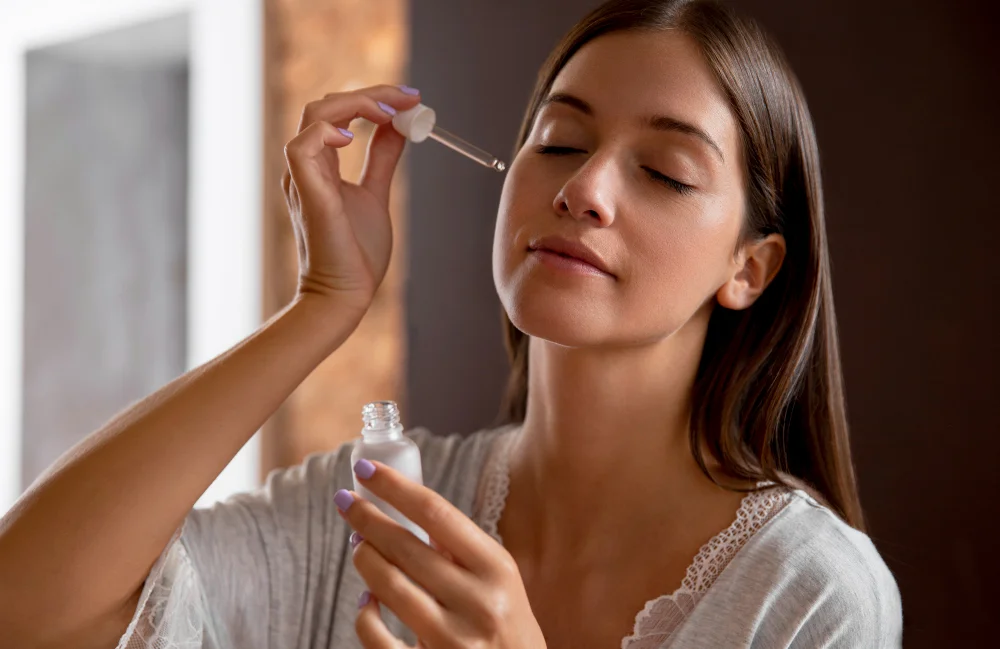
- Apply retinol
- Dispense pea-sized amount onto clean fingertips
- Dot onto forehead, cheeks, chin, nose
- Press gently into skin; don’t rub vigorously
- Avoid eye area, lips, and any active irritation
- Wait 10-15 minutes before moisturizer (“buffering” technique)
- Moisturizer — Rich, hydrating, fragrance-free
- Apply generously over retinol
- This step reduces irritation significantly
- Optional: Facial oil — If very dry or sensitive
- A few drops of squalane or rosehip oil over moisturizer
- Adds extra barrier support
Morning (Every Day):
- Gentle cleanser — Rinse with lukewarm water + cleanser
- Hydrating toner or essence — Adds hydration layer
- Lightweight moisturizer — Non-negotiable hydration
- SPF 30+ sunscreen — Absolutely mandatory
- SPF 50+ preferable when using retinol
- Reapply every 2 hours if outdoors
The “Sandwich Method” (Best for Sensitive Skin)
If you’re extremely sensitive, the sandwich method reduces irritation while maintaining efficacy:
- Apply light moisturizer to clean, dry skin
- Apply retinol (pea-sized amount)
- Wait 10-15 minutes
- Apply another layer of moisturizer on top
This “buffering” approach reduces irritation by about 40-50% without significantly diminishing results. Most sensitive-skin users successfully tolerate retinol this way.
Continue the Retinol Journey: What Does Retinol Do?
Starting Frequency: The Critical “Low and Slow” Protocol
How often you use retinol in week 1 determines whether you’ll succeed or quit. Most beginner failures stem from jumping to too-frequent use too quickly.
Weeks 1-2: Once Per Week
Use retinol once, on the same night each week (e.g., every Monday evening). This allows your skin to adapt to the molecular signal retinol creates without overwhelming your barrier.
What to expect: Possible mild dryness, slight redness, or mild peeling starting 2-3 days after application. This is normal and expected.
Weeks 3-4: Twice Per Week
Increase to twice weekly (e.g., Monday and Thursday evenings), keeping at least 3 days between applications. Your skin has adapted to the cellular changes; it can handle more frequency.
What to expect: Retinization period (the adjustment phase) typically peaks around week 2-3. You may see more noticeable peeling or dryness. This indicates your skin is actively remodeling—not a sign to stop.
Weeks 5-6: Three Times Per Week
Move to three times weekly if your skin is tolerating well (e.g., Monday, Wednesday, Friday). This frequency allows for meaningful skin remodeling while maintaining tolerance.
What to expect: Retinization period should be resolving. Skin is adapting. Early improvements in texture and tone may become visible.
Weeks 7-8+: Four to Five Times Per Week or Daily
Once adapted, you can increase to 4-5 times weekly or nightly if desired. However, many people find 4-5 times weekly provides optimal results without unnecessary irritation. Listen to your skin—daily use isn’t required for efficacy.
Important: Don’t Rush This Timeline
Jumping directly to daily or even every-other-night use in week 1 causes the severe irritation, redness, and barrier damage that give retinol a bad reputation. The timeline above is proven to minimize irritation while maintaining efficacy. Skipping steps creates problems.
One More Retinol Secret: Retinol vs Retinoids
Retinol on Non-Retinol Nights: What to Do
On nights you’re not using retinol, your routine is straightforward and should focus on hydration and barrier support:
- Gentle cleanser
- Hydrating toner or essence
- Hydrating serum (hyaluronic acid or peptides)
- Rich moisturizer
- Optional: Facial oil or sleeping mask for extra hydration
This “off night” routine supports your barrier, maintains hydration, and prepares your skin for the next retinol application.
Common Beginner Mistakes to Avoid
Mistake #1: Applying Retinol to Damp Skin
This is the single most common cause of irritation. Damp skin increases retinol penetration, which increases irritation without increasing efficacy. Always wait 5-10 minutes after cleansing.
Mistake #2: Using Too Much Product
A pea-sized amount is sufficient. More product doesn’t mean faster results—it means more irritation. Resist the urge to apply generously.
Mistake #3: Combining Retinol with Other Actives Too Early
Don’t pair retinol with vitamin C, AHAs, BHAs, or benzoyl peroxide during the first 8 weeks. These combinations create excessive irritation. After 8 weeks of successful retinol use, you can carefully introduce other actives if desired.
Mistake #4: Skipping SPF
Retinol increases photosensitivity. Sun exposure negates retinol’s benefits and accelerates photoaging. Daily SPF 30+ (ideally 50+) is non-negotiable. This isn’t optional—it’s the difference between getting results and wasting time.
Mistake #5: Giving Up During Retinization
Weeks 1-4 are uncomfortable. Peeling, dryness, and sensitivity are normal. This is temporary—it resolves by week 4-6. Most people who quit do so because they didn’t expect this phase or didn’t know it’s temporary.
Mistake #6: Assuming You’re “Resistant” After 2-3 Weeks
Results take time. Expecting visible changes by week 2 guarantees disappointment. Real improvements appear by week 6-8 with consistent use. Patience is essential.
Mistake #7: Not Supporting Your Barrier
Retinol works best with a strong barrier. Using retinol while neglecting hydrating moisturizer and supporting ingredients creates unnecessary irritation and slows adaptation.
What to Expect During Your First 8 Weeks
Week 1: Initial Application
Most people notice nothing immediately. You may experience mild dryness or sensitivity 24-48 hours later. This is normal—your skin is responding to retinol’s cellular signals.
Week 2-3: Retinization Peak
This is when peeling, flaking, and redness may be most noticeable. Your skin is accelerating cell turnover. This temporary disruption is actually a sign retinol is working—not a sign to stop.
Week 4: Retinization Resolving
The irritation phase typically resolves. You may still have mild dryness, but severe redness and peeling should improve. Your skin is adapting.
Week 4-6: Subtle Changes
Early improvements in texture and tone become noticeable. Your skin looks slightly smoother. The “dull” appearance many people have improves. These changes are subtle but real.
Week 6-8: Noticeable Results
By week 6-8, most people notice clear improvements in:
- Skin texture (smoother, softer)
- Radiance (brighter appearance)
- Tone evenness (fewer blotchy areas)
- Pore appearance (smaller-looking, less congested)
- Acne (for acne-prone skin, noticeable improvement in breakout frequency)
Week 8-12: Significant Results
Wrinkle reduction, dark spot fading, and dramatic texture improvements become visible. This is when retinol’s benefits become undeniable.
Curated for Your Skin: How to Start Retinol
When to Expect Real Changes
Early Changes (Week 2-4):
- Smoother texture
- Brighter appearance
- Reduced dullness
Mid-Stage Changes (Week 4-8):
- Visible acne improvement
- Noticeably softer skin
- More even tone
- Reduced pore appearance
Full Results (Week 8-12+):
- Measurable wrinkle reduction
- Faded dark spots
- Dramatically improved texture
- Visible collagen-building effects
The timeline varies—some people see results by week 4, others need the full 12 weeks. Consistency matters more than speed.
Retinol for Different Skin Concerns
For Acne-Prone Skin
Retinol is particularly effective because it normalizes sebum production and accelerates pore clearance. You’ll likely see acne improvement by week 6-8. Start at 0.15-0.25%, twice weekly.
For Aging/Wrinkles
Retinol’s collagen-stimulating effects address wrinkles and photoaging most effectively. You’ll see texture improvements by week 4, wrinkle reduction by week 8-12. Start at 0.1-0.15%, building frequency gradually.
For Dark Spots/Hyperpigmentation
Retinol accelerates the shedding of pigmented cells. You’ll see fading by week 6-8. Start at 0.1-0.2%, building to regular use for best results.
For Uneven Texture
Retinol’s exfoliating effects (accelerated cell turnover) improve texture fastest. You may see improvements by week 2-4. Start at 0.15-0.25% for texture-focused routines.
When to Upgrade Your Retinol
After 12 weeks of successful use at a certain concentration and frequency, you can increase intensity if desired. However, many people find their original concentration + regular use sufficient for long-term results.
Options for Progression:
- Increase concentration: If using 0.1%, move to 0.25% or 0.5%
- Increase frequency: If using 3× weekly, move to 4-5× or nightly
- Switch to stronger retinoid: After mastering retinol, consider retinal (faster results, more potent) or adapalene (OTC, stronger than retinol)
Rule: Increase only one variable at a time. Don’t increase both concentration and frequency simultaneously.
The Bottom Line: Retinol Is Beginner-Friendly When Done Right
Retinol isn’t difficult for beginners—it just requires patience and adherence to the “start low, go slow” principle. Beginning with 0.1-0.25% concentration, using it once or twice weekly initially, supporting your barrier with hydration, and wearing SPF daily sets you up for success.
Most people can successfully use retinol if they approach it strategically. The issue isn’t retinol’s potency—it’s impatience. Give your skin 8-12 weeks of consistent use, tolerate the temporary retinization period, and results will follow.
For Our South Asian Readers
Retinol is increasingly available in India, Pakistan, Bangladesh, and Sri Lanka through dermatologists, pharmacies, and online retailers, but counterfeit products are common—purchase only from verified retailers or dermatologist-recommended sources.
South Asia’s heat and humidity degrade retinol rapidly; store products in cool, dark places (ideally a refrigerator) and replace every 3-4 months rather than the typical 6-month recommendation. The combination of intense year-round UV exposure and retinol use requires particularly diligent SPF application (minimum SPF 50+, reapply every 2 hours outdoors); without strict sun protection, retinol’s benefits are negated.
Additionally, retinization-related dryness is more pronounced in arid climates and during winter months in parts of South Asia; use the sandwich method liberally and prioritize hydrating products.
This Guide is Part of Our Complete Retinol Guide: The Ultimate Retinol Guide: Benefits, How to Use, and Expert-Backed Routines