
Direct Answer:
Retinol is a fat-soluble vitamin A derivative that serves as a cosmetic-grade retinoid in skincare products. Once applied to skin, it is enzymatically converted into retinal, then into retinoic acid—the active form that binds to retinoic acid receptors in your skin cells to trigger anti-aging benefits including collagen production, accelerated cell turnover, reduced sebum production, and improved skin texture. Unlike prescription retinoids like tretinoin, retinol is available over-the-counter and generally requires a gradual introduction period to build tolerance.
Understanding the Ingredient Behind the Hype
Retinol is arguably the most frequently recommended skincare ingredient in dermatology, yet many people use retinol-containing products without fully understanding what they’re applying or how it works. The term “retinol” itself is often used loosely to describe any vitamin A derivative, which creates confusion because the retinoid family includes numerous molecules with vastly different potencies and mechanisms.
This article clarifies exactly what retinol is, how it differs from related compounds, and why dermatologists consistently recommend it as an evidence-based anti-aging and acne-fighting ingredient.
Continue the Journey: What Does Retinol Do?
The Basic Definition: What Retinol Is
Retinol is a naturally occurring form of vitamin A that belongs to the retinoid family—a group of compounds derived from vitamin A. Structurally, it is a small, fat-soluble molecule that can penetrate the skin’s lipid barrier and reach the dermis (the layer below the epidermis where collagen lives).
The critical point many people miss: retinol itself is not the active form. When you apply it topically, your skin must convert it through enzymatic steps into retinoic acid, which is the molecule that actually binds to cellular receptors and produces visible changes.
This conversion requirement is why it is categorized as a “pro-retinoid” or “pre-retinoid”—it’s a precursor that your body activates, rather than an active ingredient that works immediately.
Why Retinol Requires Conversion
Your skin contains specific enzymes that convert vitamin A derivatives step-by-step:
Retinol → (enzymatic conversion) → Retinal → (enzymatic conversion) → Retinoic Acid
Only retinoic acid can bind to retinoic acid receptors (RAR and RXR) in your cells, which act as switches controlling genes related to collagen production, cell differentiation, pigmentation, and sebaceous gland function.
Because it requires two enzymatic conversions, this process is:
- Slower — Takes time for enzymes to work through both conversion steps
- Less efficient — Not every molecule applied, successfully converts to retinoic acid
- Gentler — The gradual delivery means less irritation than prescription-strength tretinoin, which is already retinoic acid
This conversion mechanism explains why users typically see results after 8-12 weeks, whereas tretinoin users often see changes within 2-4 weeks—the enzyme-driven conversion adds time but reduces irritation risk.
Your Notes: How Does Retinol Work?
Retinol vs. Other Retinoids: Where It Fits
The retinoid family includes several molecules, each at different points on the potency spectrum. Understanding these differences helps you choose the right form for your needs:
Retinyl Palmitate
The weakest form in the retinoid family. Retinyl palmitate requires multiple enzymatic conversions before becoming retinoic acid, making it the gentlest but slowest-acting option. Often used in mass-market moisturizers because the low irritation risk allows brands to claim “retinoid” benefits with minimal concern for adverse reactions.
Best for: Complete beginners, reactive skin, or those seeking minimal risk over maximum results.
Retinol (Pure Form)
Requires two enzymatic conversions. Available over-the-counter at concentrations typically ranging from 0.1% to 1%. Balances efficacy with tolerability—strong enough to produce visible results within 8-12 weeks, gentle enough for most skin types when introduced gradually.
Best for: Most people seeking anti-aging benefits, acne treatment, or skin texture improvement. The sweet spot for beginners willing to build tolerance over several weeks.
Retinal (Retinaldehyde)
Intermediate strength; requires only one enzymatic conversion before becoming retinoic acid. Clinical research indicates retinal acts approximately 11× faster than retinol, meaning stronger results with a shorter timeline—but also higher irritation risk.
Best for: Intermediate users who’ve successfully adapted to retinol and seek faster results, or those with robust skin tolerances.
Adapalene (Differin)
A synthetic third-generation retinoid that doesn’t require conversion; it binds directly to specific retinoic acid receptors via a selective pathway. Available at 0.1% over-the-counter (Differin) and 0.3% by prescription. Was designed specifically to minimize irritation compared to earlier prescription retinoids while maintaining potency for acne treatment.
Best for: Those seeking potency similar to retinol but with less irritation risk, or those specifically targeting acne.
Tretinoin (Retin-A)
Prescription-strength; chemically identical to retinoic acid, so no conversion is necessary—it works immediately at the receptor level. Approximately 20× more potent than retinol. Used for acne, photoaging, and various off-label conditions. Requires close monitoring due to higher irritation and side-effect risk.
Best for: Those with established retinoid tolerance or those whose dermatologists determine would benefit from prescription strength.
Tazarotene
Another prescription retinoid, sometimes more potent than tretinoin. Primarily used for acne and psoriasis. Rarely used for general anti-aging.
Bakuchiol
A non-retinoid plant-based alternative derived from the babchi plant. Produces similar biological effects to retinol (collagen stimulation, cell turnover acceleration) without binding to retinoic acid receptors. No irritation, no photosensitivity, no pregnancy concerns. Slower results than retinol but excellent for sensitive, pregnant, or retinoid-intolerant skin.
Best for: Pregnant/breastfeeding individuals, very sensitive skin, those unable to tolerate vitamin A derivatives, or anyone seeking retinol benefits without irritation.
Potency Spectrum Summary
Retinyl Palmitate < Retinol < Retinal < Adapalene < Tretinoin
One More Secret: Retinol vs Retinoids
Why Retinol Is Called the “Gold Standard”
Retinol earned its gold-standard reputation because it occupies a unique position in the retinoid landscape:
1. Evidence-Backed Efficacy
Retinol has been studied extensively in dermatological literature for decades. According to the American Academy of Dermatology Association and numerous peer-reviewed journals, retinol consistently improves wrinkles, photoaging, acne, hyperpigmentation, and skin texture. The evidence base for it is as robust as any skincare ingredient.
2. Over-the-Counter Availability
Unlike tretinoin and adapalene (which require prescriptions at therapeutic doses), retinol is available without a doctor’s prescription. This accessibility makes anti-aging and acne treatment available to millions who can’t access dermatology care.
3. Balanced Risk-Benefit Profile
Retinol is potent enough to produce visible results within 8-12 weeks but gentle enough that most people can tolerate it with a gradual introduction protocol. It’s significantly more irritating than bakuchiol but far less irritating than tretinoin. This middle ground makes it ideal for people seeking results without the intensity of prescription options.
4. Versatility Across Concerns
A single retinol product can address multiple concerns simultaneously—anti-aging, acne, discoloration, and texture. This multipurpose profile makes it exceptionally efficient in a skincare routine.
5. Compatibility with Other Ingredients
After an adaptation period, retinol pairs well with many other beneficial ingredients (vitamin C, niacinamide, hyaluronic acid, peptides). This flexibility allows for sophisticated, multi-targeted routines.
How Retinol Works at the Cellular Level
Once retinol is converted to retinoic acid, it binds to retinoic acid receptors (RAR-α, RAR-β, RAR-γ and RXR receptors) in your skin cells. These receptors function as transcription factors—molecular “switches” that control which genes are turned on or off.
When retinoic acid activates these receptors, it upregulates genes responsible for:
- Collagen synthesis — Signals fibroblasts to produce new collagen and elastin
- Cell differentiation — Promotes normal skin cell maturation and shedding
- Matrix metalloproteinase (MMP) inhibition — Prevents collagen-degrading enzymes from breaking down existing collagen
- Sebaceous gland regulation — Normalizes sebum production
- Melanin regulation — Controls pigment cell behavior, reducing hyperpigmentation
- Angiogenesis — Promotes blood vessel formation and improved skin blood flow
This multi-targeted mechanism is why retinol addresses such a wide range of skin concerns without requiring multiple active ingredients.
Retinol Stability & Formulation Challenges
Retinol is notoriously unstable. It degrades when exposed to:
- Light (especially UV and blue light)
- Heat
- Air (oxygen)
- Water
This is why quality products come in:
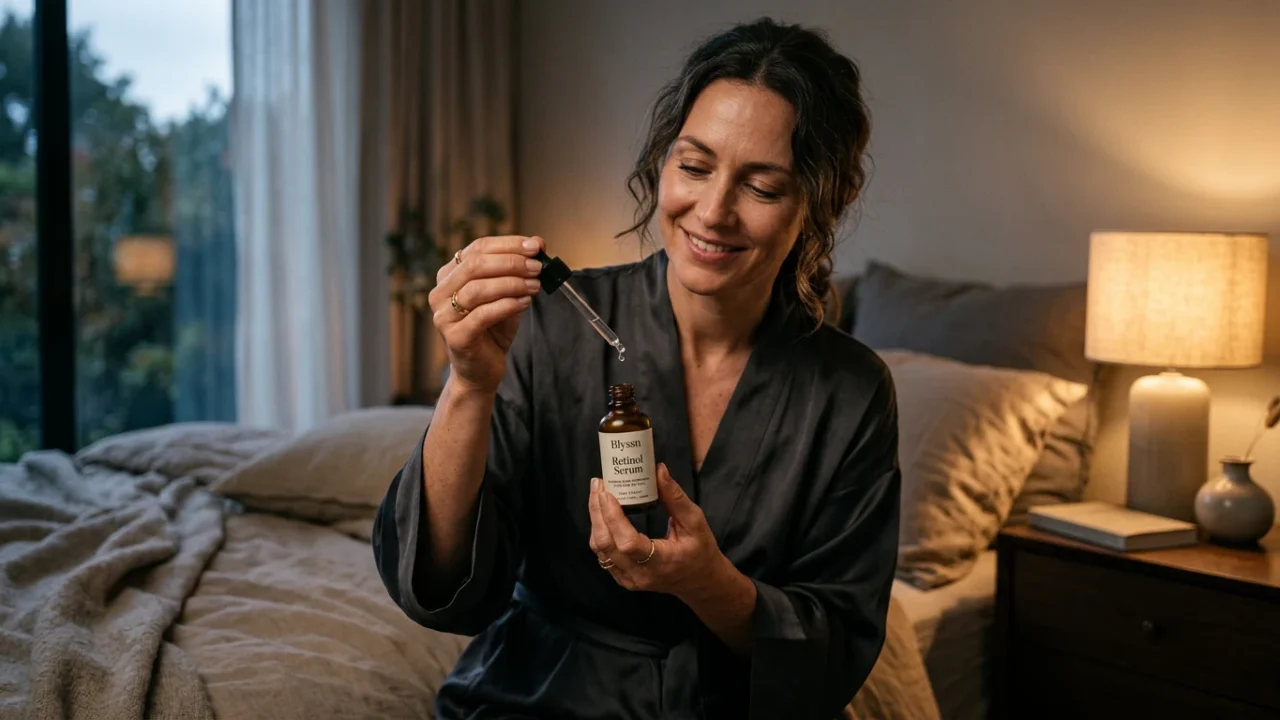
- Dark or opaque packaging — Blocks light
- Airtight containers — Minimizes oxygen exposure
- Anhydrous formulations — Water-free bases prevent degradation
A retinol product in clear packaging or a pump dispenser likely contains degraded form and won’t deliver expected benefits. When shopping, packaging matters as much as concentration.
Advanced formulations use:
- Encapsulation technologies — Retinol wrapped in microspheres that release gradually, reducing irritation while improving stability
- Stabilized forms — Chemically modified retinol designed for better stability
- Ester forms (retinyl palmitate, retinyl acetate) — More stable but less potent than pure retinol
The Next Step: Retinol for Beginners
Concentration & Efficacy: Does Higher = Better?
Concentrations range from 0.05% to 1%, but higher concentrations don’t automatically mean better results. Several factors matter more:
1. Your Skin’s Adaptation
Using 0.1% retinol consistently produces better results than sporadic use of 1%. Consistency beats intensity.
2. Formulation Quality
A well-formulated 0.3% retinol may deliver better results than a poorly formulated 0.5% due to differences in:
- Stability
- Delivery system (encapsulation, carrier molecules)
- Supporting ingredients (hydrators, antioxidants, soothing agents)
3. Your Specific Concerns
For mild concerns (fine lines, minor texture), 0.25-0.3% may be sufficient. For more significant concerns (deep wrinkles, severe acne, significant photoaging), 0.5-1% may be necessary.
4. Your Skin’s Sensitivity
Very sensitive, reactive, or compromised skin barriers require lower concentrations. Robust, resilient skin can typically tolerate higher concentrations.
Best approach: Start with the lowest concentration you can find (0.1%), use consistently for 8-12 weeks, assess results, then increase concentration or frequency if desired.
The Retinization Period: What to Expect
When you first start retinol, your skin undergoes an adaptation period called “retinization,” typically lasting 2-4 weeks. During this time:
- Mild redness or flushing — Blood vessels dilate in response to increased skin activity
- Dryness and tightness — Retinol increases cell turnover; outer layer sheds faster
- Slight peeling or flaking — Accelerated shedding of dead skin cells
- Temporary sensitivity — Skin may feel reactive to other products
- Possible breakouts — Not true “purging,” but sometimes congestion as pores clear
These effects are normal and expected. They don’t mean retinol isn’t working for you—they mean your skin is adapting. Persistence through this phase leads to clearer, smoother, more radiant skin by week 6-8.
If irritation doesn’t resolve after 4-6 weeks of consistent use at low frequency, your skin may not tolerate retinol. This is uncommon but valid, and you should discontinue use and explore alternatives.
Retinol & Pregnancy: What You Need to Know
Topical exposure during pregnancy is controversial. While dermal absorption through intact, healthy skin is minimal (estimated at less than 1% of applied retinol), many pregnancy and dermatology organizations recommend avoiding all retinoids during pregnancy as a precautionary measure.
If you’re pregnant or planning to become pregnant:
- Discontinue retinol at least one month before attempting pregnancy
- Don’t resume until your obstetrician gives explicit permission
- During breastfeeding, most experts recommend waiting until nursing is complete
Safer alternatives during pregnancy:
- Bakuchiol (plant-based, non-teratogenic)
- Vitamin C
- Niacinamide
- Hyaluronic acid
- Gentle physical exfoliation
Always consult your OB/GYN before using any topical actives during pregnancy.
Common Myths Debunked
Myth 1: “Retinol causes permanent thinning of the skin”
Fact: Retinol strengthens skin by increasing collagen and improving barrier function. Skin may appear slightly thinner during the retinization period due to exfoliation, but it actually becomes thicker and more resilient long-term.
Myth 2: “Retinol makes you more prone to skin cancer”
Fact: Retinol actually helps prevent photoaging and may reduce certain skin cancer risks. The increased sun sensitivity requires diligent SPF use, but this is about protection, not increased cancer risk.
Myth 3: “Once you start retinol, you can’t stop or your skin gets worse”
Fact: You can discontinue retinol anytime. Your skin won’t “crash” or become dependent. However, anti-aging benefits will plateau once you stop use.
Myth 4: “Retinol works the same in all formulations”
Fact: Retinol is only as effective as the formulation allows. Stability, concentration, delivery system, and supporting ingredients dramatically affect real-world efficacy.
Myth 5: “Higher concentration automatically means faster results”
Fact: Consistent use of lower concentration outperforms sporadic use of high concentration. Starting too high often leads to irritation and discontinuation.
The Bottom Line
Retinol is a stable, well-studied, over-the-counter vitamin A derivative that requires enzymatic conversion to become retinoic acid—the molecule that actually triggers anti-aging and acne-fighting benefits in your skin. It occupies the “Goldilocks zone” in the retinoid spectrum: potent enough to produce visible results within 8-12 weeks, gentle enough that most skin types can tolerate it with proper introduction.
When choosing, focus on:
- Starting low (0.1% concentration)
- Going slow (once or twice weekly initially)
- Choosing stable formulations (dark packaging, clean ingredient list)
- Supporting with hydration and sun protection
- Building tolerance gradually before increasing concentration or frequency
Understanding what retinol is—and crucially, what it isn’t—positions you to use it effectively and achieve the visible skin improvement that makes it the gold standard in skincare.
Curated for Your Skin: How to Start Retinol
For Our South Asian Readers
In South Asian countries, retinol products are increasingly available through both traditional retail and online channels, but product quality and authenticity vary significantly. When purchasing it in India, Pakistan, Bangladesh, or Sri Lanka:
(1) buy from verified retailers or dermatologist-recommended brands to ensure authenticity, as counterfeit skincare products are common in the region, (2) choose formulations with stabilized or encapsulation technology, as heat and humidity in South Asia can degrade conventional retinol, (3) prioritize products with opaque, airtight packaging to protect against climate-induced degradation, and (4) expect to pay slightly premium prices for quality formulations—cheap retinol products often contain inactive or degraded forms.
This Guide is Part of Our Complete Guide: The Ultimate Retinol Guide: Benefits, How to Use, and Expert-Backed Routines