

Quick Answer:
A basic retinol routine applies the ingredient at night after cleansing on dry skin, followed by moisturizer. Start with low concentrations (0.3%) every other night for 2–3 weeks, then increase frequency as your skin adapts. Use daily broad-spectrum SPF 50+ during the day. Results appear within 4–12 weeks depending on concentration and skin sensitivity.
What Is Retinol and Why Does It Matter?
Retinol is a form of vitamin A that has become one of the most researched and effective anti-aging ingredients in skincare. Board-certified dermatologist Dr. Linda Honet, president of Honet Dermatology/Cosmetic, explains that retinoids—of which retinol is a subtype—are powerful skin transformers that work by boosting cellular turnover and supporting collagen production. This is why dermatologists consistently recommend retinol for reducing fine lines, evening skin tone, and improving texture.
The mechanism is straightforward: retinol penetrates the skin, converts into retinoic acid, and then signals cells to turn over faster and produce more collagen. However, this power comes with an adjustment period. Your skin needs time to acclimate to avoid irritation, dryness, or what skincare professionals affectionately call “the retinol uglies.”
The Retinol Edit: What Is Retinol?
The Ideal Retinol Routine: Step-by-Step
Step 1: Start With a Gentle Cleanser (Evening)
Begin your retinol routine by cleansing your face with a mild, non-foaming cleanser. According to dermatology guidance, avoid scrubbing or using hot water—both can compromise your skin barrier. Pat your skin dry gently with a soft towel. Crucially, wait 15–30 minutes after cleansing before applying retinol. This allows your skin to reach its natural pH, which prevents excessive irritation.
Why the wait? Damp or freshly cleaned skin absorbs retinol more rapidly and intensely. For beginners, slower absorption means less irritation and better tolerance.
Retinol Notes: How Does Retinol Work?
Step 2: Apply Retinol to Completely Dry Skin
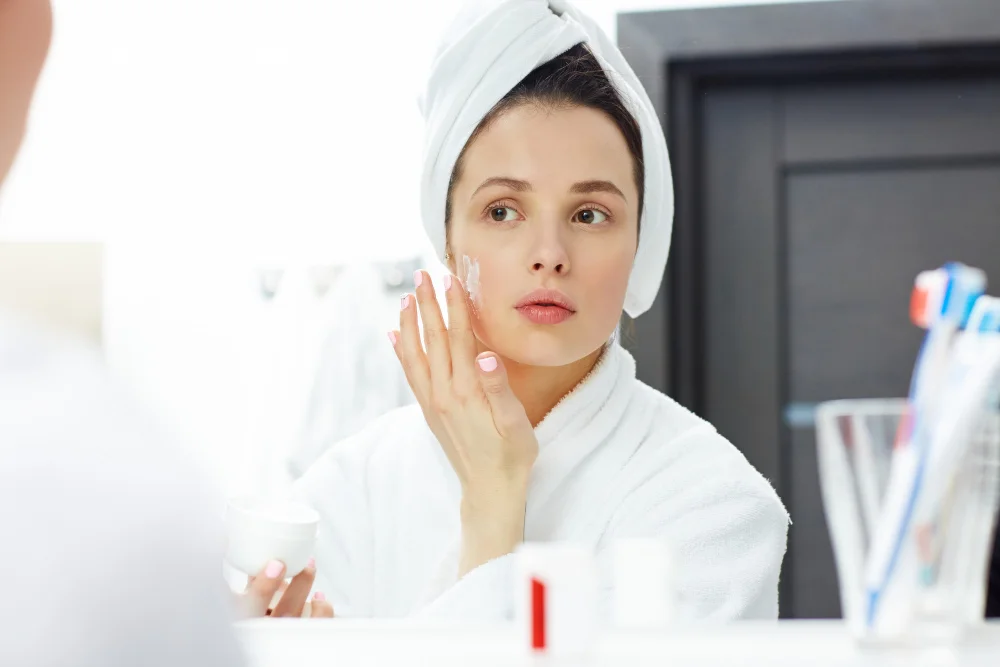
Once your skin is fully dry, apply a pea-sized amount of retinol serum or cream to your entire face, avoiding the delicate eye contour, lips, and mucous membranes. Use your fingertips and apply with gentle, upward strokes. Do not mix retinol with other products in your palm—this can destabilize the formula and reduce efficacy.
Licensed esthetician Lindsay Holdorf notes that retinol benefits are maximized when the skin barrier is intact and hydration is supported. Applying to completely dry skin (not damp) allows the ingredient to penetrate gradually without overwhelming your skin.
Step 3: Wait Before Moisturizing (5–15 Minutes)
Allow your retinol to absorb fully before applying moisturizer. A 5–15 minute wait gives the retinol time to be absorbed without being diluted by occlusive creams. If your skin is extremely dry or sensitive, you can use the “sandwich method”: apply a thin layer of moisturizer first, then retinol, then another layer of moisturizer. This buffers irritation while preserving efficacy.
Continue the Retinol Journey: What Does Retinol Do?
Step 4: Apply a Nourishing Moisturizer
Follow with a hydrating, barrier-supporting moisturizer. Look for ingredients like hyaluronic acid, ceramides, or glycerin. This is non-negotiable—retinol increases dryness and sensitivity, and a good moisturizer minimizes these side effects and supports long-term adherence to your routine.
Step 5: Morning Routine (SPF is Essential)
In the morning, follow your regular skincare routine and apply a broad-spectrum sunscreen with at least SPF 50+. Retinol increases photosensitivity, meaning your skin is more vulnerable to UV damage. Skipping sunscreen negates retinol’s anti-aging benefits and increases the risk of sun damage and hyperpigmentation.
One More Retinol Secret: Retinol vs Retinoids
South Asian Audience Read:
For readers in South Asia, particularly those with deeper or warm skin tones: Retinol benefits all skin tones equally, but deeper skin is more prone to post-inflammatory hyperpigmentation (PIH) during retinol adjustment.
Start with the lowest concentration (0.25% or less) and increase frequency very slowly—once weekly for the first 4–6 weeks. Always use SPF 50+ or higher (preferably with zinc oxide or avobenzone for UVA protection). If PIH develops, reduce retinol frequency immediately and add vitamin C or niacinamide to your routine.
Many dermatologists in India, Pakistan, and Bangladesh now recommend retinol for all skin tones when introduced cautiously, making it an excellent long-term investment in skin health regardless of location.
Retinol Concentration and Frequency: A Beginner’s Timeline
One of the most common mistakes is starting with too high a concentration or using retinol every night. Your skin needs an adjustment period. Here’s a proven timeline:
Weeks 1–3: Use 0.3% retinol 2–3 times per week (e.g., Monday, Wednesday, Friday nights). If irritation or excessive dryness occurs, reduce to once weekly.
Weeks 4–6: If your skin is tolerating well, increase to every other night (alternating nights).
Weeks 7+: If no adverse effects, progress to nightly use. Higher concentrations (0.5%–1%) can be introduced only after your skin has adapted to lower strengths.
A 2016 clinical study found that retinol cream enriched with supportive ingredients (like niacinamide and moisturizers) resulted in significantly less irritation compared to retinol-only formulas. This reinforces why pairing retinol with hydrating support is essential from day one.
The Next Retinol Step: Retinol for Beginners
Retinol’s Timeline for Results
Patience is critical. Retinol results don’t appear overnight:
- Weeks 2–4: Possible initial dryness or mild peeling (your skin is turning over faster)
- Weeks 4–8: Skin texture begins improving; pores appear smaller
- Weeks 8–12: Fine lines soften visibly; skin tone evens; skin appears brighter
- Weeks 12+: Full anti-aging benefits emerge—firmer, more plump skin with reduced hyperpigmentation
Most dermatologists note that consistent use for at least 8–12 weeks is required to assess whether retinol is working for your skin. Stopping early because you don’t see immediate results undermines the entire effort.
Curated for Your Skin: How to Start Retinol
Common Retinol Side Effects and How to Manage Them
Retinol can cause temporary side effects, especially in the first few weeks. These are usually signs your skin is adapting, not that you should stop using it:
Dryness and Peeling: This is the most common side effect. Manage it by reducing frequency, using the sandwich method, or adding an extra hydrating layer. Ensure your moisturizer is nourishing, not lightweight.
Redness and Irritation: If redness is mild (not burning), it typically subsides within 1–2 weeks. If it’s severe, reduce frequency or concentration. Do not combine retinol with other exfoliating acids during the adjustment period.
Increased Sensitivity to Sun: This is why SPF 50+ is non-negotiable. Retinol temporarily compromises your skin barrier and UV protection, so sun protection becomes critical.
The “Retinol Uglies”: Some people experience temporary breakouts, flaking, or increased sensitivity in the first 2–4 weeks. This is a sign of increased cell turnover and usually resolves as your skin acclimates.
Best Practices for Long-Term Retinol Success
Avoid Mixing With: AHAs/BHAs (glycolic, salicylic acid), vitamin C in the same step, or high-strength benzoyl peroxide. These can over-exfoliate or destabilize retinol formulas.
Avoid Direct Sunlight: Retinol degrades under UV light, making it less effective. Night-only application is ideal. Some formulations claim daytime stability, but evening use maximizes benefits.
Use Proper Storage: Retinol is unstable when exposed to light and air. Buy products in opaque, airless packaging. Avoid jars. Store in a cool, dark place or refrigerator for extended shelf life.
Support Your Barrier: Use hydrating ingredients like hyaluronic acid, niacinamide, or peptides alongside retinol. These don’t interfere with retinol efficacy but dramatically improve tolerance and results.
Consistency Over Perfection: Retinol works through cumulative use. Missing occasional applications is fine, but erratic use stalls results. Aim for at least 3–4 applications per week minimum.
Who Should Use Retinol?
Retinol is beneficial for most skin types:
- Aging skin: Reduces fine lines, increases firmness, boosts radiance
- Acne-prone skin: Unclogs pores, reduces sebum, prevents breakouts
- Uneven tone: Accelerates cell turnover, fades hyperpigmentation and dark spots
- Dull skin: Brightens through increased cellular renewal
Who should avoid retinol: Pregnant or nursing women (retinol is teratogenic), people with severe eczema or dermatitis (consult a dermatologist first), or those with extreme photosensitivity.
Retinol vs. Prescription Retinoids: What’s the Difference?
Retinol (over-the-counter) is weaker than prescription retinoids (tretinoin, adapalene, tazarotene) but also causes fewer side effects. What this means, Retinol works gradually; prescription retinoids work faster but require more careful introduction. For beginners, retinol is ideal. Once skin is adapted, switching to a prescription retinoid under dermatological guidance can provide stronger anti-aging results.
Final Thoughts: Your Retinol Roadmap
A successful retinol routine is built on three pillars: gradual introduction, consistent hydration support, and daily sun protection. Start low, go slow, and listen to your skin. If you experience persistent severe irritation, consult a dermatologist—they can recommend adjustments or alternative formulations.
Retinol is one of the few skincare ingredients with decades of clinical validation. When used correctly, the transformation in skin texture, tone, and firmness is genuinely remarkable. Your patience now pays dividends in 12 weeks.
This Guide is Part of Our Complete Retinol Guide: The Ultimate Retinol Guide: Benefits, How to Use, and Expert-Backed Routines