
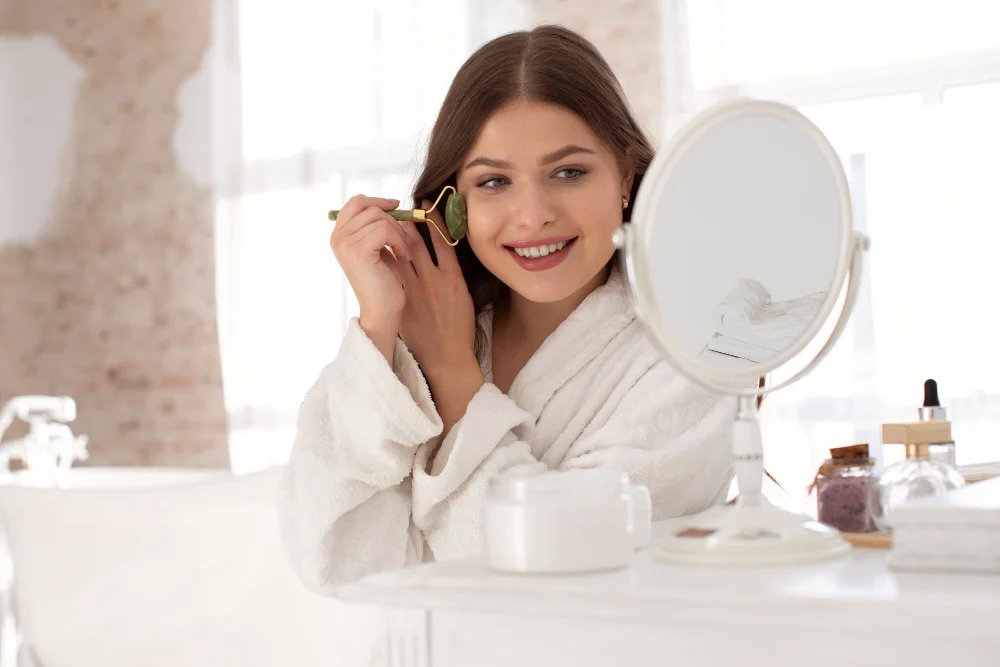
Growing up in Pakistan, you’ve probably heard it countless times: “Your skin is your first impression.” But here’s the truth no one tells you—a simple skincare routine for Pakistani girls doesn’t mean expensive imports or 10-step Korean regimens. It means understanding your skin, your climate, and what actually works in Lahore’s humidity, Karachi’s salt air, or Quetta’s dryness.
Pakistani girls face unique skin challenges. The harsh sun ages skin faster. Pollution clogs pores. The stress of balancing cultural expectations, studies, and career ambitions wreaks havoc on your complexion. Between 8-hour college days, family responsibilities, and scrolling social media at midnight, who has time for elaborate routines?
This guide is different. It’s built for you—not for someone in California or Seoul. It’s a 5-step morning and evening skincare routine that takes less than 10 minutes total, uses products you can actually find in Pakistan, and works with your lifestyle. Whether your skin is oily, dry, combination, or sensitive, we’ll adapt this routine to your needs.
By the end, you’ll have a framework that keeps your skin glowing, protected, and stress-free—even on your busiest days.
Direct Answer:
Q: What is a simple skincare routine for Pakistani girls?
A: A simple skincare routine for Pakistani girls consists of five steps performed twice daily:
Morning (5 minutes):
- Cleanse with a gentle cleanser suited to your skin type
- Apply toner or rose water to balance pH
- Apply serum (Vitamin C or Niacinamide for brightening and oil control)
- Moisturize with a lightweight formula
- Apply broad-spectrum SPF 30+ sunscreen for UV protection
Evening (7 minutes):
- Remove makeup with oil cleanser or micellar water if worn
- Cleanse again with gentle cleanser
- Apply toner/rose water for pH balance
- Apply treatment serum (Vitamin C, Niacinamide, or Retinol for cell turnover)
- Moisturize with a richer night cream
Why this matters for Pakistani skin:
- Pakistan’s UV index (11+) causes pigmentation and premature aging
- Pollution in major cities (Lahore, Karachi, Islamabad) clogs pores and causes dullness
- Hormonal stress common in Pakistani girls triggers breakouts
- Climate varies (coastal humidity vs. inland dryness) requiring seasonal adjustments
Key products available in Pakistan:
- Himalaya Gentle Cleansing Lotion (500 PKR)
- Pure rose water (300 PKR from local beauty shops)
- The Ordinary Niacinamide 10% (800 PKR via Daraz)
- Cetaphil SPF 50 (1,000 PKR)
Realistic results timeline:
- Week 1–2: Skin feels cleaner
- Week 3–4: Visible glow, breakouts reduced
- Week 6–8: Dark spots lighter (30–40%), even tone
Natural Pakistani remedies to integrate:
- Turmeric + honey masks (weekly) for brightening
- Aloe vera for acne-prone skin
- Multani mitti for oil absorption
- Rose water as traditional hydrating toner
Why Pakistani Girls Need a Custom Skincare Routine
Before you skip to “just tell me the routine,” understand why you need one specifically tailored to Pakistan.
Unique Challenge #1: The Climate Factor
Pakistan’s climate is intense. The UV index in summer (March–September) exceeds 11—well into the “extreme” zone. Your skin isn’t exaggerating when it burns after 20 minutes of sun exposure. This isn’t vanity; it’s dermatology. Daily sun exposure accelerates:
- Pigmentation and dark spots
- Fine lines and premature aging
- Photoaging (sun-induced damage that makes skin look 5–10 years older)
- Hyperpigmentation (uneven patches, especially on cheeks and forehead)
Factor in:
- Summer humidity (70–90% in coastal cities) that traps bacteria in pores
- Winter dryness (5–15% humidity in inland areas) that strips your skin barrier
- Seasonal pollution (smog season in Lahore, Oct–Dec)
- Dust storms and high particulate matter (especially Peshawar and Karachi)
Your skin isn’t “sensitive” or “difficult”—it’s working overtime.
Unique Challenge #2: The Lifestyle Pressure
Pakistani girls juggle pressures Western skincare guides never address:
- Early mornings (5–6 AM for school/work/prayers)
- Long days (8+ hours away from home)
- Mandatory family dinners and social commitments
- Study stress (exams, competitive college admissions)
- Social media comparison (Instagram models don’t face your pollution)
- Multi-role expectations (student, daughter, sister, friend, future professional)
This sustained stress increases cortisol, triggering:
- Hormonal breakouts (especially around jaw and chin)
- Increased sebum production
- Delayed skin healing
- General inflammation and redness
No amount of fancy serum can out-compete chronic stress. But a consistent, efficient routine signals to your brain: “I’m taking care of myself.” That psychological act alone reduces stress—and your skin shows it within 2–3 weeks.
Unique Challenge #3: Pigmentation & Uneven Tone
If you’ve looked in the mirror and noticed your skin tone isn’t uniform—darker on cheeks, lighter on forehead, hyperpigmented patches around the mouth—you’re not alone. Studies show 70–80% of South Asian women struggle with uneven tone by age 25.
Causes:
- Sun damage (photopigmentation)
- Hormonal changes (pregnancy, birth control, stress)
- Post-inflammatory hyperpigmentation (acne scars)
- Genetics (your melanocytes are very responsive)
This is why sunscreen isn’t optional in Pakistan—it’s the #1 anti-aging, anti-pigmentation tool. More effective than any serum.
Before investing in expensive brightening products, make sure you’re not making the common errors covered in Sunscreen Mistakes That Cause Pigmentation.
The 5-Step Morning Skincare Routine (Takes 5 Minutes)
Your morning routine preps your skin for 8+ hours of sun, pollution, and environmental stress.
Step 1: Gentle Cleanse (1 minute)
What to use: Hydrating or gel cleanser (gel if oily, hydrating if dry/sensitive) Examples available in Pakistan:
- Himalaya Gentle Cleansing Lotion
- Neutrogena Hydro Boost Hydrating Cleansing Wipes
- Local option: Simple Kind to Skin Refreshing Facial Wash
Why: Overnight, your skin secretes sebum, bacteria colonize your pores, and dust settles on your face. A gentle cleanser (not a harsh scrub) removes this without stripping your skin barrier.
How:
- Use lukewarm water (not hot—hot water damages your lipid barrier)
- Apply cleanser with fingertips in circular motions (20–30 seconds)
- Rinse thoroughly with cool water to close pores
- Pat dry with a clean towel (don’t rub—rubbing irritates skin)
Pro tip for Pakistani climate: In summer, cleanse with slightly cooler water to prevent heat-induced flushing. In winter, use lukewarm water to prevent tightness.
Step 2: Toner or Hydrating Mist (1 minute)
What to use: pH-balancing toner OR hydrating facial mist Examples available in Pakistan:
- Rose water (pure, from local cosmetic shops)
- Himalaya Purifying Neem Toner
- Micellar water (for makeup-free days)
Why: Cleansing disrupts your skin’s pH balance (your skin prefers pH 4.5–5.5; water is pH 7). A toner restores this balance, preparing skin to absorb serums better.
How:
- Apply with a cotton pad or spray directly onto face
- Let it dry for 10–15 seconds before moving to next step
- This creates a “hydration base” for serums
Natural Pakistani alternative: Use pure rose water (commonly available in Pakistani markets). Rose water is anti-inflammatory, maintains pH, and has been used for centuries in South Asian skincare.
Step 3: Serum or Essence (1 minute)
What to use: Vitamin C serum OR Niacinamide serum OR hydrating essence Examples available in Pakistan:
- Deconstruct Vitamin C Serum
- The Ordinary Niacinamide 10% + Zinc 1%
- Local: DVAGO Brightening Serum
- Budget-friendly: Hydrating essence spray (available in Daraz, local pharmacies)
Why: Serums penetrate deeper than creams and deliver concentrated actives (vitamins, brightening agents). This is where you address pigmentation and dullness.
Best choice for Pakistani girls: Vitamin C serum (brightens, antioxidant protection) OR Niacinamide (regulates sebum, calms inflammation). Both are powerhouses for pollution-damaged skin.
How:
- Apply 2–3 drops to fingertips
- Gently press into face (don’t rub; patting is more effective)
- Let it absorb for 30–45 seconds
Step 4: Moisturizer (1 minute)
What to use: Lightweight moisturizer suited to your skin type Examples available in Pakistan:
- Oily skin: CeraVe Facial Moisturizing Lotion PM OR Neutrogena Oil-Free Moisturizer
- Dry skin: Cetaphil Rich Hydrating Night Cream (use morning too) OR Himalaya Moisturizing Cream
- Combination: Neutrogena Hydro Boost Water Gel
Why: Moisturizer locks in hydration from previous steps and creates a barrier against pollution and UV. Even oily skin needs this. If you’ve ever wondered whether moisturizer will make oily skin worse, you’ll find the answer in Moisturizer for Oily Skin: Do You Really Need It?
How:
- Apply a pea-sized amount to face and neck
- Gently massage in upward strokes (massage improves blood circulation)
- Let it set for 1–2 minutes before sunscreen
Step 5: Broad-Spectrum Sunscreen SPF 30+ (1 minute)
What to use: Mineral (zinc oxide/titanium dioxide) OR Chemical (oxybenzone/octinoxate) sunscreen Examples available in Pakistan:
- Cetaphil Sun Spf 50+ (budget-friendly, easily available)
- Blue Nectar Ayurvedic Sunscreen SPF 50
- Garnier Ombrelle UV Protection SPF 60
- Local pharmacy generic: Any SPF 30+ from brands like Fair & Lovely, Olay, or Ponds
Why this is non-negotiable: Sunscreen is the #1 anti-aging product. It prevents:
- Pigmentation (dark spots, melasma)
- Photoaging (wrinkles, leathery texture)
- Skin cancer risk (melanoma incidence is rising in South Asia)
For Pakistani girls in a sunny climate, daily sunscreen is as essential as toothbrushing.
How:
- Apply generously (most people use 1/4 teaspoon—too little. Use 1/2 teaspoon for face)
- Wait 2–3 minutes before touching your face (sunscreen needs time to set)
- Reapply every 3 hours if you’re outdoors (especially after sports, gym, or outdoor classes)
In summer: Use a lightweight, non-greasy sunscreen formula (gel texture). Your oily skin will thank you. In winter: Sunscreen is still essential—UV rays penetrate clouds and reflect off snow/light surfaces.
The 5-Step Evening Skincare Routine (Takes 7 Minutes)
Evening is when your skin repairs itself. This routine removes the day’s damage and feeds your skin while you sleep.
Step 1: Makeup Removal (2 minutes)
What to use: Oil cleanser OR micellar water (if wearing makeup) Examples available in Pakistan:
- Oil cleanser: Coconut oil (yes, really—but use a good brand like Divine or Coco Organics, not cooking oil)
- Micellar water: Garnier Micellar Water (available in Daraz, pharmacies)
- Cream cleanser: Cetaphil Cream Cleanser
Why: If you wore sunscreen + any makeup, a regular cleanser won’t remove it completely. Oil dissolves oil-based products. Leaving residue overnight causes clogged pores, blackheads, and breakouts.
How:
- Apply oil or micellar water to dry face
- Massage for 30–45 seconds (this helps dissolve makeup, sunscreen, and sebum)
- Add a little water and keep massaging (it will turn milky—this is the emulsion breaking down)
- Rinse thoroughly with lukewarm water
Pro tip: If you didn’t wear makeup (just sunscreen + serum), you can skip this and go to Step 2.
Step 2: Cleanse Again (1 minute)
What to use: Gentle cleanser (same as morning, or a cream cleanser for extra hydration) Why: This is the “second cleanse”—it removes any residual oil cleanser and makes sure your skin is truly clean before applying actives.
How:
- Apply cleanser to damp face
- Massage for 20–30 seconds
- Rinse with cool water
- Pat dry
Step 3: Toner or Hydrating Mist (1 minute)
What to use: Same rose water or toner as morning Why: Re-balances pH after cleansing, preps skin for heavier actives at night.
Step 4: Night Serum or Treatment (2 minutes)
What to use: Vitamin C serum, Retinol (if experienced), or Niacinamide serum Examples available in Pakistan:
- Retinol: The Ordinary Retinol 0.2% (start here—low strength for beginners)
- Vitamin C: Deconstruct Vitamin C Serum
- Niacinamide: The Ordinary (same as morning, but night application is deeper)
- Natural option: Fresh aloe vera gel (antibacterial, soothing for acne-prone skin)
Why: At night, your skin’s cell turnover increases (skin cells renew every 28 days, with most renewal happening 9 PM–3 AM). This is when actives work hardest.
How:
- Apply 2–3 drops
- Wait 5–10 minutes for it to absorb (especially important for retinol—waiting prevents irritation)
- Then move to moisturizer
Note on retinol: If you’re under 25 and have never used retinol, start with The Ordinary Retinol 0.2% or 0.25% twice a week (not every night). Your skin needs time to adjust. Increase frequency after 4–6 weeks if no irritation.
Step 5: Night Moisturizer (1 minute)
What to use: Richer moisturizer than morning (night moisturizer can be slightly heavier) Examples available in Pakistan:
- Cetaphil Rich Hydrating Night Cream
- Himalaya Moisturizing Cream (available everywhere)
- Olay Regenerist Night Renewal Cream
- Budget option: Ponds Cold Cream (traditional, actually works for dry skin)
Why: Night creams lock in the serums you applied and provide 8+ hours of hydration while you sleep. This is why people wake up with glowing skin.
How:
- Apply to face and neck in upward strokes
- Don’t skip your neck—it ages fastest (thin skin, gets sun exposure)
- Let it absorb into pillow (use a satin/silk pillowcase to prevent wrinkles and hair breakage)
Customizing This Routine for Your Skin Type
The routine above is a base. Now customize it for your specific concerns.
For Oily Skin (Common in Pakistani Heat)
Concerns: Excess sebum, enlarged pores, breakouts, shiny T-zone
Modifications:
- Morning cleanser: Use a gel cleanser with salicylic acid 0.5–2% (helps unclog pores).
- Morning serum: Use Niacinamide (regulates sebum) instead of Vitamin C
- Morning moisturizer: Skip it OR use only on cheeks/dry areas (T-zone doesn’t need moisture)
- Evening treatment: Use salicylic acid or benzoyl peroxide on breakout-prone areas (2–3x weekly, not daily). Once your skin adjusts, you can decide whether daily use is appropriate by reading Can You Use Salicylic Acid Every Day?
- Skip heavy creams; use lightweight moisturizers
Product examples:
- Cleanser: Neutrogena Oil-Free Acne Wash
- Serum: The Ordinary Niacinamide 10%
- Spot treatment: Clean & Clear Benzoyl Peroxide 2.5%
For Dry Skin (Winter in Northern Pakistan)
Concerns: Tightness, flaking, redness, sensitivity
Modifications:
- Use hydrating cleanser (not gel)
- Morning serum: Use Hyaluronic Acid serum (holds 1000x its weight in water)
- Morning moisturizer: Don’t skip—use a richer formula
- Evening treatment: Add a hydrating essence or facial oil (2–3 drops after serum)
- Switch to cream cleanser for evening
Product examples:
- Cleanser: Cetaphil Cream Cleanser
- Serum: Simple Kind to Skin Hydrating Light Moisturiser (or any HA serum)
- Oil: Organic rose hip oil or jojoba oil (not coconut, which can clog pores)
For Combination Skin (Oily T-zone, Dry Cheeks)
Concerns: Balancing hydration across zones
Modifications:
- Use a gentle gel-cream cleanser (not too heavy, not stripping)
- Morning serum: Niacinamide (helps oil production on T-zone while hydrating)
- Apply moisturizer only on cheeks, forehead, and neck—skip oily T-zone
- Evening: Use two moisturizers—lightweight on T-zone, richer on cheeks
For Sensitive/Reactive Skin
Concerns: Redness, stinging, burning, tight feeling
Modifications:
- Skip all actives initially (no retinol, vitamin C, salicylic acid for 4 weeks)
- Use only: Cleanser, toner, gentle hydrating serum, moisturizer, sunscreen
- Introduce new products one at a time (wait 1 week between each new product)
- Avoid: Fragrance, essential oils, alcohol-based toners, physical exfoliants
Natural Pakistani Remedies to Add to Your Routine
Pakistani girls have been using natural ingredients for generations. Science now confirms many work. Here’s how to integrate them smartly:
Rose Water (Gulab Jal)
What it does: Anti-inflammatory, pH-balancing, hydrating, brightening How to use: Replace your commercial toner with pure rose water (make sure it’s 100% rose water, not rose-scented water) Where to find: Any Pakistani beauty shop, perfumers’ shops (attar wala), or online (Daraz, local sellers) Cost: 200–500 PKR for quality rose water Research: Studies show rose water reduces redness and improves hydration in as little as 2 weeks
Aloe Vera (Aloe Barbadensis)
What it does: Soothes inflammation, hydrates, fights bacteria (helps acne), heals burns How to use: Use fresh aloe gel (from the plant) or store-bought gel as a night serum or spot treatment Where to find: Grow your own (hardy plant, needs little water) OR buy from pharmacies/beauty shops Cost: Free if you grow it; 300–800 PKR if buying Application: Apply directly to acne, burns, or irritated skin before night moisturizer
Honey (Shahad)
What it does: Antibacterial, hydrating, healing, anti-inflammatory How to use: DIY face mask (mix 1 tbsp raw honey + 1 tbsp yogurt, apply 15 minutes, rinse with warm water) Frequency: Once weekly Best: Raw, organic honey (Sidr honey is prized in Pakistan) Cost: 200–1000 PKR per jar
Turmeric (Haldi)
What it does: Brightening, anti-inflammatory, fights bacteria (acne), evens skin tone How to use: Mix 1 pinch turmeric + 1 tbsp raw honey + 1 tbsp yogurt into a paste, apply 15 minutes, rinse gently Frequency: 1–2x weekly Warning: Can temporarily stain lighter skin yellow; use less if concerned Why it works: Curcumin (turmeric’s active compound) reduces inflammation and inhibits bacterial growth
Fuller’s Earth (Multani Mitti)
What it does: Oil absorption (great for oily skin), detoxifying, pore-cleansing, brightening How to use: Mix 2 tbsp Fuller’s earth + 1 tbsp rose water + 1 tsp honey into a paste, apply 15 minutes, rinse with cool water Frequency: Once weekly (not more—can over-dry skin) Where to find: Every Pakistani cosmetic shop, pharmacies, online Cost: 50–150 PKR per packet
DIY Weekly Mask Routine
For Oily/Acne-Prone Skin:
- Multani mitti + rose water + honey (once weekly)
Targeting Dullness & Pigmentation:
- Turmeric + honey + yogurt (twice weekly)
For Dry/Sensitive Skin:
- Aloe vera gel + honey + rose water (once weekly)
Addressing 5 Common Pakistani Skin Concerns
1. Dark Spots & Pigmentation
Why it happens: Sun exposure (Pakistan’s UV index is extreme), pollution, hormonal changes, acne scars
How to address:
- Daily sunscreen SPF 50+ (non-negotiable)
- Vitamin C serum (morning—brightens, prevents new spots)
- Niacinamide serum (reduces overproduction of melanin)
- Monthly brightening masks (turmeric + honey + yogurt)
- Patience: Dark spots take 8–12 weeks to fade with consistent treatment
Realistic timeline: You’ll notice 30% improvement in 4 weeks, 60% in 8 weeks with strict sunscreen use.
Read our guide on How to Fix Uneven Skin Tone Safely for treating existing pigmentation.
2. Acne & Breakouts
Why it happens: Hormonal fluctuations, bacteria in clogged pores, inflammation, stress, pollution
How to address:
- Salicylic acid cleanser (unclogs pores)
- Niacinamide serum (reduces sebum production, calms inflammation)
- Benzoyl peroxide spot treatment (kills bacteria—use 2–3x weekly)
- Aloe vera on irritated areas (soothes without drying)
- Sleep on a clean pillowcase (bacteria transfer)
Avoid: Picking (causes scars), over-washing (damages barrier, triggers more breakouts)
3. Dullness from Pollution
Why it happens: Delhi-like smog (especially Lahore, Oct–Dec), dust particles settling on skin, dead skin cell buildup
How to address:
- Double cleanse every evening (removes pollution + sunscreen)
- Weekly exfoliation (removes dead skin, brightens texture)
- Vitamin C serum (boosts radiance, antioxidant against pollution)
- Hydrating masks (plump dull skin, improve light reflection)
- Drink 2–3 liters water daily (hydration from within improves glow)
Results: Most people notice brighter skin within 3–5 days of consistent double cleansing.
4. Dry or Dehydrated Skin (Winter)
Why it happens: Low humidity (5–15% in winter), heating/air conditioning, harsh weather, over-exfoliation
How to address:
- Hydrating toner or hydrating essence (layer hydration, not just moisturizer)
- Hyaluronic acid serum (holds moisture in skin)
- Richer moisturizer at night (creamier formula)
- Add facial oil (jojoba, rose hip, or almond oil—2–3 drops mixed into moisturizer)
- Humidifier in bedroom (adds moisture to air your skin absorbs)
- Limit hot water showers (damages lipid barrier)
Natural option: Rose water + glycerin mixture (3 parts rose water, 1 part vegetable glycerin) as hydrating toner
5. Sensitivity & Redness
Why it happens: Compromised skin barrier, overuse of actives (retinol, vitamin C), inflammation from pollution/stress
How to address:
- Simplify routine for 2–3 weeks (only cleanse, hydrate, moisturize, sunscreen)
- Avoid all active ingredients temporarily
- Use a ceramide-rich moisturizer (repairs barrier)
- Apply soothing masks (aloe + honey)
- Manage stress (meditation, sleep, exercise—stress = inflammation)
- Avoid touching your face (bacteria transfer)
When to see a dermatologist: If redness/sensitivity persists beyond 3 weeks, could be eczema or rosacea (needs professional treatment).
Common Mistakes Pakistani Girls Make (And How to Fix Them)
Mistake #1: Skipping Sunscreen
Why: “I’m staying indoors,” “It’s cloudy,” “I forget,” “It’s too greasy”
Reality: UV rays penetrate clouds. They bounce off buildings (Lahore’s concrete). You get indirect exposure through windows. And pigmentation happens even indoors.
Fix: Keep sunscreen in your bag. Use a lightweight formula. Reapply every 3 hours outdoors.
Mistake #2: Switching Products Every Week
Why: Impatience. “This serum didn’t work in 3 days.”
Reality: Skin takes 28 days to renew. Real results show in 4–6 weeks. Constantly switching prevents results and confuses your skin barrier.
Fix: Commit to one routine for 6 weeks before changing anything.
Mistake #3: Using the Same Routine Year-Round
Why: Convenience. Pakistani climate varies wildly (Karachi’s humidity vs. Peshawar’s dryness).
Reality: Winter dryness demands richer moisturizers. Summer heat needs lightweight, oil-free formulas.
Fix: Keep a “summer routine” (lighter) and “winter routine” (richer). Switch October & March.
Mistake #4: Overdoing Actives
Why: “If one retinol is good, two retinols is better.”
Reality: Overdoing causes irritation, barrier damage, sensitivity, excessive dryness.
Fix: Start with low-strength actives (Retinol 0.25%, Vitamin C 10%), use 2–3x weekly, increase gradually.
Mistake #5: Ignoring Your Neck & Chest
Why: “Neck isn’t my face.”
Reality: Neck skin is thinner, gets sun exposure, ages fastest. If your neck is wrinkled but face is smooth, everyone notices.
Fix: Apply everything (cleanser, serum, sunscreen, moisturizer) from jawline down to collarbones.
Products You Can Actually Buy in Pakistan
Where to Shop:
- Online: Daraz.pk (biggest range, fastest shipping), Aahaar.pk, Amazon.pk
- Pharmacies: Most cities have chains (Remedy, Life, Alshifa) stocking international brands
- Retail: Boots (Lahore/Islamabad), The Ordinary counters in major cities
- Beauty Shops: Local shops in every city center (often cheaper for Pakistani brands)
Budget Breakdown:
- Under 1,500 PKR (complete routine): Himalaya, Ponds, Fair & Lovely, local brands
- 1,500–3,000 PKR: Neutrogena, CeraVe, Garnier
- 3,000–8,000 PKR: The Ordinary, Deconstruct (local), Tretinoin (if prescribed)
- 8,000+ PKR: High-end (Clinique, Estée Lauder—less necessary than consistency)
Real-world affordable routine:
- Cleanser: Himalaya Gentle Cleansing Lotion (500 PKR)
- Toner: Pure rose water (300 PKR)
- Serum: The Ordinary Niacinamide (800 PKR) [available on Daraz]
- Moisturizer: Neutrogela Oil-Free (800 PKR)
- Sunscreen: Cetaphil SPF 50 (1,000 PKR)
- Total: ~3,400 PKR for a complete, science-backed routine
Read our guide on: Best Beginner Skincare Routine for Girls
The 30-Day Challenge: What to Expect
You’ve read the guide. Here’s what to expect if you actually commit to this routine for 30 days:
Week 1:
- Skin feels cleaner, less greasy (if oily).
- Possible slight dryness (adjustment period)
- Breakouts might increase slightly (skin purging is normal)
Keep the routine simple during this stage, then gradually introduce stronger ingredients using Skin Cycling Routine for Beginners once your skin has adjusted.
Week 2–3:
- Breakouts calm down
- Skin texture improves (smoother to touch)
- First signs of glow (better hydration)
- Oily skin produces less visible shine by end of week 3
Once You Reach Week 4:
- Dark spots noticeably lighter (if using Vitamin C + sunscreen)
- Skin tone more even
- Pores appear smaller (tighter, less clogged)
- Others might notice (“You look well rested!”) even if you’re not
By Week 6:
- Major improvement in dullness
- Acne significantly reduced (if compliant with routine)
- Dark spots 30–40% lighter
- Skin feels hydrated, looks radiant
Important: These are realistic timelines, not guarantees. Everyone’s skin is different. But consistency + the right products = visible results.
Read Also: Toner Before or After Moisturizer? and Skincare Routine for Dull Skin or you can learn exactly Why Your Skin Looks Dull Even After Skincare
FAQ: Your Most-Asked Questions Answered
Q: Can I use this routine if I have acne-prone skin?
A: Yes. Use salicylic acid in the morning cleanser, add benzoyl peroxide spot treatment at night on active acne, and skip heavy oils. Focus on keeping the skin barrier healthy (hydration + moisturizer) while treating acne.
Q: Is sunscreen really necessary every day?
A: Absolutely. Pakistan’s sun is intense. Sunscreen is the single most important anti-aging product. Even one day of unprotected sun exposure can darken existing spots.
Q: Can I use natural remedies instead of commercial products?
A: Partially. Natural remedies work for masks/treatments (honey, turmeric, aloe). But for cleanser + sunscreen, you need effective commercial products. Hybrid approach = best results.
Q: What if I can’t afford fancy serums?
A: Your cleanser + sunscreen + moisturizer + consistency matter more than expensive serums. A 3,400 PKR routine (cleanser, rose water, The Ordinary Niacinamide, Neutrogena moisturizer, Cetaphil sunscreen) beats a 15,000 PKR routine done inconsistently.
Q: How long before dark spots fade?
A: 8–12 weeks with daily sunscreen + Vitamin C serum + niacinamide. Scars take 3–6 months. Be patient. Consistency beats intensity.
Q: Can I use retinol with other actives?
A: Not at first. Start retinol alone (2–3x weekly). After 6 weeks, you can add other actives on non-retinol nights. Mixing too many actives early causes irritation.
Q: Is my routine different if I wear a hijab?
A: Yes. Hijabs trap heat + humidity under the fabric (especially around forehead, cheeks). Sweat + friction + fabric create breakouts. Extra step: Use a lightweight, oil-free sunscreen (not cream formula) to reduce friction. Change out of hijab 30 minutes after removing it to let skin breathe. Wash hijab/dupatta regularly (bacteria transfer).
Q: What about makeup? Do I still need sunscreen under makeup?
A: Yes. Apply sunscreen, wait 2–3 minutes, then apply primer/foundation. Most foundations don’t have enough SPF alone.
Your Skincare Mindset Matters
Here’s what no skincare guide tells you: your skin is a mirror of how you treat yourself.
You’re not doing this for Instagram. Nor is it about looking like someone else. You’re doing this because:
- Your skin is your body’s largest organ
- It protects your organs from pollution, UV, bacteria
- Taking 10 minutes daily to care for it is an act of self-love, not vanity
- A consistent routine signals to your nervous system: “I’m worth taking care of”
- Healthy skin = confidence. Confidence = opportunity.
In Pakistani culture, self-care is often seen as selfish. It’s not. When you care for yourself, you have more energy, patience, and love to give to family and others. Your glow becomes permission for other girls to prioritize themselves too.
So when you’re tired and want to skip your routine, remember: you’re not skipping skincare. You’re choosing yourself.
Read our guides on: How Long Does Salicylic Acid Take to Work? and How to Use Salicylic Acid Without Damaging Your Skin Barrier
Final Checklist: Your Complete Routine at a Glance
Morning Routine (5 minutes)
- Cleanse (1 min)
- Apply toner/rose water (1 min)
- Apply serum (1 min)
- Moisturize (1 min)
- Sunscreen SPF 30+ (1 min)
Evening Routine (7 minutes)
- Remove makeup if worn (2 min)
- Cleanse (1 min)
- Apply toner/rose water (1 min)
- Apply treatment serum (2 min)
- Moisturize (1 min)
Weekly Additions
- Exfoliate once (salicylic acid OR gentle physical exfoliant)
- Face mask once (turmeric + honey OR Multani mitti)
- Eye cream (optional, but helps fine lines early)
For more skin glow up, check our guides on: Skincare Routine for Oily Skin in Hot Weather and How to Repair Your Skin Barrier
Conclusion
You now have everything you need. Not a complicated 10-step Korean routine. Forget expensive imports you can’t pronounce. No generic advice written for someone in New York.
A simple, effective, Pakistani-designed skincare routine.
Will you wake up tomorrow with perfect skin? No. But in 30 days, you’ll have:
- Clearer, healthier skin
- More even tone
- Visible glow
- Fewer breakouts
- Confidence that comes from self-care
The secret isn’t the products. It’s consistency. It’s showing up for yourself every morning and night, even when tired, even when stressed, even when you don’t see results yet.
Your skin is listening. Start today.
This guide is part of our detailed guide on: Skincare Routine for South Asian Skin: Oily Skin, Dullness, Acne, and Pigmentation and also check out How to Get Clear Skin Before Eid