
Direct Answer
Yes, you absolutely need a moisturizer for oily skin. This is not a myth. The confusion exists because people misunderstand what “moisturizing” means. Your oily skin isn’t producing too much water—it’s producing too much oil. These are two different things. Research from dermatological resources consistently emphasizes that all skin types need moisture for optimal health. When oily skin is properly hydrated, it’s less likely to go into oil-production overdrive.
Skipping moisturizer when you have oily skin actually makes your skin produce more oil, creates more acne, and leads to dehydration. Here’s why, and how to choose the right one.
The Myth That Won’t Die: “Oily Skin Doesn’t Need Moisturizer”
This misconception persists because people confuse oil with hydration.
Oil (sebum) = A greasy substance produced by sebaceous glands Hydration (water) = Water content in the outer layers of skin
Your skin can be oily AND dehydrated at the same time. In fact, this is the most common state for oily, acne-prone skin in humid climates like South Asia.
What Actually Happens: Your skin produces excess oil as a defense mechanism. When your skin is dehydrated (lacking water), your sebaceous glands go into overdrive, producing extra sebum to try to seal in moisture. This creates a vicious cycle: dehydrated → more oil → more acne → more dehydration.
The solution? Add water-based hydration, not oil. This signals to your skin that it has enough moisture, so it stops overproducing sebum.
It’s a common misconception that people with oily skin don’t need to moisturize at the end of their routine because their skin already produces too much oil and adding more could clog the pores and cause acne. However, regularly skipping a topical moisturizer can actually make skin even oilier.
What Science Says About Oily Skin & Moisturizers
Dermatological Consensus
As a dermatologist, patients with acne often come to me with complaints about excessively oily skin. It may seem counterintuitive, but oily skin needs plenty of moisture, too. I usually advise my patients with oily skin to apply moisturizer twice per day (in the morning and at night) to their face and neck, according to Dr. Jarett Casale, a dermatologist and CeraVe consultant.
Clinical Evidence
Researchers at the American Academy of Dermatology stated that with an acne-friendly moisturizer for 4–8 weeks, most patients saw a reduction in acne. Over 85% of the 91 participants reported that the SPF 30 moisturizer made it easier for them to bear their acne treatment.
This is critical: moisturizing doesn’t worsen acne when you use the right formula. In fact, it improves it.
Real-World Proof
Your daily diet and the amount of water you drink can impact skin’s hydration levels. So if you’re not getting enough water internally and you’re also not applying anything topically to attract the moisture in the air to your skin, you can easily end up with a dehydrated complexion.
Why Oily Skin Actually Needs Moisturizer More Than You Think
Reason #1: Oil ≠ Hydration
Your sebaceous glands produce oil. Your epidermis needs water. These systems are separate.
The Anatomy:
- Sebaceous glands are located in the dermis (middle layer of skin)
- Skin hydration happens in the stratum corneum (outermost layer)
- A dehydrated outer layer + oily inner layer = the worst combination
What Happens: Oily skin is often a symptom of dehydration, not a sign that you don’t need moisturizer.
Reason #2: Dehydrated Oily Skin Breaks Out More
Hormones have a lot to do with whether skin tends to be on the oilier side. Hormones also impact the quality of oil that your body produces. Your environment can lead to oily skin as well. Hot, humid weather triggers sebum production in skin. If you’re stressed, your body may react by pumping out more sebum.
In South Asia, the combination of heat, humidity, and stress means your skin is already in overdrive. Add dehydration to that, and your acne worsens exponentially.
Reason #3: Acne Treatment Requires Hydration
If you’re using acne treatments (benzoyl peroxide, salicylic acid, retinoids, azelaic acid), your skin barrier becomes compromised and dehydrated. Without moisturizer, your barrier breaks down further, leading to:
- More irritation
- More acne
- Slower healing
- Increased sensitivity
Without moisturizer: Acne treatment irritates → Skin barrier damages → More breakouts → Acne worsens With moisturizer: Acne treatment works → Skin barrier stays intact → Faster healing → Acne improves
How Moisturizers Work (The Science)
The Three Components of a Moisturizer
Modern moisturizers contain three types of ingredients that work together:
| Component | What It Does | Examples |
|---|---|---|
| Humectants | Draw water from the air and deeper skin layers into the outer layer | Hyaluronic acid, glycerin, propylene glycol, sorbitol |
| Emollients | Fill gaps between skin cells, smoothing texture | Ceramides, natural oils, plant extracts |
| Occlusives | Form a protective barrier to prevent water from evaporating | Petrolatum, dimethicone, silicones (in lightweight formulas) |
For oily skin, you want:
- Heavy humectants (draw water in)
- Minimal or lightweight emollients
- Silicone-based occlusives instead of oil-based ones (they’re lighter)
The Oily Skin Moisturizer Formula: What to Look For
Key Ingredient: Hyaluronic Acid
At 5% concentration, hyaluronic acid draws water into the skin with meaningful effect—increasing hydration levels measurably, not just temporarily. It does not clog pores. It does not add oil. Instead, it simply attracts and retains water in the skin cells that need it.
Hyaluronic acid is the #1 ingredient for oily skin hydration because:
- It attracts moisture without adding oils
- It’s lightweight and won’t feel greasy
- It actually helps reduce sebum production by signaling that skin is hydrated
Non-Comedogenic Formula
A non-comedogenic moisturizer is formulated to avoid ingredients with high comedogenic ratings, meaning it won’t clog your pores.
For oily and acne-prone skin, pore congestion is a constant concern. Blackheads, whiteheads, and breakouts are often the result of pores blocked by dead skin cells and trapped sebum. A genuinely non-comedogenic moisturizer is formulated to avoid ingredients with high comedogenic ratings, meaning it works with your pores rather than against them.
Lightweight Texture
Lotions and gels tend to be more water-based and therefore less likely to aggravate oily, acne-prone skin. Avoid ointments as they are greasier and fat or oil-based.
Texture Ranking for Oily Skin:
- Gel moisturizer (lightest, fastest-absorbing)
- Lotion moisturizer (light, fast-absorbing)
- Cream moisturizer (heavier, use sparingly or only at night)
- ❌ Ointment (too heavy, skip entirely)
The South Asian Climate Factor
South Asia’s heat, humidity, and pollution create unique skincare challenges:
Problem #1: Humidity Tricks Your Skin
What happens: High humidity makes your skin feel hydrated because water is in the air. Your sebaceous glands read this as “we’re good on hydration” and slow down oil production.
What you don’t realize: Humidity doesn’t actually penetrate into your skin’s outer layer. Your stratum corneum is still dehydrated.
The fix: Use a humectant-based moisturizer anyway. Even in humid climates, your skin needs topical hydration.
Problem #2: Heat Accelerates Dehydration
Heat increases:
- Transepidermal water loss (TEWL) — water evaporating from your skin
- Sweat production
- Oil production
- Cell turnover (which dries skin out further)
The fix: Use a lightweight humectant moisturizer twice daily, and reapply after cleansing or sweating.
Problem #3: Pollution + Humidity = Compromised Barrier
Pollution particles sit on your skin in humid climates, trapping heat and irritants. This damages your skin barrier, which then loses more water.
The fix: Cleanse well, moisturize immediately after (within 60 seconds of damp skin) to trap water in, and use antioxidant serums.
How to Use Moisturizer for Oily Skin (The Right Way)
Amount: Less Is More
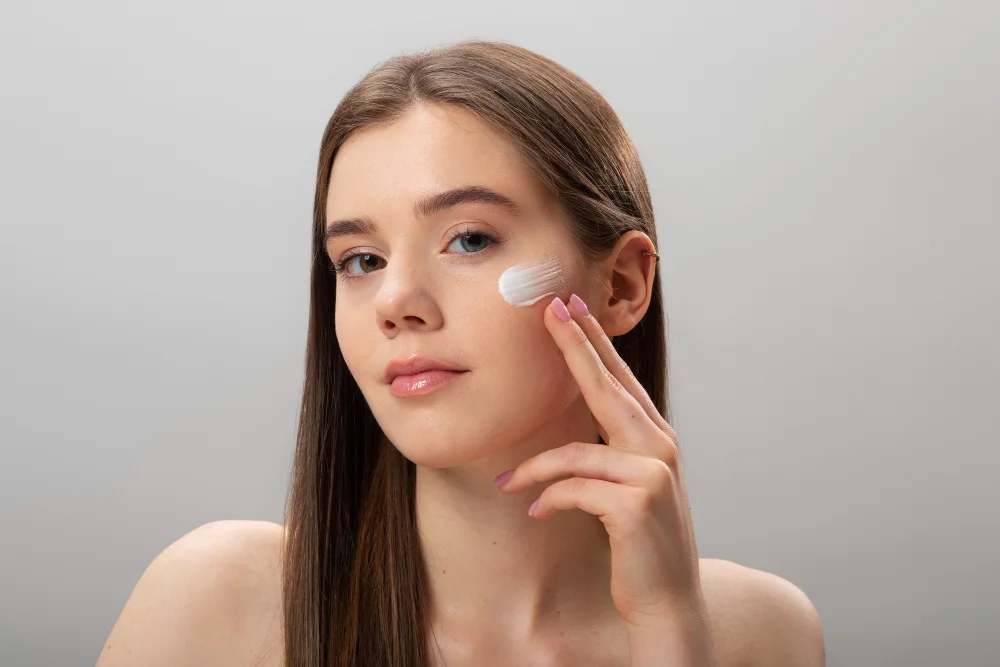
Apply a pea-sized amount to face and neck morning and evening, after cleansing and any serums. A pea-sized amount is genuinely enough—applying more does not increase the benefit and can create unnecessary heaviness.
Common Mistake: Most people with oily skin either:
- Use way too much moisturizer (thinking more = more hydration)
- Use no moisturizer at all (thinking it’ll make skin oilier)
Both are wrong. A pea-sized amount is the sweet spot.
Timing: Apply to Damp Skin
Best practice for oily skin:
- Cleanse thoroughly
- Apply any serums or treatments to damp skin (this helps them penetrate)
- Wait 30 seconds (don’t let skin fully dry)
- Apply pea-sized amount of moisturizer
- Gently press into skin; don’t massage (prevents excess sebum stimulation)
Why this works: Applying moisturizer to damp skin allows it to lock water into the epidermis, maximizing hydration without requiring more product.
Layering for Maximum Benefit
For best results with oily, acne-prone skin:
Morning:
- Cleanser
- Hydrating toner or essence (optional)
- Lightweight serum (vitamin C or niacinamide)
- Gel moisturizer
- Sunscreen (SPF 30+)
Evening:
- Gentle cleanser (oil cleanser first if needed)
- Water-based cleanser
- Hydrating toner or essence (optional)
- Targeted serum (azelaic acid, salicylic acid, or retinoid if you use it)
- Lightweight moisturizer
- Skip heavy oils (unless you have an extra-dry patch)
Proof: The Clinical Studies
Study #1: American Academy of Dermatology
Researchers at the American Academy of Dermatology conducted a study where patients with oily, acne-prone skin applied an acne-friendly moisturizer with SPF 30 for 4–8 weeks. The results: most patients saw a reduction in acne, and over 85% of the 91 participants reported that the moisturizer made it easier to bear their acne treatment.
What this means: Moisturizing doesn’t worsen acne. It improves it by strengthening your skin barrier and helping acne treatments work better.
Study #2: Long-Term Prevention
Olay conducted a study demonstrating the efficacy of moisturizers in minimizing the appearance of wrinkles. The study’s results were published in the British Journal of Dermatology. Eight years later, follow-up research found that using a moisturizer and sunscreen daily can help prevent premature skin aging.
What this means: Consistent moisturizing prevents long-term skin damage, including wrinkles and loss of elasticity.
The Oily Skin Moisturizer Myth-Busters
Myth #1: “Moisturizer will make my oily skin worse”
Reality: Will this make my oily skin worse? No. An oil-free, non-comedogenic moisturizer is clinically proven to help balance oil—not increase it.
Myth #2: “I should only moisturize my dry patches”
Reality: Your entire face needs hydration. Skipping the T-zone (forehead, nose, chin) because it’s oily leads to dehydration there, which triggers more oil production.
Myth #3: “If my skin feels greasy, I don’t need moisturizer”
Reality: Greasiness = excess oil production from dehydration. Moisturizing fixes the root cause.
Myth #4: “Natural oils are better than moisturizers for oily skin”
Reality: Oils add fat to skin, not water. You need hydration (water-based), not more oil. Stick with humectant-based moisturizers.
Read Also: Sunscreen Mistakes That Cause Pigmentation and Skin Cycling Routine for Beginners
Best Practices for Oily Skin in South Asia
Daily Routine
- ✓ Cleanse morning and night (don’t skip evening cleanse—pollution buildup triggers more acne)
- ✓ Use hydrating toner or essence to prep skin for moisturizer
- ✓ Apply lightweight, gel-based moisturizer immediately after toner (on damp skin)
- ✓ Wait 2–3 minutes before applying makeup
- ✓ Reapply sunscreen midday if outdoors
Weekly Routine
- ✓ Gentle exfoliation 1–2 times weekly (chemical, not physical)
- ✓ Hydrating mask once weekly (even oily skin benefits)
- ✓ Targeted treatment serum (niacinamide or azelaic acid for acne-prone skin)
What NOT to Do
- ❌ Don’t skip moisturizer “to dry out” oily skin
- ❌ Don’t use heavy creams or ointments
- ❌ Don’t apply more moisturizer thinking it’ll hydrate faster
- ❌ Don’t use harsh, stripping cleansers (they damage your barrier and worsen oil production)
- ❌ Don’t ignore your skin at night
- ❌ Don’t use occlusive products over active acne
Read our guide on: How to Fix Uneven Skin Tone Safely and Best Beginner Skincare Routine for Girls
The Final Verdict: Yes, You Need Moisturizer
Here’s what dermatologists unanimously agree on:
It may seem counterintuitive, but oily skin needs plenty of moisture. I usually advise my patients with oily skin to apply moisturizer twice per day (in the morning and at night) to their face and neck.
Not only does oily skin need moisturizing daily, regularly skipping a topical moisturizer can actually make skin even oilier.
The mistake isn’t using moisturizer—it’s choosing the wrong type, applying too much, or not choosing a non-comedogenic, lightweight formula.
Read Also: Toner Before or After Moisturizer? and Skincare Routine for Dull Skin or you can learn exactly Why Your Skin Looks Dull Even After Skincare
Quick Reference: Oily Skin Moisturizer Checklist
Before buying a moisturizer for oily skin, verify:
- ✓ Contains humectants (hyaluronic acid, glycerin, propylene glycol)
- ✓ Non-comedogenic (won’t clog pores)
- ✓ Oil-free formula (water-based, not oil-based)
- ✓ Lightweight texture (gel or lotion, not cream)
- ✓ No heavy silicones (minimal silicones, or lightweight dimethicone only)
- ✓ No fragrance (fragrance can irritate acne-prone skin)
- ✓ SPF 30+ option (for morning use)
- ✓ Clinically tested on oily or acne-prone skin
Read our guides on: How Long Does Salicylic Acid Take to Work? and How to Use Salicylic Acid Without Damaging Your Skin Barrier, also check out Can You Use Salicylic Acid Every Day?
Key Takeaways
- ✓ Oil and hydration are different—your oily skin needs water, not oil
- ✓ Dehydrated oily skin produces more sebum, making acne worse
- ✓ Use a pea-sized amount of lightweight, humectant-based moisturizer twice daily
- ✓ Apply to damp skin immediately after cleansing
- ✓ Non-comedogenic, gel-based formulas are ideal for oily skin
- ✓ Moisturizing is especially important when using acne treatments
- ✓ Skipping moisturizer makes oily skin oilier—not drier
- ✓ In humid South Asian climates, consistent hydration prevents barrier damage and acne
- ✓ Give it 4–8 weeks to see improvement in acne and skin texture
For more skincare related guides check out: Skincare Routine for Oily Skin in Hot Weather and Simple Skincare Routine for Pakistani Girls
When to See a Dermatologist
If you have oily skin and are experiencing:
- Severe acne that doesn’t improve with moisturizer + sunscreen
- Chronic dehydration despite moisturizing
- Allergic reactions to moisturizer
- Hormonal acne (adult women especially)
Consult a dermatologist. They can recommend specific formulations and treatments tailored to your skin type and South Asian skin concerns.
Your skin doesn’t have to choose between being hydrated and being clear. With the right moisturizer, you can have both.
For more skin glow up, check our guides on: How to Get Clear Skin Before Eid and How to Repair Your Skin Barrier
This guide is part of our detailed guide on: Complete Skincare Routine for South Asian Skin: Oily Skin, Dullness, Acne, and Pigmentation