
Direct Answer
Teenage girls need only three essential steps: a gentle cleanser morning and night, a lightweight moisturizer twice daily, and broad-spectrum SPF 30+ sunscreen every morning. This simple routine prevents acne, protects skin during critical growth years, and builds healthy habits for life. No 10-step routines needed.
Why Teenage Skincare Matters (And Why Less Is More)
If you’re a teenage girl scrolling through social media, you’ve probably seen videos of elaborate “glass skin” routines with 10+ products. The truth? All dermatologists consulted confirmed that there are just three steps to an effective teen skin care routine: cleanser, moisturizer, and sunscreen. Within these categories, teens can tailor products to their specific skin type.
Why the 3-step approach is better:
- Your teenage skin is still developing and more sensitive than adult skin
- Overloading with products damages your skin barrier, causing more breakouts
- Complex routines are expensive, unnecessary, and often wasteful
- Building healthy habits now prevents skin problems at 25, 35, and beyond
The American Academy of Pediatrics emphasizes that the best skin care for tweens and teens is simple, gentle, and consistent, noting that children and adolescents have resilient, youthful skin that doesn’t require adult-targeted products or complex routines.
Understanding Your Teenage Skin
During your teen years, hormonal changes trigger major skin transformations. Hormonal changes during adolescence often lead to increased oil production, clogged pores, and breakouts, making it crucial to start a proper skincare routine early to manage current issues like pimples and clogged pores while building a healthy foundation for long-term skin wellness.
What’s happening:
- Oil glands become overactive (hello, oily forehead by afternoon)
- Pores enlarge and clog more easily
- Acne-causing bacteria thrive in excess oil
- Skin sensitivity fluctuates with your cycle
- New skin cells replace old ones faster than in adults (but still need support)
The good news: This is actually the best time to establish routines that prevent long-term damage. UV protection started now means fewer wrinkles, age spots, and skin cancer risk at 40+.
The Essential 3-Step Routine Explained
Step 1: Gentle Cleanser (Morning & Night)
Why it matters: Cleansing removes dirt, oil, sweat, makeup, and bacteria that clog pores and cause breakouts.
Morning cleanse: Removes oil buildup from sleep
Evening cleanse: Removes sunscreen, makeup, and daily grime
How to cleanse properly:
- Use lukewarm water (not hot, which strips skin)
- Apply small amount of cleanser
- Massage gently for 30 seconds
- Rinse thoroughly until no residue remains
- Pat (don’t rub) dry with a clean towel
Best cleansers by skin type:
For Oily or Acne-Prone Skin:
- Gel cleansers with salicylic acid (1–2%)
- Foaming cleansers (not drying if gentle formula)
- Oil-control formulas
A gentle foaming cleanser is ideal for oily skin, and looking for products with salicylic acid helps unclog pores, reducing breakouts without over-drying.
For Dry or Sensitive Skin:
- Cream or milk cleansers
- Hydrating cleansers with glycerin
- Fragrance-free, sulfate-free formulas
For Combination Skin:
- Gentle gel cleansers (balance between hydration and oil control)
- Fragrance-free options
Products to avoid:
- Harsh physical scrubs (damage skin barrier, worsen acne)
- Alcohol-based toners (strip natural oils)
- Overly fragrant products (irritate sensitive teen skin)
- Adult anti-aging cleansers (too strong)
Step 2: Lightweight Moisturizer (Morning & Night)
Why it matters: Even oily, acne-prone skin needs moisturizer. Skipping it causes your skin to overproduce oil, worsening breakouts.
The myth: “Moisturizer makes acne worse” The truth: The right lightweight moisturizer prevents dehydration, which triggers excess oil production.
How to moisturize:
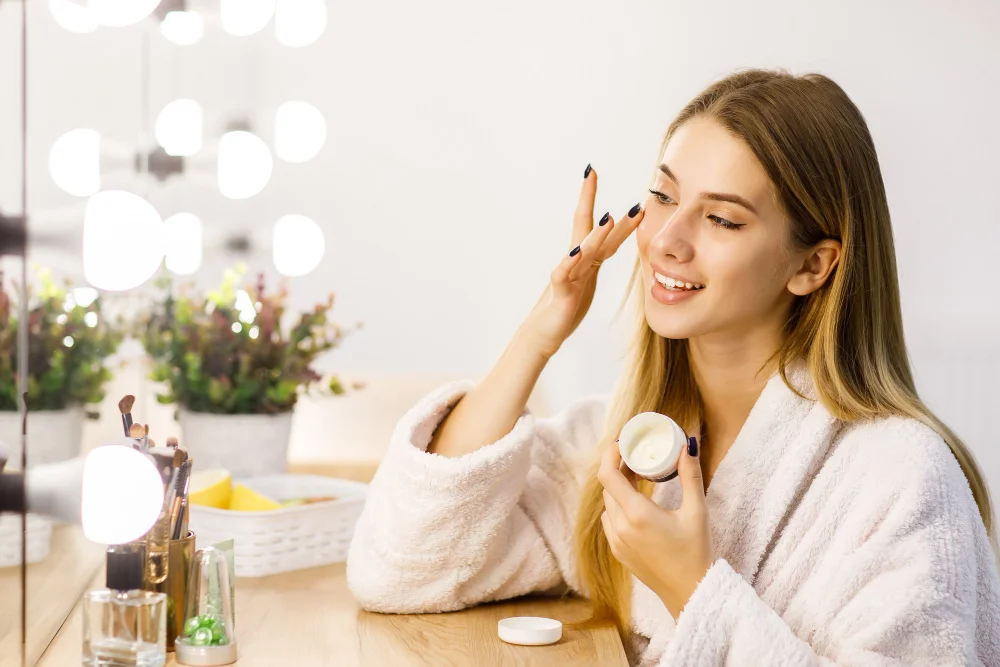
- Apply to damp skin (within 1 minute of cleansing) to lock in hydration
- Use a pea-sized amount on face
- Gently pat in, don’t rub
- Wait 1 minute before applying sunscreen or other products
Best moisturizers by skin type:
For Oily/Acne-Prone Skin: For oily skin, a lightweight oil-free moisturizer is essential, with products like gel-cream formulations providing hydration without clogging pores.
- Gel-cream formulas
- Oil-free, mattifying moisturizers
- Lightweight hydrating serums
- Products with niacinamide (reduces shine, minimizes pores)
For Dry or Sensitive Skin:
- Light creams with ceramides
- Moisturizers with hyaluronic acid
- Products with fragrance-free formulas
Key ingredients to look for:
- Hyaluronic acid: Holds moisture without feeling heavy
- Glycerin: Natural humectant that hydrates
- Niacinamide: Balances oil, soothes redness, strengthens barrier
- Ceramides: Repair skin barrier; prevent water loss
Products to avoid:
- Heavy night creams (too occlusive for teen skin)
- Products with mineral oil (can clog pores)
- Fragrant moisturizers (irritate sensitive skin)
Step 3: Broad-Spectrum Sunscreen SPF 30+ (Every Morning)
Why it matters: Sunscreen is a must-have for teenagers, as dark spots, uneven tone, and early aging result from UV damage, which starts early. Even indoors, dermatologists advise using sunscreens that are lightweight, non-comedogenic, and devoid of silicones or parabens.
UV damage is permanent and compounds over your lifetime. Applying sunscreen now prevents:
- Age spots and sun spots at 30+
- Premature wrinkles and sagging
- Melasma (especially if you’re South Asian)
- Skin cancer risk
Use a broad-spectrum SPF 30+ mineral sunscreen every day—even when it’s cloudy, as UV rays penetrate clouds.
How to apply sunscreen correctly:
- Use 1 teaspoon for face and neck (most people use too little)
- Apply as the last step of your morning routine
- Wait 10–15 minutes before makeup
- Reapply every 2 hours if outdoors
- Use on lips, ears, and any exposed skin
Best sunscreens for teenage skin:
Physical (Mineral) Sunscreens:
- Zinc oxide and/or titanium dioxide
- Less irritating for sensitive skin
- Don’t need to be absorbed
- Downside: Can leave white cast (especially on deeper skin tones)
Chemical Sunscreens:
- Faster to apply; lightweight feel
- Less likely to leave white residue
- Downside: Can irritate sensitive skin; need absorption time
For Oily or Acne-Prone Skin: Dermatologists advise using sunscreens that are lightweight, non-comedogenic, and devoid of silicones or parabens, with mattifying formulas being great for oily skin.
- Mattifying sunscreens
- Oil-control formulas
- Gel or serum-based sunscreens
- Avoid heavy, creamy formulas
For South Asian Skin (Deeper Tones):
- Tinted mineral sunscreens (reduce gray/chalky cast)
- Look for undertones that match your skin
- Hybrid mineral + chemical options
Products to avoid:
- Sunscreens with fragrance (irritate)
- Overly heavy formulas (clog pores)
- Sunscreens you hate the feel of (won’t reapply)
Your Complete Morning Routine (2 Minutes)
1. Cleanse (30 seconds)
– Wet face with lukewarm water
– Apply gentle cleanser
– Rinse thoroughly
– Pat dry
2. Moisturize (30 seconds)
– Apply lightweight moisturizer to damp skin
– Let set 1 minute
3. Sunscreen (1 minute)
– Apply SPF 30+ to face, neck, ears
– Wait 10–15 minutes before makeup
Your Complete Evening Routine (2–3 Minutes)
1. Cleanse (30 seconds)
– Wet face with lukewarm water
– Apply gentle cleanser
– Remove makeup with pre-cleanser if needed
– Rinse thoroughly
– Pat dry
2. Moisturize (1 minute)
– Apply lightweight moisturizer to damp skin
– Let set before bed
3. Optional Treatments (1–2 minutes)
– Spot treatment for active pimples (benzoyl peroxide 2.5%)
– Use only on affected areas, 3–5x weekly if new
– Apply AFTER moisturizer, not before
Adding Treatments for Specific Concerns
If you have active acne, you can add one targeted treatment to your routine. But start with the 3-step base first.
For Mild Acne or Breakout-Prone Skin
Benzoyl Peroxide (2.5%)
- Kills acne-causing bacteria
- Start: 2–3x weekly at night
- Application: After moisturizer on clean skin
- Timing: Give 2–3 weeks to see improvement
- Caution: Can cause dryness; pair with good moisturizer
Salicylic Acid (1–2%)
- Unclogs pores; prevents blackheads
- Start: 2–3x weekly
- Best for: Oily, clogged skin
- Caution: Can be irritating if overused
Tea Tree Oil
- Natural antibacterial
- Application: Diluted in carrier oil, or in products
- Best for: Sensitive skin that’s acne-prone
When to use treatments:
- Apply to cleansed, dry skin
- Wait 20 minutes, then apply moisturizer
- Start 2–3x weekly; increase frequency slowly
- Introduce one treatment at a time
For Sensitivity or Redness
Skip treatments. Focus on:
- Extra-gentle cleanser (cream or milk)
- Fragrance-free moisturizer with ceramides
- SPF 50+ (mineral) daily
- Avoid exfoliants; let your dermatologist guide you
What NOT to Do (Common Mistakes)
❌ Don’t use adult anti-aging products Your skin doesn’t need retinol, vitamin C serums, or peptides yet. These are for aging skin, not teen skin.
❌ Don’t follow viral “10-step routines” Social media makeup artists and influencers have different skin needs than you. More products ≠ better skin.
❌ Don’t over-wash Cleansing more than 2x daily strips your skin barrier, causing MORE oil production and irritation.
❌ Don’t pick or squeeze pimples This causes scarring, darker marks (especially on darker skin), and spreads bacteria. Let treatments do the work.
❌ Don’t skip sunscreen “I’m just inside today” is the #1 reason for premature aging. UV rays penetrate windows.
❌ Don’t use harsh physical scrubs Microbeads and walnut shell scrubs damage skin barrier and worsen acne.
❌ Don’t layer too many actives Benzoyl peroxide + salicylic acid + vitamin C = irritation and barrier damage. Pick ONE.
When to See a Dermatologist
Visit a dermatologist if:
- Acne covers more than 25% of your face or body
- Breakouts don’t improve with over-the-counter treatments after 6–8 weeks
- You have painful cystic acne
- You’re experiencing persistent itching, burning, or redness
- You want to discuss hormonal contraceptives for acne control
- You have severe eczema or psoriasis (dermatitis)
For South Asian teens: If you’re experiencing post-acne marks or dark spots (post-inflammatory hyperpigmentation), a dermatologist can recommend specific treatments like vitamin C serums or professional fades to prevent permanent marks.
Read Also: Sunscreen Mistakes That Cause Pigmentation and Moisturizer for Oily Skin: Do You Really Need It?
Skincare Tips Beyond Products
The best skincare happens outside the bathroom:
1. Sleep (7–9 hours nightly) Sleep deprivation disrupts skin cell turnover and can lead to a dull, fatigued appearance, as skin is crucial for repair and regeneration.
Your skin repairs itself while you sleep. Shortchanging sleep causes breakouts, dark circles, and a dull complexion.
2. Hydration (8–10 glasses of water daily) Dehydrated skin looks dull, feels tight, and is more prone to irritation.
3. Diet (Rich in fruits, veggies, and omega-3s) A diet rich in fruits, veggies, and water helps keep your skin clear, hydrated, and healthy.
Foods to prioritize:
- Leafy greens (vitamins A, C, E)
- Berries (antioxidants)
- Fatty fish, nuts, seeds (omega-3 for skin barrier)
- Water-rich foods: cucumbers, watermelon
4. Stress Management High stress increases cortisol, triggering breakouts. Try:
- Regular exercise (even 20-minute walks)
- Deep breathing
- Meditation or yoga
- Talking to friends or a counselor
5. Clean Hands & Pillowcases
- Don’t touch your face throughout the day (spreads bacteria)
- Change pillowcases 2–3x weekly
- Keep phone clean (it touches your face constantly)
6. Remove Makeup Before Bed Sleeping in makeup clogs pores and causes breakouts. Use a gentle cleanser to remove it nightly.
Read our guide on: How to Fix Uneven Skin Tone Safely and Skin Cycling Routine for Beginners
Skincare Routine by Age
Ages 12–14 (Tween Years)
Routine:
- Gentle cleanser morning and night
- Lightweight moisturizer
- Sunscreen daily
What to skip: All active ingredients, exfoliants, and treatments (skin is still developing)
Ages 15–17 (Mid-Teens)
Routine:
- Gentle cleanser morning and night
- Lightweight moisturizer
- Sunscreen daily
- Optional: One targeted treatment if needed (benzoyl peroxide or salicylic acid, 2–3x weekly)
What to skip: Retinol, multiple actives, heavy products
Ages 18+ (Late Teens/Young Adults)
Routine:
- Gentle cleanser morning and night
- Lightweight moisturizer
- Sunscreen daily
- Optional: One or two targeted treatments if desired
Introducing new steps: If you want to add more (exfoliants, serums), do it gradually—one product every 4–6 weeks—and monitor your skin’s reaction.
Read Also: Toner Before or After Moisturizer? and Skincare Routine for Dull Skin or you can learn exactly Why Your Skin Looks Dull Even After Skincare
FAQ
Can I use my mom’s skincare products? No. Adult skincare is often too strong for teen skin. Stick to products formulated for teens or sensitive skin. When you’re 25+, you can explore more advanced products.
How long until I see results?
- Hydration & glow: 1–2 weeks
- Reduced breakouts: 4–6 weeks
- Improved skin texture: 8–12 weeks
- Faded acne marks: 3–6 months (requires sun protection)
Do I need to exfoliate? Not required. If you have clogged pores or blackheads, a gentle chemical exfoliant (salicylic acid) 1x weekly is optional. Physical scrubs are not recommended.
My skin is oily—do I need moisturizer? Yes. Skipping moisturizer causes your skin to overproduce oil to compensate. Use a lightweight, oil-free gel formula.
Can skincare products cure acne? Mild acne (blackheads, whiteheads, small pimples) can improve with consistent skincare. Moderate to severe acne (painful, cystic, widespread) usually needs dermatology treatment like prescription medications or oral antibiotics.
Is it okay to try different brands? Yes, but change one product at a time and wait 2–3 weeks to assess results. Switching everything at once makes it impossible to know what’s helping or hurting.
What if nothing works? See a dermatologist. You might have sensitive skin, eczema, rosacea, or acne that needs professional treatment.
Key Takeaways
- 3 steps are enough: Cleanser + moisturizer + sunscreen = healthy skin
- Start early: Sun protection now prevents skin damage for decades
- Consistency beats products: Using 3 products daily beats using 10 sporadically
- Less is more: Overloading your skin worsens breakouts and sensitivity
- Patience: Real improvement takes 4–8 weeks; keep going
- See a pro if needed: Dermatologists can customize care for your unique skin
Read our guides on: How Long Does Salicylic Acid Take to Work? and How to Use Salicylic Acid Without Damaging Your Skin Barrier, also check out Can You Use Salicylic Acid Every Day?
Product Recommendations by Budget
Budget-Friendly (Under $30 for Full Routine)
- CeraVe Foaming Facial Cleanser
- CeraVe Lightweight Moisturizing Lotion
- Neutrogena Ultra Sheer Dry-Touch SPF 30
Mid-Range ($30–60)
- La Roche Posay Toleriane Hydrating Cleanser
- Neutrogena Hydro Boost Hydrating Toner
- Blue Lizard Australian Sunscreen SPF 30+
Higher-End ($60+)
- Clinique Clarifying Lotion
- Tatcha Luminous Dewy Skin Mist
- EltaMD UV Clear SPF 46
For more skincare related guides check out: Skincare Routine for Oily Skin in Hot Weather and Simple Skincare Routine for Pakistani Girls
Scientific References
- Bowe, W. P., et al. (2024). Dermatologist recommendations for tween and teen skincare routines. CNN Underscored Beauty.
- American Academy of Pediatrics. (2024). Trendy skincare for tweens and teens: Safety guidelines. HealthyChildren.org.
- Garshick, M. S., et al. (2024). Social media and skincare trends in adolescents: A dermatologist’s perspective. Journal of the American Academy of Dermatology.
- Estelle Hixon, PA-C. (2024). Building skincare routines for teens. MDCS Dermatology.
For more skin glow up, check our guides on: How to Get Clear Skin Before Eid and How to Repair Your Skin Barrier
This guide is part of our detailed guide on: Complete Skincare Routine for South Asian Skin: Oily Skin, Dullness, Acne, and Pigmentation