

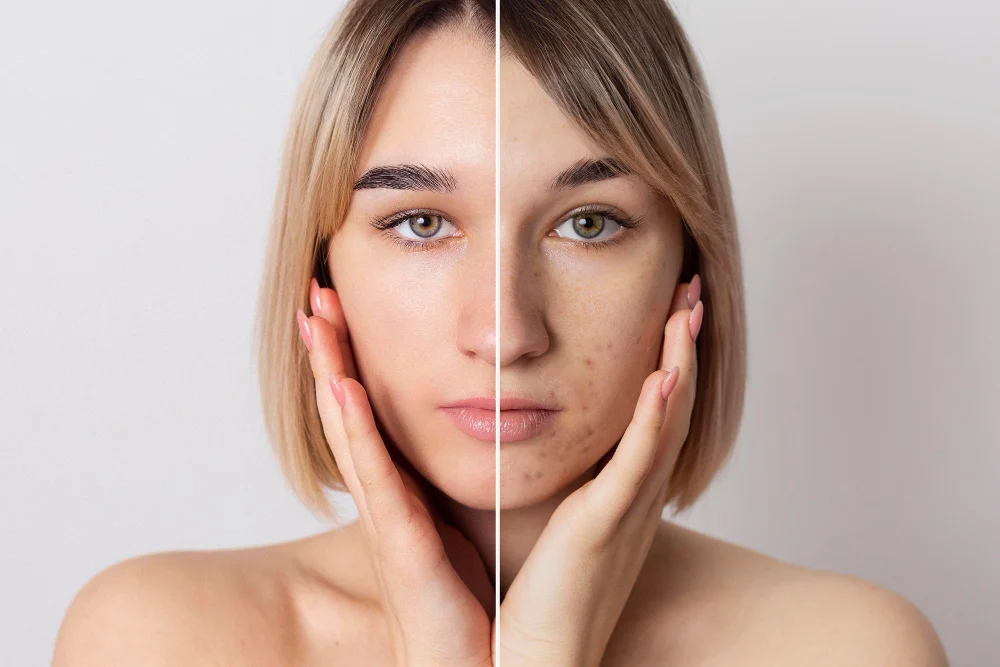
What Is a Skin Barrier and Why Does It Matter?
Your skin barrier is your body’s first line of defense against environmental damage, bacteria, and moisture loss. The outermost layer of your skin, known as the epidermis, functions as your skin barrier and defends your body against environmental threats while simultaneously protecting your body’s critical water balance.
Think of your skin barrier like a brick wall: The skin cells are the bricks, and the mix of fats—like ceramides, cholesterol, and fatty acids—acts like the glue holding those bricks together. When this barrier is intact, your skin feels calm, hydrated, and resilient.
For South Asian skin in particular, the combination of heat, humidity, and seasonal pollution exposure makes barrier maintenance even more critical. Environmental threats such as chemicals and infectious agents, along with free radical damage from UV exposure and pollution, can decrease the overall health and functioning of our protective shield over time.
Signs Your Skin Barrier Is Damaged
Not sure if your barrier needs repair? Look for these telltale signs:
Evidence of barrier dysfunction can be seen with skin that is dull, dry, cracked, red, flaky, itchy, discolored, and rough in texture. Additional signs include:
- Increased sensitivity to products that previously worked fine
- Persistent tightness after cleansing
- Stinging or burning sensations when applying serums
- New, unexplained breakouts (even if you don’t have acne-prone skin)
- Makeup sitting unevenly on patchy, dry areas
Root Causes of a Damaged Skin Barrier
Understanding what damaged your barrier is crucial for preventing future damage:
Common causes include overuse of exfoliants, harsh skincare products, UV damage, or excessive cleansing. Environmental stressors like cold weather or pollution can also weaken your barrier. Post-procedure skin is especially vulnerable if not properly cared for.
For South Asian skin specifically, these factors compound the issue:
- Year-round sun exposure without adequate SPF protection
- Hot water cleansing (a common practice that strips natural oils)
- Over-exfoliation during seasonal pollution spikes
- Humidity-driven oil production leading to over-cleansing
The Science: Why It Takes 2-4 Weeks to Repair
Most people see improvement within a few days, with complete recovery taking 2-4 weeks depending on damage severity. Stick with this simplified routine throughout the healing process.
Why this timeline? Your skin’s natural cell turnover cycle is approximately 28-30 days. During barrier repair, you’re asking your skin to rebuild its lipid layer while protecting the newly revealed, vulnerable skin underneath. Consistency matters more than intensity during this period.
Step-by-Step Guide: How to Repair Your Skin Barrier in 4 Weeks
STEP 1: Simplify Your Routine Immediately
This is the hardest step emotionally, but the most important scientifically.
Dermatologists immediately eliminate stripping cleansers, harsh exfoliants, and aggressive actives. A simplified routine with a gentle cleanser, hydrating serum, and ceramide-rich moisturizer is the starting point.
What to eliminate (starting today):
- All exfoliants (physical scrubs, chemical peels, AHAs, BHAs, retinoids)
- Vitamin C serums (too acidic for damaged barriers)
- Benzoyl peroxide (for acne sufferers)
- Fragranced products, alcohol-based toners
- Hot water (your skin’s enemy during repair)
Your temporary routine should have only 3 steps:
Morning Routine:
- Gentle cleanser (lukewarm water, no hot water)
- Hydrating serum (if tolerated; optional)
- Ceramide-rich moisturizer
- Broad-spectrum SPF 30+ (non-negotiable, even indoors)
Evening Routine:
- Oil-based cleanser or balm (to remove makeup without stripping)
- Gentle water-based cleanser
- Pat dry (never rub)
- Ceramide-rich moisturizer
- Optional: thin layer of petrolatum over dry areas
STEP 2: Choose Barrier-Repair Ingredients (The 3-Lipid System)
Your skin barrier depends on three essential lipids working together: ceramides, cholesterol, and fatty acids. Research shows that all three are required for proper barrier function, and applying just one or two delays healing.
Ceramides (50% of your barrier’s structure)
Ceramides make up about 50% of your skin’s outer layer. Clinical studies show that ceramide-containing moisturizers significantly improve skin hydration within 24 hours and help restore barrier integrity. Look for products with ceramides 1, 3, and 6-II for optimal results.
Niacinamide (Vitamin B3) – The Accelerator
Studies show niacinamide increases ceramide synthesis by 4-5 fold and improves the skin’s ability to retain moisture at different humidity levels. It also reduces water loss and helps calm inflammation.
For South Asian skin, niacinamide is particularly valuable because it helps regulate sebum production while repairing the barrier—a critical balance when barrier repair increases skin sensitivity.
Cholesterol & Fatty Acids – The Supporting Cast
Cholesterol and fatty acids work alongside ceramides to create a complete lipid profile. Look for moisturizers that list these three together on the ingredient list.
Additional Soothing Ingredients:
- Hyaluronic acid (humectant – draws water into skin)
- Glycerin (humectant – binds water to skin)
- Petrolatum or squalane (occlusive – locks moisture in)
STEP 3: Water Temperature and Cleansing Technique Matter
Avoid hot water, and there is no need to cleanse in the morning. Cleansing can strip natural oils, increase transepidermal water loss, and further disrupt the skin barrier—not what you want after the skin has spent the night repairing itself.
Cleansing Protocol During Barrier Repair:
- Morning: Rinse with lukewarm water only. No cleanser needed.
- Evening: Use an oil-based cleanser first (removes makeup, sunscreen, pollution), then follow with a gentle gel or milk cleanser
Why this order matters: Oil dissolves makeup and SPF without stripping your skin’s natural oils. Water-based cleansers then remove the oil residue.
STEP 4: Moisturize While Skin Is Still Damp
Hydrated skin glows better. Apply serums and moisturizers to damp (not wet) skin—this traps water in the barrier.
Timing is critical: Apply moisturizer within 60 seconds of cleansing, before your skin fully dries.
STEP 5: Protect With SPF Every Single Day
UV rays further damage the barrier. Daily SPF is non-negotiable, even on cloudy days.
For South Asian climate, use:
- Lightweight, non-greasy SPF 30+ (chemical or mineral, based on skin type)
- Reapply every 2 hours if outdoors
- Consider UPF-protective clothing during peak sun hours (10 AM – 4 PM)
Timeline: What to Expect Week by Week
Week 1-2: Initial Stabilization
- Sensitivity and stinging may intensify before improving (as the barrier starts “closing” the gaps)
- Dryness may increase temporarily
- Redness and inflammation persist
- Patience is key—don’t add anything new
By Week 3: First Signs of Improvement
- Stinging sensations decrease
- Redness begins to fade
- Products stop stinging (a sign your barrier is healing)
- Skin feels slightly less tight
Around Week 4: Noticeable Recovery
- Dryness significantly improves
- Skin feels resilient again
- Sensitivity to touch products decreases
- Breakouts from barrier damage begin to resolve
Weeks 5-6: Near-Complete Repair
- Barrier repair doesn’t happen overnight. It may take a full 10 days for your skin to fully recover. By week 5-6, you should see dramatic improvement.
- Ready to gently reintroduce low-strength actives (if desired)
Read Also: Skin Cycling Routine for Beginners
When to Reintroduce Actives (Carefully)
After 4-6 weeks of barrier repair, you can slowly reintroduce active ingredients. Once healed, you can reintroduce them slowly with guidance. If your barrier is compromised, pause actives like retinol, AHAs, and vitamin C until skin recovers.
Reintroduction Protocol:
| Week | Ingredient | Frequency | Strength |
|---|---|---|---|
| 6+ | Niacinamide serum | Daily | Any strength |
| 6+ | Hyaluronic acid | Daily | Any strength |
| 7+ | Vitamin C serum | 2x/week | 10% (low strength) |
| 8+ | Retinol | 1x/week | 0.25-0.5% (low strength) |
| 9+ | AHAs (glycolic acid) | 1x/week | 7-10% |
Golden rule: Introduce one new active every 2 weeks. If stinging or redness returns, pause and return to repair mode.
Read Also: Sunscreen Mistakes That Cause Pigmentation and Moisturizer for Oily Skin: Do You Really Need It?
South Asian Skin Barrier Repair: Special Considerations
Climate Challenges
South Asian climates present unique barrier challenges:
- Monsoon season: Humidity + pollution spike = increased sensitivity. Stick to barrier repair longer during monsoon.
- Hot, dry summers: Air conditioning strips moisture; increase hydration steps.
- Water quality: Hard water can damage barriers. Consider a water softener or filtered shower head.
Common Skincare Habits to Change
A simple regimen can often be more beneficial than a cumbersome routine of products that have the potential to expose the skin to a multitude of potentially drying and irritating chemicals.
Many South Asian beauty routines include:
- Face massages with oils (ok during barrier repair, but be gentle)
- Multiple toners and essences (pause during repair—too many layers irritate)
- Heavy night creams (good, but only 1-2 during repair, not 5+)
- Overnight masks (beneficial, but ensure they’re fragrance-free)
Skin Tone & Barrier Repair
According to the American Academy of Dermatology, those with sensitive skin and darker skin tones may want to use a soft cloth and a mild chemical exfoliant.
South Asian skin tones are more prone to post-inflammatory hyperpigmentation (PIH). During barrier repair, avoid any irritation that could trigger PIH. This means extending the repair period if you notice increased dark spots.
Read our guide on: How to Fix Uneven Skin Tone Safely and Best Beginner Skincare Routine for Girls
Common Mistakes During Barrier Repair (Avoid These!)
- Switching products too frequently — Let each product work for at least 2 weeks
- Adding “nourishing” serums and oils — Every extra product is a potential irritant
- Using hot water to feel clean — Lukewarm water feels inadequate but is necessary
- Skipping sunscreen — Damaged barrier + sun exposure = permanent damage
- Assuming faster = better — Adding actives too early can set repair back 2-3 weeks
- Using “barrier-repair” products with fragrance — Fragrance is an irritant, even in barrier products
- Over-moisturizing — 2 moisturizers maximum; more doesn’t mean faster healing
- Ignoring internal factors — Internal threats to our skin barrier, like stress, dehydration, and poor dietary choices, can also influence how well our barrier can perform.
Read Also: Toner Before or After Moisturizer? and Why Your Skin Looks Dull Even After Skincare
When to See a Dermatologist
Consult a dermatologist if:
- Symptoms worsen after 2 weeks of barrier repair routine
- Redness, swelling, or itching spreads to other areas
- You develop signs of infection (pus, warmth, swelling)
- Skin doesn’t improve after 4-6 weeks of consistent care
- You suspect an underlying condition (eczema, rosacea, dermatitis)
Read our guides on: How Long Does Salicylic Acid Take to Work? and How to Use Salicylic Acid Without Damaging Your Skin Barrier also check out Can You Use Salicylic Acid Every Day?
FAQ: Barrier Repair Questions
Q: Can I wear makeup while repairing my barrier?
A: Yes, but only non-comedogenic, fragrance-free mineral makeup. Avoid long-wear or waterproof formulas that require harsh removers. Remove makeup gently with an oil-based balm, not with makeup wipes.
Q: Will my damaged barrier trigger breakouts?
A: Yes—a weak barrier allows bacteria and irritants to penetrate more easily, which can trigger breakouts. It can also cause more redness and swelling in existing acne. Strengthening your barrier often reduces acne flare-ups.
Q: My barrier is damaged but I have oily skin—do I still need moisturizer?
A: Yes. A damaged barrier can actually trigger excess oil production as your skin tries to compensate. Use a lightweight, non-comedogenic moisturizer with ceramides to help restore balance without clogging pores.
Q: How long will results last?
A: Once healed, your barrier can remain healthy for years with consistent care. However, the barrier can be damaged again by harsh products, over-exfoliation, or sun exposure. Prevention is easier than repair.
Q: Can I speed up barrier repair with professional treatments?
A: In-office treatments like LED light therapy, hydration facials, or post-procedure skin boosters are used to calm inflammation and accelerate recovery. Consult a dermatologist about options during your repair period.
The Bottom Line: Your Barrier Recovery Plan
Repairing a damaged skin barrier takes patience, but it’s 100% reversible. Follow this 4-6 week protocol:
- Simplify ruthlessly — 3-step routine only
- Use the 3-lipid system — Ceramides, cholesterol, fatty acids together
- Protect obsessively — SPF every day, lukewarm water always
- Wait consistently — 4-6 weeks minimum before reintroducing actives
- Adjust for your climate — Account for South Asian seasonal changes
Your skin’s resilience is worth the short-term sacrifice of your favorite serums. Once healed, you’ll have a stronger foundation for any skincare routine you choose.
For more skincare related guides check out: Skincare Routine for Oily Skin in Hot Weather and Simple Skincare Routine for Pakistani Girls
References & Sources
- Alamo Heights Dermatology: “Dermatologist’s Take on Popular Trends Series: Skin Barrier Repair”
- Cleveland Clinic: “How to Maintain a Healthy Skin Barrier”
- Doctor Rogers MD: “How to Repair Your Skin Barrier”
- Healthline: “Skin Barrier Function and How to Repair and Care for It”
- Nolla Health: “How to Repair Skin Barrier: Dermatologist Guide”
- Vitamins For Woman: “Skin Barrier Repair: The 2026 Dermatologist Guide”
- American Academy of Dermatology (AAD) recommendations for skin tone considerations
- Journal of the American Academy of Dermatology: “Optimal ratios of topical stratum corneum lipids improve barrier recovery”
- Antioxidants Journal (2024): “Mechanistic insights into the multiple functions of niacinamide”
For a full skin glow up, check our guide on: How to Get Clear Skin Before Eid and Skincare Routine for Dull Skin
This guide is part of our detailed guide on: Complete Skincare Routine for South Asian Skin: Oily Skin, Dullness, Acne, and Pigmentation