
Quick Answer:
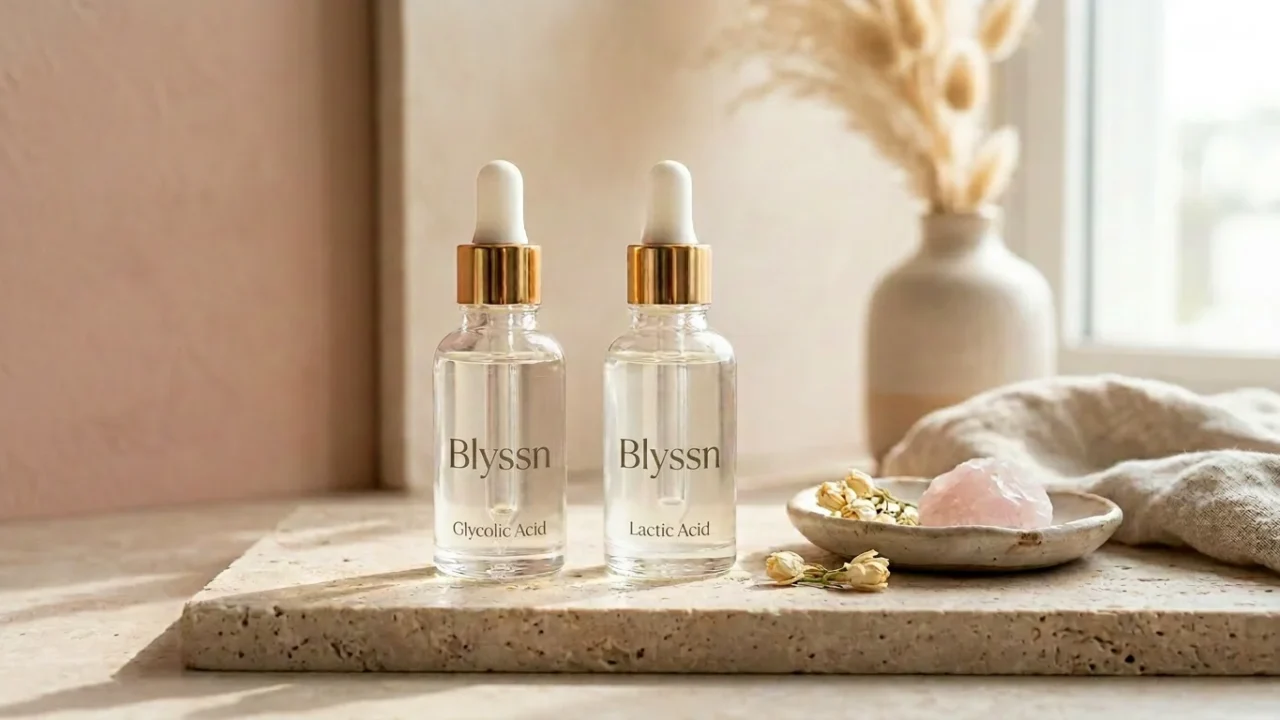
Glycolic acid penetrates deeply with fastest results but higher irritation risk; lactic acid exfoliates gently with built-in hydration, making it ideal for sensitive skin. Choose glycolic for visible anti-aging results on resilient skin, or lactic for sustainable, barrier-friendly exfoliation.
Understanding Molecular Size and Penetration
The fundamental difference between glycolic acid and lactic acid comes down to molecular size—and this one variable determines everything about how each acid behaves on your skin.
Glycolic acid has the smallest molecular structure of all alpha hydroxy acids, at approximately 76 Daltons. This tiny size allows it to penetrate rapidly through your skin’s outermost layers and reach the deeper epidermis within minutes of application. The result: fast, visible transformation but also higher irritation potential.
Lactic acid, derived from milk or fermented plant sources, has a molecular weight around 90 Daltons—slightly larger than glycolic. That larger molecular structure limits penetration depth, meaning lactic acid stays closer to the surface and works more gradually. This translates to gentler exfoliation that many dermatologists recommend for first-time acid users.
According to dermatologist Dr. Kenneth Howe, “Glycolic acid stimulates fibroblasts in the dermis to produce increased amounts of collagen by penetrating deeper into the skin. By increasing collagen production, it makes skin feel firmer and helps reduce the appearance of fine lines.” This deeper action is glycolic’s superpower—and its double-edged sword, as deeper penetration often brings stronger irritation.
This guide is part of our complete exfoliation journey:
AHA vs BHA
Mandelic Acid vs Glycolic Acid
Salicylic Acid vs Glycolic Acid
PHA vs AHA
Best Acid for Beginners
Glycolic Acid: The High-Performance Resurfacer
What It Is:
Glycolic acid is derived from sugarcane. With its smallest-in-class molecular structure, it’s been the gold standard for decades in professional peels and at-home exfoliation.
How It Works:
Glycolic acid dissolves the bonds between dead skin cells on and just below the surface. Its rapid penetration triggers visible cell turnover within 1–2 weeks, which is why professionals often choose it for active transformation routines.
Best For:
- Oily or combination skin seeking visible results
- Acne-prone skin (surface-level breakouts)
- Hyperpigmentation and post-acne marks
- Fine lines and early photoaging signs
- Those already accustomed to chemical exfoliants
The Benefits:
- Fastest visible results — Noticeable smoothing and brightening within 2–3 weeks
- Deep resurfacing — Penetrates to improve texture at a cellular level
- Collagen stimulation — Stronger activation of skin’s repair mechanisms
- Anti-aging powerhouse — Tackles fine lines, wrinkles, and sun damage
- Acne control — Effective for active breakouts and clogged pores
The Trade-Offs:
- Higher irritation potential — Stinging, redness, and burning are more common
- Not ideal for sensitive skin — Can trigger hypersensitivity reactions
- Moisture barrier disruption — May cause temporary dryness or flaking
- Sun sensitivity — Increases photosensitivity significantly
Glow with Intention: AHA vs BHA
Lactic Acid: The Gentle Hydrating Exfoliant
What It Is:
Lactic acid is a naturally occurring compound found in milk and produced during lactic acid fermentation of plant sources. It’s naturally present in your body as part of normal metabolism and the skin’s natural moisturizing complex.
How It Works:
Like all AHAs, lactic acid dissolves intercellular bonds—but its slightly larger molecule size means it does so more slowly and uniformly across the skin. It exfoliates without aggressive penetration, making it the gentler option in the AHA family.
Best For:
- Sensitive, dry, or reactive skin
- First-time acid users
- Anyone with rosacea or easily irritated skin
- Melanin-rich or darker skin tones (lower risk of post-inflammatory hyperpigmentation)
- Those seeking sustainable, long-term exfoliation without drama
The Benefits:
- Gentle, even exfoliation — Slow absorption means minimal irritation
- Built-in hydration — Humectant properties support moisture retention
- Antibacterial action — Mild antimicrobial properties help with acne
- Dermatologist-approved for sensitive skin — Well-tolerated even by reactive skin
- Cumulative results — Slower but steady improvements in texture and tone
- Barrier-friendly — Less likely to compromise your moisture barrier
The Trade-Offs:
- Slower visible results — May take 6–8 weeks to see significant changes
- Less suitable for deep concerns — Won’t penetrate far enough for severe scarring or deep pigmentation
- Not ideal for aggressive anti-aging — Weaker collagen stimulation than glycolic
Curated for You: Mandelic Acid vs Glycolic Acid
Head-to-Head Comparison
| Factor | Glycolic Acid | Lactic Acid |
|---|---|---|
| Molecular Size | Smallest AHA (~76 Da) | Slightly larger (~90 Da) |
| Penetration Depth | Deep (into dermis) | Moderate (upper epidermis) |
| Speed of Action | Fastest (2–3 weeks visible) | Slower (6–8 weeks) |
| Irritation Risk | Higher | Lower |
| Hydration Support | Minimal | Strong humectant properties |
| Best Skin Type | Oily, resilient, acne-prone | Sensitive, dry, first-time users |
| Intensity Level | Aggressive | Gentle |
The Next Exfoliation Step: Salicylic Acid vs Glycolic Acid
Glycolic Acid vs Lactic Acid: Which Should You Choose?
Choose Glycolic Acid If:
- You have oily or combination skin with a strong barrier
- Fine lines and deep wrinkles are your primary concern
- You want visible anti-aging results within weeks
- Hyperpigmentation requires aggressive treatment
- You’re already experienced with chemical exfoliants
- Your skin tolerates stronger actives without irritation
Choose Lactic Acid If:
- Your skin is sensitive, dry, or reactive
- You’re new to chemical exfoliants
- You have rosacea, eczema, or inflammation-prone skin
- Your skin tone is darker (lower post-inflammatory hyperpigmentation risk)
- You prefer gentler, sustainable results over dramatic transformation
- Hydration and barrier support are priorities
How to Start: Concentrations and Frequency
Glycolic Acid:
- Beginner concentration: 5–7% (start 2 nights weekly)
- Intermediate: 7–10% (3–4 nights weekly)
- Advanced: 10%+ (up to daily use, if tolerated)
Lactic Acid:
- Beginner concentration: 5–10% (can tolerate daily use)
- Intermediate: 10–12% (daily or every other day)
- Strong formulations: 15%+ (can be used multiple times weekly)
The key difference: lactic acid’s gentleness means you can often introduce it at higher concentrations or more frequent use than glycolic acid’s initial concentrations.
Can You Use Both Together?
Yes—but with caution. Many skincare experts recommend combining glycolic and lactic acid for a balanced approach: glycolic’s power with lactic’s gentleness. However:
- Separate them in time — Use one in the morning, the other at night, on different days
- Start separately — Establish tolerance to each individually first
- Monitor closely — Watch for over-exfoliation signs (stinging, persistent redness, flaking)
- Reduce frequency — Using both together may require cutting back to 2–3 times weekly total
According to Eucerin’s dermatological research, lactic acid’s humectant nature “demonstrates antibacterial activity against various dermatologically relevant microorganisms, making it particularly valuable in managing bacterial skin conditions,” while glycolic’s deeper action supports collagen rebuilding.
Complete Your Routine: PHA vs AHA
Common Myths Debunked
Myth 1: “Glycolic is always better because it’s stronger.”
Stronger isn’t always better. Glycolic’s power can cause barrier damage and post-inflammatory hyperpigmentation in sensitive or darker skin. Lactic’s gentleness allows consistent use and cumulative results without drama.
Myth 2: “Lactic acid doesn’t work as well.”
False. Lactic acid delivers comparable improvements in skin texture, tone, and clarity—it just takes longer. For sustainable skincare, slower results often mean fewer setbacks.
Myth 3: “You can jump straight to 10% glycolic as a beginner.”
This is how barrier damage happens. Start with 5–7% glycolic, 2–3 nights weekly. If your skin tolerates it well after 3–4 weeks, then increase.
Read the Exfoliation Library: Best Acid for Beginners
Real-World Timeline
Glycolic Acid Results (If Well-Tolerated):
- Week 1–2: Smoother texture, reduced dullness
- Week 3–4: Visible brightening, fine lines appear softer
- Week 6–8: Significant improvement in hyperpigmentation and tone
- Week 12+: Sustained collagen-building effects, firmer appearance
Lactic Acid Results:
- Week 1–2: Softer, more hydrated feel
- Week 3–4: Smoother texture, reduced dryness
- Week 6–8: Visible tone improvement, gentle brightening
- Week 12+: Sustained clarity, refined pores, more even complexion
SOUTH ASIAN AUDIENCE ADAPTATION
In South Asian countries, where many face both acne and hyperpigmentation simultaneously, the glycolic vs lactic choice becomes strategic. Lactic acid’s gentler approach is particularly valued because post-inflammatory hyperpigmentation (PIH) is more pronounced on darker skin tones—making irritation avoidance a priority.
Many dermatologists in India and Pakistan now recommend lactic acid as the entry-level exfoliant before progressing to glycolic, especially given the region’s higher humidity and pollution levels that can trigger sensitivity.
Glycolic acid peels remain popular in professional settings (dermatologists administer 70% glycolic peels regularly), but for at-home use, lactic acid has become preferred for maintenance and daily use. The region’s traditional emphasis on gentle skin nurturing also aligns well with lactic acid’s hydrating, barrier-protective philosophy compared to glycolic’s more aggressive approach.
This guide is part of our Complete Exfoliation Plan, read Chemical Exfoliation Guide for a comprehensive strategy covering your entire routine