
Quick Answer:
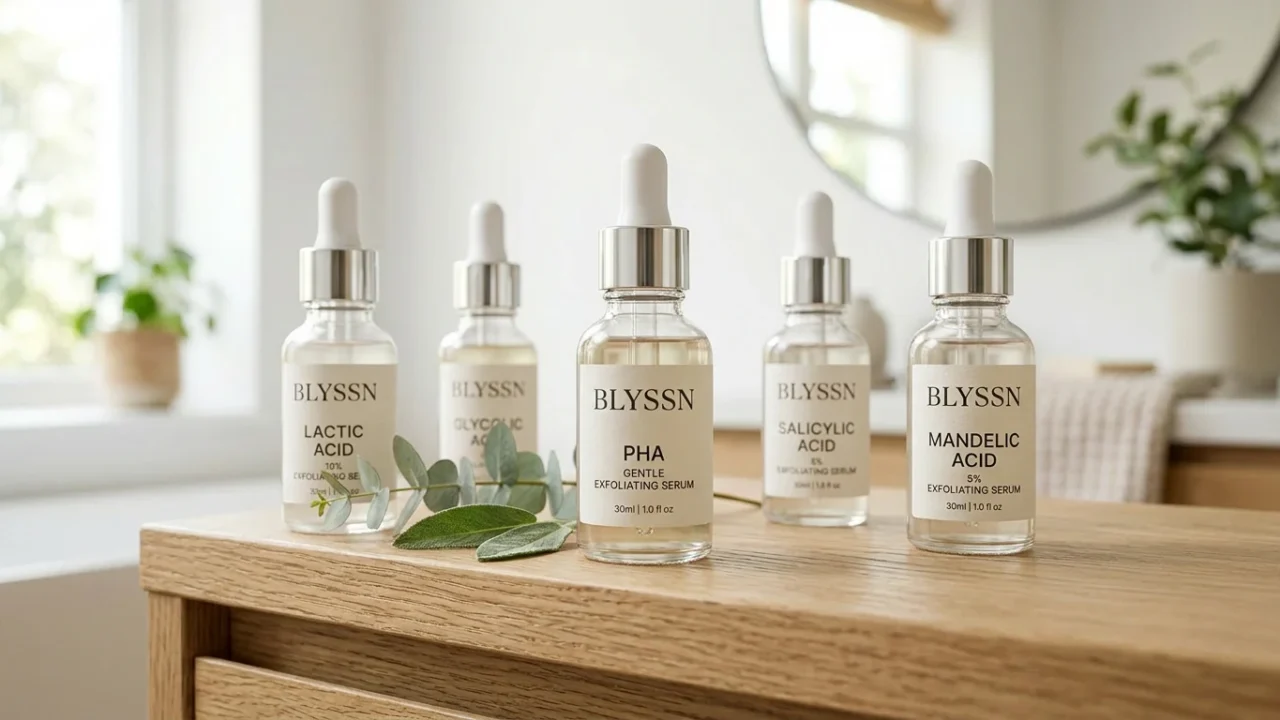
The best beginner acids are lactic acid (5–10%), mandelic acid (5–8%), or PHAs (any concentration)—all provide real exfoliation with minimal irritation. Avoid glycolic acid and salicylic acid initially; they require barrier resilience most beginners don’t have yet.
Why Most People Start Wrong—And Pay for It
The most common beginner mistake? Jumping into 10% glycolic acid because it’s popular, affordable, and readily available. Result: irritation flare-up, barrier damage, and abandoned skincare routines.
Chemical exfoliants are powerful tools. They’re not bad—they’re just mismatched with unprepared skin. Starting your exfoliation journey with the right acid means the difference between building a sustainable routine and suffering through weeks of redness, stinging, and regret.
According to Paula’s Choice, specialists in beginner formulation: “For those new to chemical exfoliants and/or those who’ve been sensitive to other AHA products in the past, it’s always best to gradually introduce this type of product into your routine. Start slowly, monitor your skin and adjust accordingly.”
This guide is part of our complete exfoliation journey:
AHA vs BHA
Mandelic Acid vs Glycolic Acid
Glycolic Acid vs Lactic Acid
Salicylic Acid vs Glycolic Acid
PHA vs AHA
The Hierarchy of Exfoliant Gentleness
Think of exfoliants on a gentleness spectrum:
GENTLEST (Best for Beginners)
- PHAs (gluconolactone, lactobionic acid)
- Lactic acid (10% or lower)
- Mandelic acid (8% or lower)
MODERATE (Intermediate)
- Lactic acid (10–15%)
- Mandelic acid (8–12%)
- Salicylic acid (0.5–1%)
AGGRESSIVE (For Experienced Users Only)
- Glycolic acid (any concentration)
- Salicylic acid (1–2%)
- Professional-strength peels
Most beginners should start in the “Gentlest” category and spend 4–6 weeks there before considering the intermediate tier.
Glow with Intention: AHA vs BHA
Option 1: Lactic Acid — The Gateway AHA
Why It’s Best for Beginners:
Lactic acid is the gold standard entry exfoliant. It’s derived from milk fermentation, naturally present in your body, and used in skincare since the 1990s. Its larger molecular size compared to glycolic means slower, gentler penetration—perfect for unprepared skin.
Best Beginner Concentration: 5–10%
Frequency: Every night (yes, daily is safe for beginners with lactic)
Results Timeline: 3–4 weeks to visible smoothing, 6–8 weeks for tone improvement
Why Dermatologists Love It for Beginners:
Lactic acid delivers real exfoliation without the irritation flare-ups. It’s hydrating, soothing, and supports barrier health—the opposite of what harsh acids do. According to E! Online’s dermatology guide: “Speaking from experience with acne scars and easily irritated skin, lactic acid has become the go-to for smoothing texture without causing redness or dryness.”
Beginner Routine with Lactic Acid:
- Cleanser (gentle, non-stripping)
- Lactic acid serum or toner (5–10%, pea-sized)
- Hydrating moisturizer (apply while skin damp)
- Broad-spectrum SPF 30+ (mornings)
Expected Experience:
- Week 1: Skin feels softer, more hydrated (no irritation)
- Week 2–3: Texture smoothing noticeable
- Week 4–6: Visible tone improvement, brighter complexion
- Week 8+: Sustained benefits, fine lines appear softer
Potential to Upgrade: After 6–8 weeks of lactic, you can:
- Increase concentration to 10–15%
- Add another acid (like mandelic or glycolic) on alternate nights
- Move to stronger acids with confidence
One More Step Toward Healthy Skin: Glycolic Acid vs Lactic Acid
Option 2: Mandelic Acid — The Sensitive-Skin Solution
Why It’s Best for Beginners (Especially Sensitive):
Mandelic acid’s larger molecular size (152 Daltons) and aromatic structure create the gentlest mainstream AHA option. If your skin is reactive or you’ve had bad experiences with exfoliants, mandelic is your starting point.
Best Beginner Concentration: 5–8%
Frequency: Daily or every other day (tolerance-dependent)
Results Timeline: 4–6 weeks to visible smoothing, 8–12 weeks for tone/clarity
Why It’s Perfect for Sensitive Beginners:
DermApproved notes: “Ten percent mandelic acid in a soothing gel base delivers real exfoliation—smoother texture, brighter tone, refined pores—without the stinging, redness, and peeling that chase sensitive skin types away from chemical exfoliants.”
Mandelic acid has anti-inflammatory and mild purifying properties, meaning it actively soothes while exfoliating. For acne-prone beginners, this is ideal: you get pore-clearing action without aggressive irritation.
Beginner Routine with Mandelic Acid:
- Cleanser (gentle)
- Mandelic acid serum (5–8%, pea-sized)
- Hydrating serum or essence (optional, for extra hydration)
- Rich moisturizer
- SPF 30+ (mornings)
Expected Experience:
- Week 1: No irritation; skin feels hydrated
- Week 2–3: Pores appear smaller, skin texture refining
- Week 4–6: Acne-prone skin showing clarity improvements
- Week 8–12: Visible brightening, post-acne marks fading
Potential to Upgrade: After 8–12 weeks of mandelic, you can:
- Increase concentration to 8–12%
- Add glycolic acid cautiously (2–3 nights weekly)
- Introduce other exfoliants with established tolerance
Curated for You: Mandelic Acid vs Glycolic Acid
Option 3: PHA — The Ultra-Gentle Alternative
Why It’s Best for Beginners (Maximum Gentleness):
If you have sensitive, reactive, or rosacea-prone skin, PHAs (polyhydroxy acids) are the gentlest exfoliation available. Zero documented irritation cases, fully hydrating, and pregnancy-safe.
Best Beginner Concentration: 5–10%
Frequency: Daily (PHAs are gentle enough for daily use)
Results Timeline: 6–8 weeks to noticeable smoothing, 8–12 weeks for significant tone improvement
Why It’s Perfect for Ultra-Sensitive Beginners:
PHAs work at the skin surface only, providing gentle exfoliation without penetrating deeply. They’re humectants, meaning they attract water and support hydration—the opposite of drying out your barrier.
According to GlowNoFilter’s analysis: “PHAs are the newest category of hydroxy acids—gentler than AHAs and BHAs. Molecular size 3–5x larger than glycolic acid, making them too large to penetrate deeply. Effect: surface-level gentle exfoliation without irritation.”
Beginner Routine with PHA:
- Cleanser
- PHA toner or serum (gluconolactone, 5–10%)
- Hydrating serum
- Moisturizer (can be lighter than with lactic/mandelic)
- SPF 30+
Expected Experience:
- Week 1–2: Skin feels hydrated and soft
- Week 3–4: Subtle texture smoothing
- Week 6–8: Visible tone improvement, dullness lifted
- Week 12+: Refined, glowing complexion
Potential to Upgrade: After 8–12 weeks, you can:
- Combine PHA with gentle AHA (PHA morning, mandelic night)
- Move to stronger AHAs (lactic or mandelic higher concentrations)
- Add other actives (vitamin C, niacinamide) for synergistic benefits
The Next Exfoliation Step: Salicylic Acid vs Glycolic Acid
What NOT to Do as a Beginner
❌ Don’t Start with Glycolic Acid
It’s the fastest-acting AHA and common, but it’s too aggressive for unprepared skin. Save it for after 8–12 weeks of gentler exfoliants.
❌ Don’t Use Salicylic Acid (BHA) First
If acne is your concern, start with mandelic acid (which has mild purifying properties) rather than BHA. The oil-soluble penetration is too strong initially.
❌ Don’t Skip Sunscreen
All exfoliants increase photosensitivity. Broad-spectrum SPF 30+ is non-negotiable, rain or shine, every single day.
❌ Don’t Use Higher Than 10% Concentration
Starting with “stronger” doesn’t mean faster results—it means damaged barrier. Stay under 10% for your first 4–6 weeks.
❌ Don’t Use More Than 3 Nights Per Week Initially
Your barrier needs recovery time. Twice or three times weekly is the safe frequency. You can increase after 4–6 weeks if tolerating well.
❌ Don’t Skip Hydrating Moisturizer
Exfoliants temporarily disrupt your barrier. Immediately follow with a hydrating moisturizer while skin is still slightly damp to lock in hydration.
The 6-Week Beginner Exfoliation Protocol
Firstly, Weeks 1–2: Introduction
- Choose ONE acid: lactic (5–10%), mandelic (5–8%), or PHA (5–10%)
- Use 2–3 nights per week
- Monitor for irritation (mild redness is normal; stinging/burning is not)
- Continue gentle cleansing and SPF
Weeks 3–4: Observation
- Same acid, same frequency
- Assess results: smoother texture, hydration, any irritation
- If well-tolerated, stay consistent
- If irritation: reduce frequency to 1–2 nights weekly
Weeks 5–6: Potential Increase
- If no irritation after 4 weeks, increase to every other night
- Still with same acid and concentration
- Watch for cumulative irritation signs
Week 7+: Maintenance or Upgrade
- Option A: Continue same acid indefinitely (perfectly fine)
- Option B: Cautiously introduce second acid (only if first fully tolerated)
- Option C: Move to slightly higher concentration of same acid
Complete Your Routine: PHA vs AHA
Beginner Success Stories vs. Cautionary Tales
Success Story:
“Started with 5% lactic acid twice weekly. By week 4, my dullness was gone. By week 8, I added mandelic acid on alternate nights for my acne scars. Now using both successfully for 6 months with zero irritation.” — First-time exfoliant user
Cautionary Tale:
“Jumped straight to 10% glycolic every night because a friend loved it. Within 2 weeks: red, stinging, flaking. My barrier was destroyed. Took 4 weeks to recover and I’ve been afraid of exfoliants ever since.” — Overeager beginner
Lesson: Starting slow isn’t boring—it’s the difference between success and setback.
Frequently Asked Beginner Questions
Q: How do I know if I’m irritating my skin vs. normal exfoliation feel?
Normal exfoliation feel: mild warmth, slightly tingly sensation that resolves within 10 minutes
Irritation: stinging that persists, burning sensation, redness that lasts hours, next-day sensitivity
If you experience irritation, reduce frequency immediately.
Q: Can I use my exfoliant every night as a beginner?
Only with PHAs and possibly lactic acid (if concentration is 10% or lower). With mandelic acid or any other AHA, start 2–3 nights weekly. Even gentle acids need recovery days.
Q: Should I exfoliate morning or night?
Night is better for beginners. Your skin isn’t exposed to environmental stressors, and you’re not rushing through the routine. Once experienced, some people do light AHA mornings with SPF, but beginners should stick to nights.
Q: What if I’m also using retinol or vitamin C?
Don’t combine all three actives. Choose:
- Retinol + Moisturizer (nights)
- Exfoliant + Moisturizer (alternate nights)
- Vitamin C + SPF (mornings only)
Rotate these, not stack them.
Q: How long before I can upgrade to stronger acids?
After 6–8 weeks of consistent, irritation-free use with your beginner acid, you can cautiously introduce a slightly stronger option. Never rush this timeline.
SOUTH ASIAN AUDIENCE ADAPTATION
For South Asian beginners, starting with lactic acid has become the recommended gold standard across dermatology practices in India, Pakistan, Bangladesh, and Sri Lanka.
The region’s high humidity, pollution levels, and prevalence of sensitivity make lactic acid’s gentle, hydrating profile ideal for establishing baseline exfoliation tolerance. Mandelic acid has also gained popularity specifically for its post-acne pigmentation-fading properties, critical in South Asia where PIH is more pronounced on darker skin tones.
Many South Asian skincare brands now market beginner exfoliant lines featuring 5–8% mandelic or 5–10% lactic, recognizing that aggressive glycolic introduction has historically led to barrier damage and hyperpigmentation setbacks. The “start slow, go gradual” philosophy aligns well with traditional South Asian beauty wisdom emphasizing patient, sustained skincare rather than dramatic transformation—making lactic acid or mandelic acid the culturally and scientifically supported choice for beginner exfoliation in the region.
This guide is part of our Complete Exfoliation Plan, read Chemical Exfoliation Guide for a comprehensive strategy covering your entire routine