
Quick Answer:
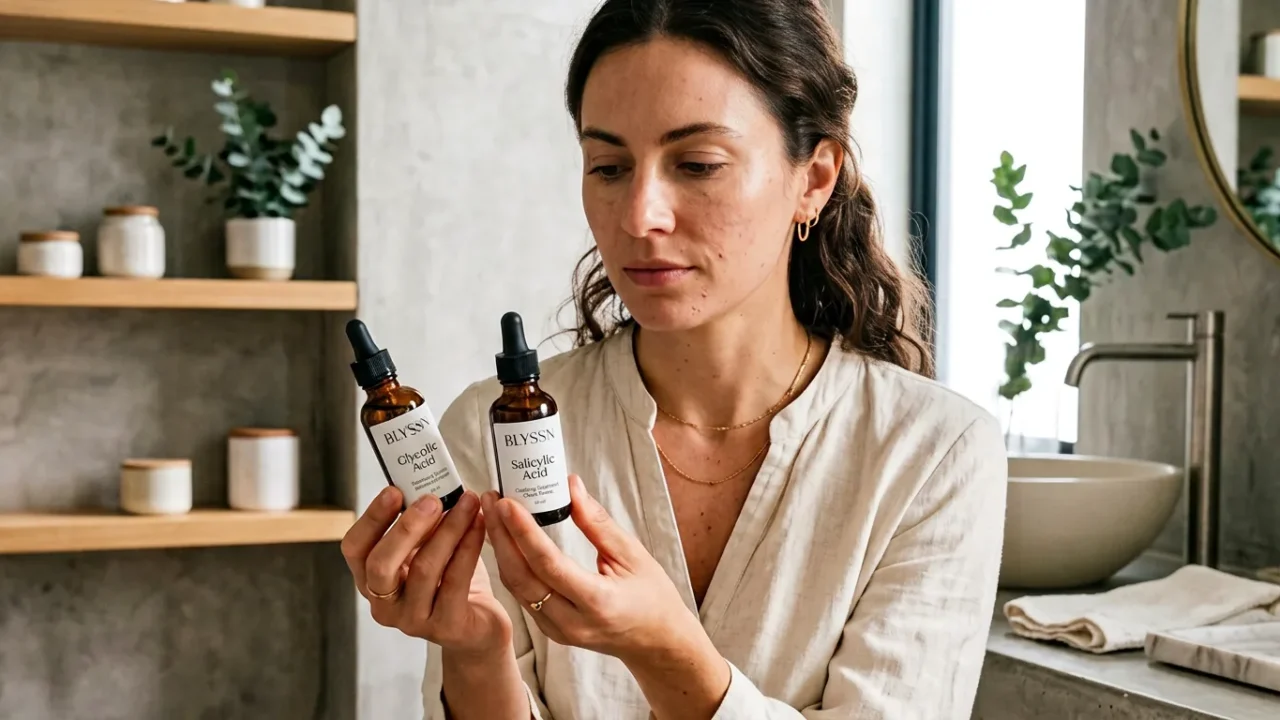
Glycolic acid fades hyperpigmentation faster (2–4 weeks visible results) but carries higher irritation and PIH risk on darker skin; salicylic acid works more gradually (6–8 weeks) but is gentler and better for acne-related dark marks on sensitive skin. Choose glycolic for speed, salicylic for safety and simultaneous acne prevention.
Understanding Hyperpigmentation and Why Acids Help
Hyperpigmentation occurs when your skin produces excess melanin in specific areas, creating dark spots, patches, or uneven tone. There are several types:
Post-Inflammatory Hyperpigmentation (PIH) appears after acne, eczema, or skin injuries heal. The inflammation triggers melanin overproduction, and the discoloration lingers long after the bump itself disappears.
Melasma is triggered by hormonal changes, sun exposure, or genetic predisposition—common on the cheeks, forehead, and bridge of nose.
Sun Damage Spots (age spots, solar lentigines) result from cumulative UV exposure over years.
Acne-Related Marks combine active breakouts with resulting hyperpigmentation.
Chemical exfoliants address hyperpigmentation by accelerating skin cell turnover, allowing pigmented cells to shed faster and revealing fresh, unpigmented skin beneath. However, the speed and safety of this process differs significantly between salicylic and glycolic acids.
This guide is part of our comprehensive guide for Salicylic Acid vs Glycolic Acid:
Salicylic Acid vs Glycolic Acid for Ingrown Hairs
Salicylic Acid vs Glycolic Acid for Scalp
Glycolic Acid: The Fast-Acting Brightening Powerhouse
How It Works for Hyperpigmentation:
Glycolic acid penetrates deeply and rapidly, dissolving intercellular bonds to accelerate cell turnover. This aggressive speed means faster fading of surface-level hyperpigmentation. Additionally, research shows glycolic acid directly inhibits tyrosinase (the enzyme controlling melanin production), providing dual action: surface exfoliation plus melanin inhibition.
Speed of Results:
- Visible brightening: 2–4 weeks
- Significant pigmentation improvement: 6–8 weeks
- Maximum results: 12 weeks
Best For:
- Sun damage and age spots
- Superficial post-acne discoloration
- Oily or combination skin
- Those with sun-damaged skin seeking rapid visible transformation
- People with strong skin tolerance and reliable SPF habits
The Benefits:
- Fastest visible results — Noticeable brightening within 2–3 weeks
- Dual action — Exfoliation + melanin inhibition
- Proven efficacy — Extensive clinical research backing
- Collagen stimulation — Additional anti-aging benefit
- Deep penetration — Reaches pigmentation at multiple skin layers
The Risks:
- Higher irritation potential — Stinging, redness, temporary peeling common
- Post-inflammatory hyperpigmentation risk — Especially on darker skin tones; clinical studies show 5.6% adverse pigmentation rate
- Photosensitivity — Significantly increases sun sensitivity
- Barrier compromise — Can temporarily disrupt moisture barrier
Next Exfoliation Step: Salicylic Acid vs Glycolic Acid for Ingrown Hairs
Salicylic Acid: The Gentler, Acne-Fighting Alternative
How It Works for Hyperpigmentation:
Salicylic acid’s oil-soluble nature allows it to penetrate into follicles where acne bacteria reside. This makes it uniquely effective for post-acne hyperpigmentation: it prevents new breakouts (the inflammation source of PIH) while simultaneously exfoliating surface pigmentation.
Speed of Results:
- Gradual fading: 6–8 weeks
- Visible improvement: 8–12 weeks
- Maximum results: 12–16 weeks
Best For:
- Post-acne hyperpigmentation (PIH)
- Active acne combined with dark marks
- Oily, acne-prone skin
- Darker skin tones (lower PIH risk than glycolic)
- Sensitive or reactive skin
- Those prioritizing prevention alongside correction
The Benefits:
- Gentler than glycolic — Lower irritation potential
- Prevents new PIH — Stops acne breakouts that create dark marks
- Anti-inflammatory — Reduces redness and irritation from acne
- Lower PIH risk — Studies show 16% adverse effects vs glycolic’s 5.6% (both low but salicylic slightly lower in sensitive application)
- Dual benefit — Clears active acne + fades old marks simultaneously
The Risks:
- Slower visible results — Takes 6–8 weeks minimum
- Less effective for sun damage — Better for acne-related marks than age spots
- Can be drying — Oil-soluble action may strip moisture if overused
- Not ideal for severe melasma — Gentler nature means less aggressive melanin inhibition
The Research: What Clinical Studies Show
A 2025 comparative study from Hayatabad Medical Complex examined 35% glycolic acid peel versus 20% salicylic acid peel in patients with post-acne scars and hyperpigmentation. Results showed:
Glycolic Acid: Superior results for overall pigmentation fading and skin texture improvement. Patients saw visible lightening of marks within 2–4 weeks. However, professional-grade 35% concentrations caused temporary redness and required strict SPF in post-treatment.
Salicylic Acid: More gradual but sustained results, particularly for acne-related marks. The treatment simultaneously reduced active breakouts (preventing future PIH formation) while fading existing marks. Fewer adverse effects reported on darker skin tones.
According to ScienceInsights’ analysis of clinical data: “In studies on darker skin, salicylic acid peels (20% to 30%) caused pigmentary complications in about 16% of patients, while glycolic acid peels at 35% to 50% had a lower adverse effect rate of around 5.6%, but the risk still exists.”
Hyperpigmentation Type Matters: Which Acid to Choose
Post-Acne Hyperpigmentation (PIH) → Salicylic Acid (Usually Better)
PIH appears as dark marks where acne once was. Salicylic acid is ideal because:
- Prevents new breakouts (stops PIH at the source)
- Gently fades existing marks without irritation
- Less likely to trigger additional PIH through treatment irritation
- Works best when combined with acne prevention
Sun Damage/Age Spots → Glycolic Acid (Usually Better)
Sun spots are purely melanin-related with no acne component. Glycolic acid excels because:
- Rapidly fades surface pigmentation
- Directly inhibits tyrosinase
- Fast visible results (what most people seeking cosmetic improvement want)
- No acne to prevent, so no need for salicylic’s anti-inflammatory action
Melasma → Depends on Trigger
Melasma triggered by hormones or sun is complex. Best approach:
- Start with salicylic (gentler, lower PIH risk)
- Add glycolic after 4–6 weeks if tolerating well
- Consider professional treatments (melasma often requires combination therapy)
Acne + Hyperpigmentation (Both Active Concerns) → Salicylic First, Then Glycolic
If you have active breakouts AND dark marks:
- Use salicylic 5–6 nights weekly for 4 weeks to clear acne
- After acne clears, introduce glycolic 2–3 nights weekly for residual pigmentation
- Once baseline clear, alternate both for maintenance
How to Use Each Acid for Hyperpigmentation
Glycolic Acid Protocol:
- Concentration: 5–10% for at-home use (professional peels 30–50%)
- Frequency: 2–3 nights weekly initially; increase to every other night after 2 weeks if tolerating
- Application: Clean, completely dry skin; wait 10 minutes before moisturizing
- SPF: Mandatory broad-spectrum SPF 30+ daily (critical with glycolic)
- Timeline: Expect visible results in 2–4 weeks; optimal results in 8–12 weeks
Salicylic Acid Protocol:
- Concentration: 1–2% for daily use; professional peels 20–30%
- Frequency: Can use nightly due to gentleness; many people tolerate daily use
- Application: On areas with hyperpigmentation; avoid sensitive areas initially
- SPF: Recommended but less critical than with glycolic (salicylic doesn’t increase photosensitivity as much)
- Timeline: Expect subtle improvement in 4–6 weeks; significant results in 8–12 weeks
Critical Safety Consideration: Dark Skin and Hyperpigmentation
The PIH Paradox: The very treatment meant to fade hyperpigmentation can cause NEW hyperpigmentation if you have darker skin and irritate your skin through over-exfoliation.
Clinical research shows this risk:
- Salicylic at 20–30% concentration: 16% experienced pigmentation complications
- Glycolic at 35–50% concentration: 5.6% experienced complications
For darker skin tones specifically:
- Start with salicylic acid — Lower irritation = lower PIH risk
- Use lower concentrations — 5–7% glycolic, not 10%+
- Extend adjustment period — 6–8 weeks with one acid before adding another
- Avoid aggressive home peels — Professional guidance recommended
- Sunscreen is non-negotiable — Sun exposure post-treatment can darken existing marks
Timeline Expectations: Real-World Results
If Using Glycolic Acid (5–10%):
- Week 1–2: Mild irritation (normal); skin feels smoother
- Week 2–4: Visible lightening of marks; skin appears brighter
- Week 6–8: Significant pigmentation improvement; finer texture
- Week 10–12: Substantial results; marks noticeably faded
- Month 3+: Plateau reached; maintenance with consistent use
If Using Salicylic Acid (1–2%):
- Week 1–2: Skin feels clearer; acne reduction (if applicable)
- Week 3–4: Subtle mark fading; smoother texture
- Week 6–8: Visible mark improvement; continued acne prevention
- Week 10–12: Good results, slower than glycolic but sustainable
- Month 4+: Marks continue fading; strong maintenance benefit
Can You Use Both Together?
Yes, but strategically:
The most effective approach combines both acids:
- Salicylic for immediate acne prevention + gradual mark fading
- Glycolic for accelerated pigmentation fading once acne is controlled
Recommended Protocol:
- Weeks 1–4: Salicylic only, nightly
- Weeks 5–8: Salicylic 4 nights weekly + glycolic 2 nights weekly (separate nights)
- Week 9+: Continue alternating pattern based on results
What NOT to Do:
- Never use glycolic and salicylic on the same night initially
- Never combine high concentrations of both
- Don’t exceed 4–5 exfoliation nights weekly total (surface + pore)
- Avoid combining with retinol or vitamin C on same night
Exfoliate with Intention: Salicylic Acid vs Glycolic Acid for Scalp
SOUTH ASIAN AUDIENCE ADAPTATION
In South Asia, where post-inflammatory hyperpigmentation is particularly pronounced on darker skin tones, the salicylic vs glycolic choice carries significant weight. The region’s prevalence of acne combined with darker complexions means PIH risk from over-aggressive treatment is higher—making salicylic acid the preferred starting point across major Indian dermatology practices.
Many dermatologists in India, Pakistan, and Bangladesh now recommend salicylic acid as the entry exfoliant for hyperpigmentation, reserving glycolic for secondary treatment only after baseline acne is controlled. Additionally, South Asia’s high pollution and humid climate contribute to active acne sustained over longer periods, making salicylic’s dual action (preventing new breakouts + fading marks) more strategically valuable than glycolic’s pure speed.
The cultural emphasis on skin fairness in parts of South Asia has also driven research into safe, effective hyperpigmentation treatment—leading to strong local preference for the gentler, lower-PIH-risk approach that salicylic acid provides.
This guide is part of our complete guide on: Salicylic Acid vs Glycolic Acid: The Complete Acne & Texture Guide